I have taught these same seven commands so many times that I could do it in my sleep, and honestly some early mornings on the trail I might be. What changes case to case isn't the list — it's the order dogs learn to trust it, and the mistakes that quietly undo weeks of work. Here's how I actually teach each one, including the parts most guides leave out.
Sit: The Easy One, Until It Isn't
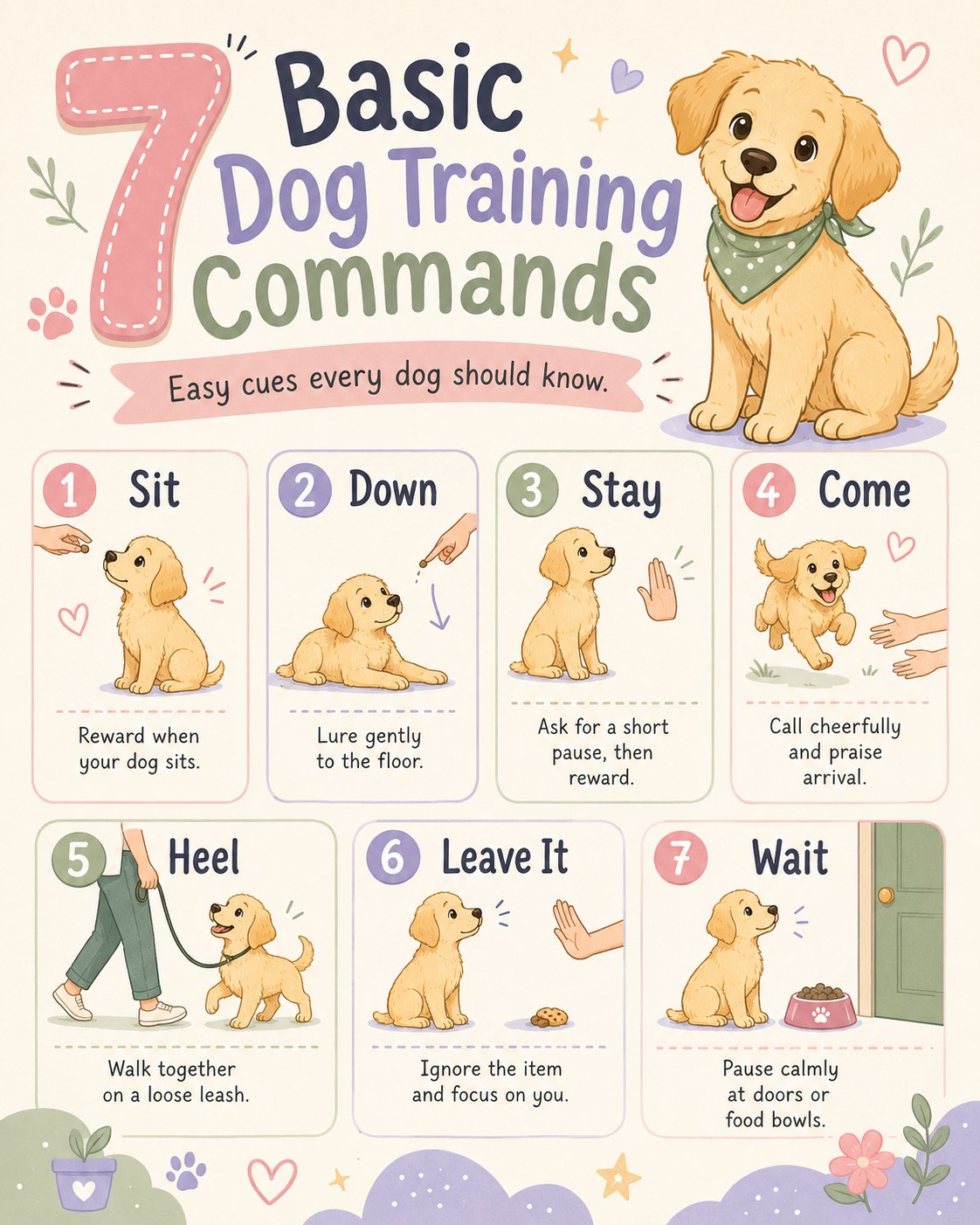
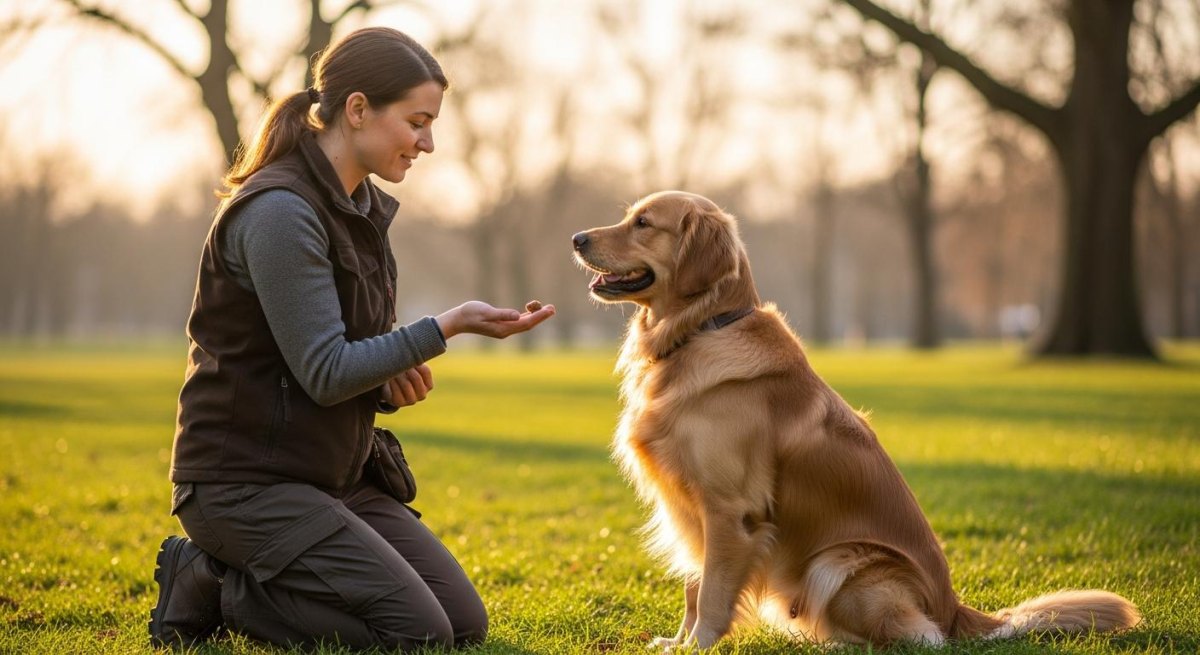
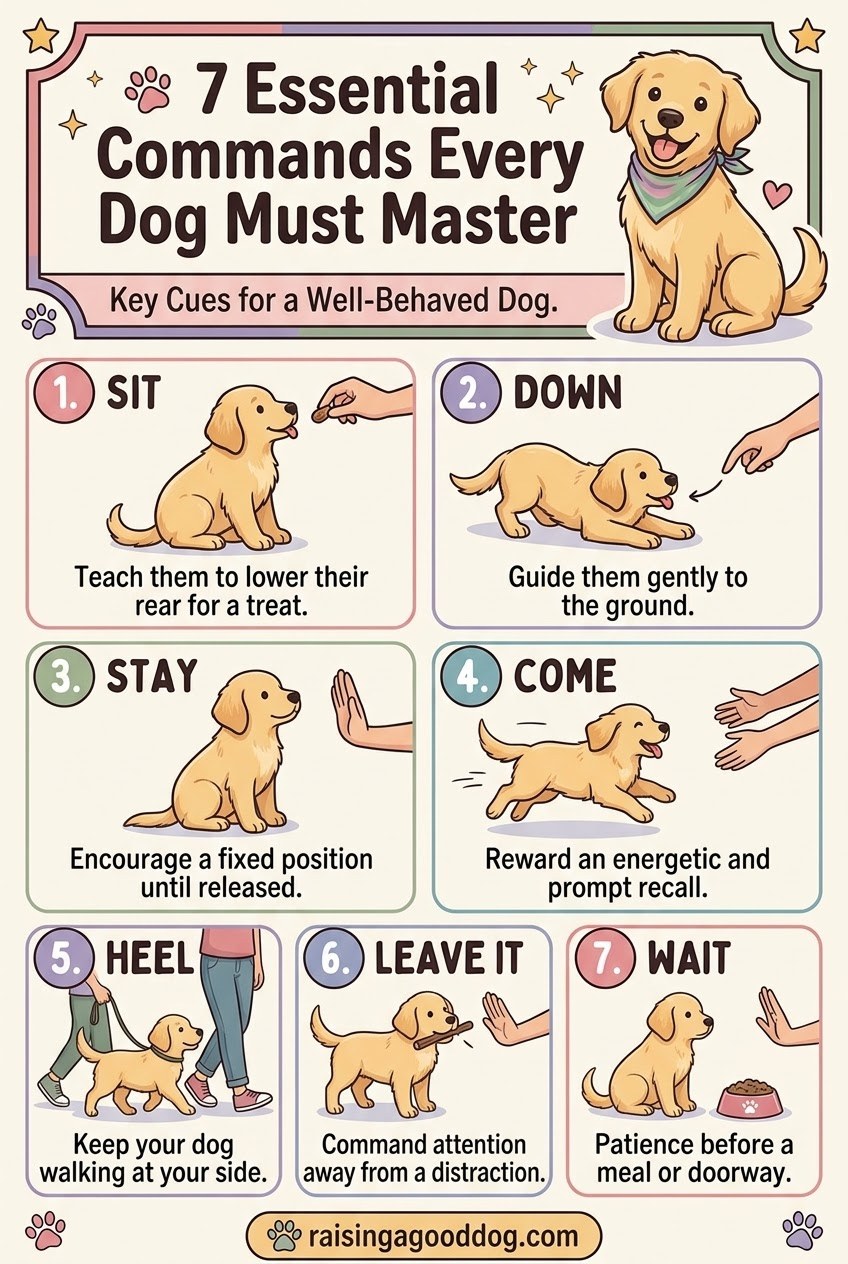
Sit is almost always the first command I teach a new client's dog, and there's a reason it works so fast — you're just capturing something the dog already does naturally. Hold a treat close to the nose, lift it slowly back over the head, and mark the instant the rear touches the ground. No pushing on the hips, ever.
- Say the word once — repeating 'sit, sit, sit' just teaches the dog that the first three don't count.
- Reward in position, not after they pop back up, or you're rewarding the release instead of the sit.
- Practice in new spots — a sit at the kitchen counter doesn't automatically transfer to the vet waiting room.
One thing from my vet-assistant years I still check first: if a dog who's always sat easily suddenly won't, or sits crooked and favors a hip, that's a vet visit before it's a training problem. Dogs don't refuse a well-known cue out of nowhere.
Down: The Cue Dogs Take Personally
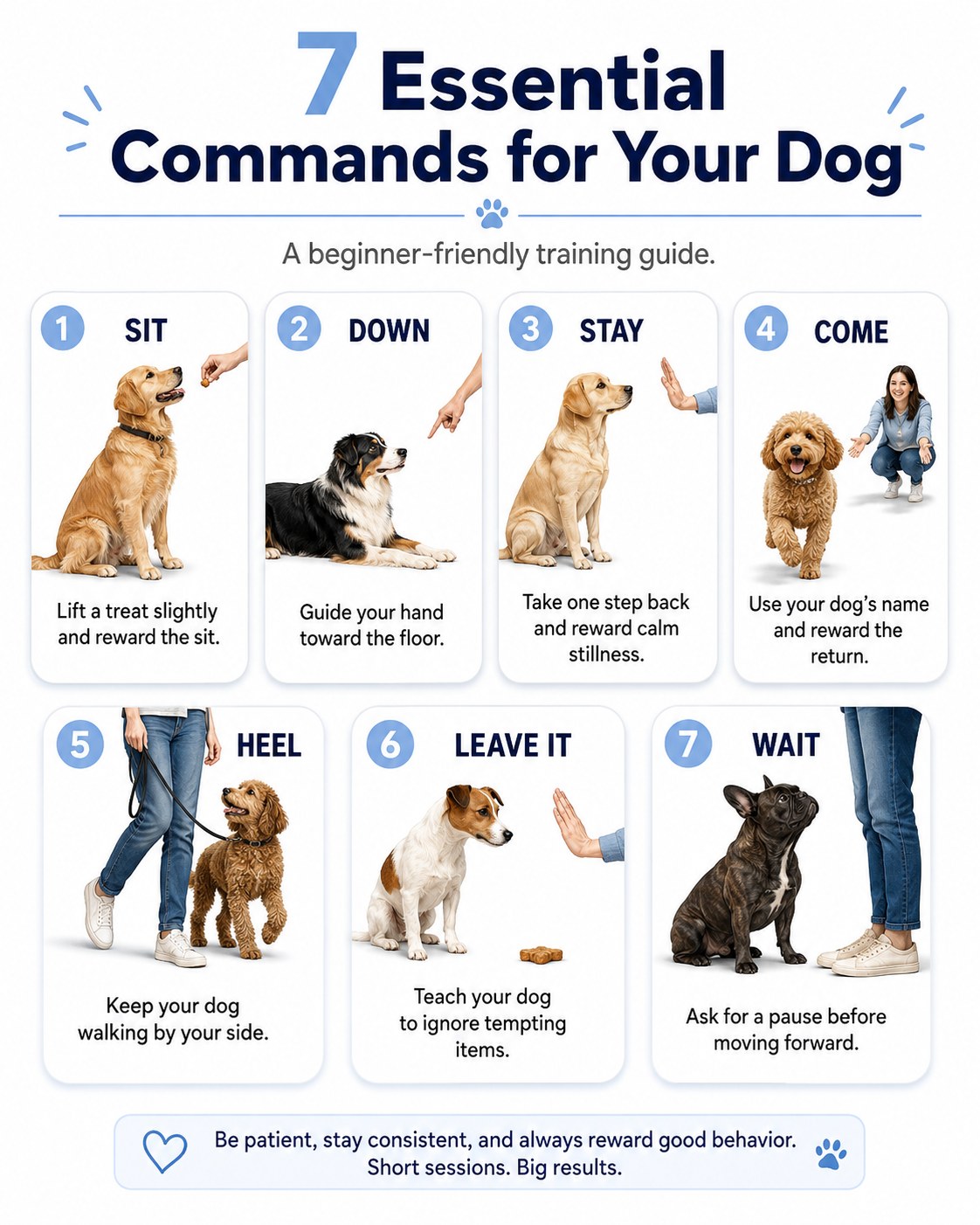
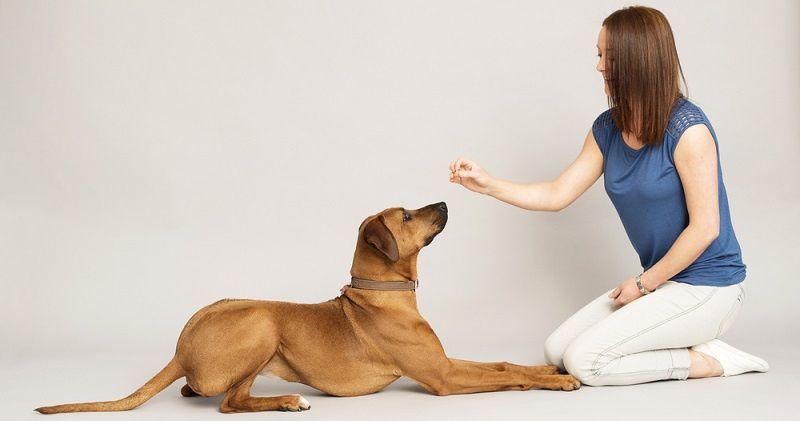
Down asks more of a dog emotionally than sit does — lying down puts them in a vulnerable position, and some dogs, especially anxious or previously punished ones, hesitate hard here. Lure from the nose down to the floor between the paws in a slow diagonal line, and reward the moment the elbows touch down, even briefly at first.
What actually helps
- Start from a sit, not standing — it shortens the physical journey the treat needs to travel.
- Reward small wins — a half-crouch earns a treat early on; you shape toward a full down over several sessions.
- Never push or fold their legs into place. It breaks trust fast and teaches nothing about the cue itself.
Watch the dog's ears and weight shift here — a dog leaning away from your hand or freezing mid-lure is telling you the pace is too fast, not that they're being stubborn.
Stay: Where Nearly Everyone Rushes
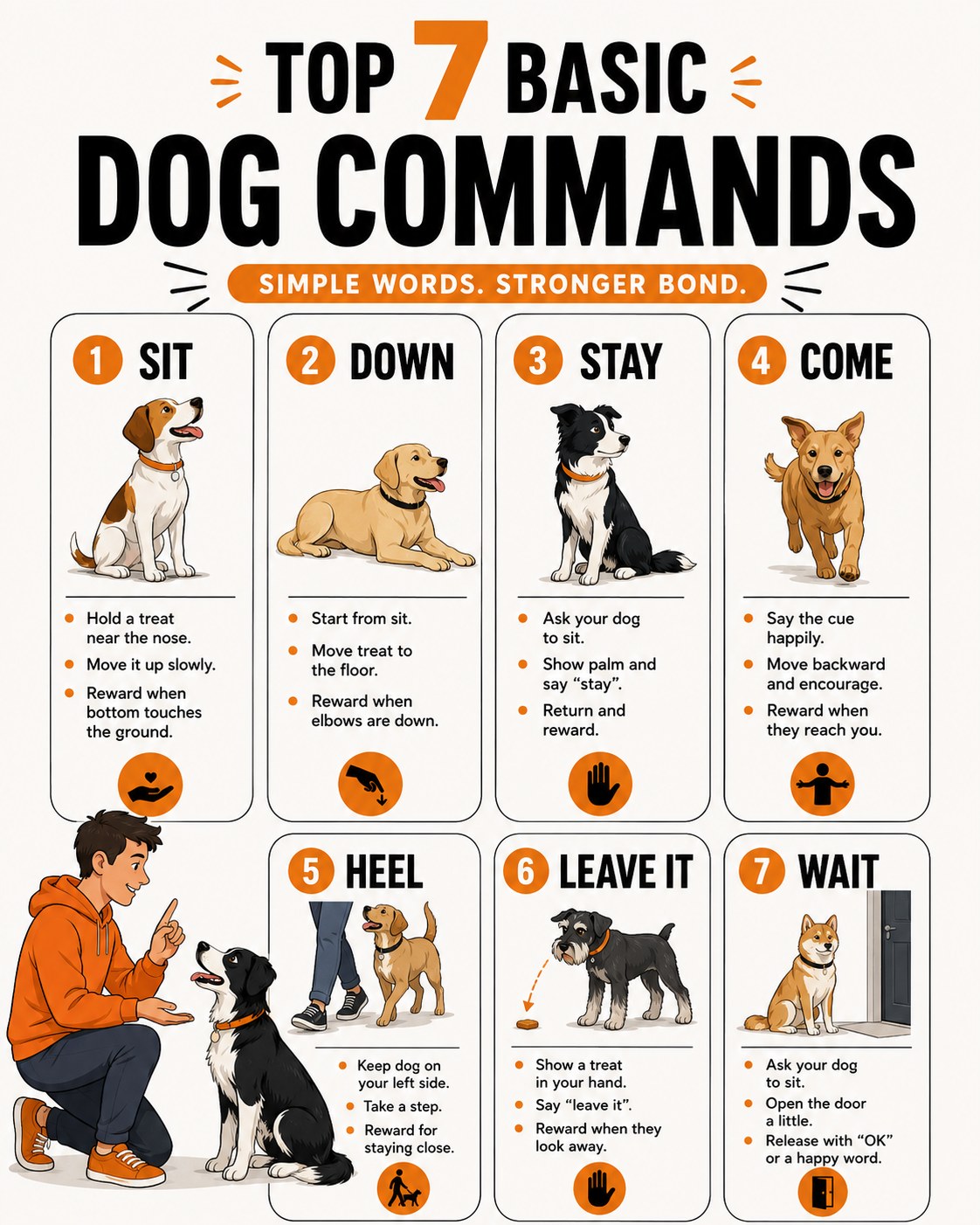
Stay fails more than any other command on this list, and it's almost never the dog's fault. It fails because people add distance, duration, and distraction all in the same session.
I tell every client the same thing: stay has three separate variables — how long, how far, and how distracting — and you only get to push one of them at a time. Add all three at once and you'll get a dog who breaks every rep and starts to think the whole exercise is pointless.
- Ask for a sit, show your open palm, say 'stay' once.
- Take one step back, return immediately, and reward calm stillness.
- Build duration in small increments — three seconds, five, ten — before you add distance.
- Only once both are solid do you start adding real-world distraction.
A dog who breaks a stay isn't defiant — they're telling you the criteria jumped too far too fast. Back up a step, literally and in your training plan.
Come: The One Cue You Can Ruin By Accident
Recall is the command with the most damage done to it before training even starts, because so many people call the dog and then do something the dog doesn't like — nail trim, bath, end of the fun at the park. That's a poisoned cue, and it takes real work to repair.
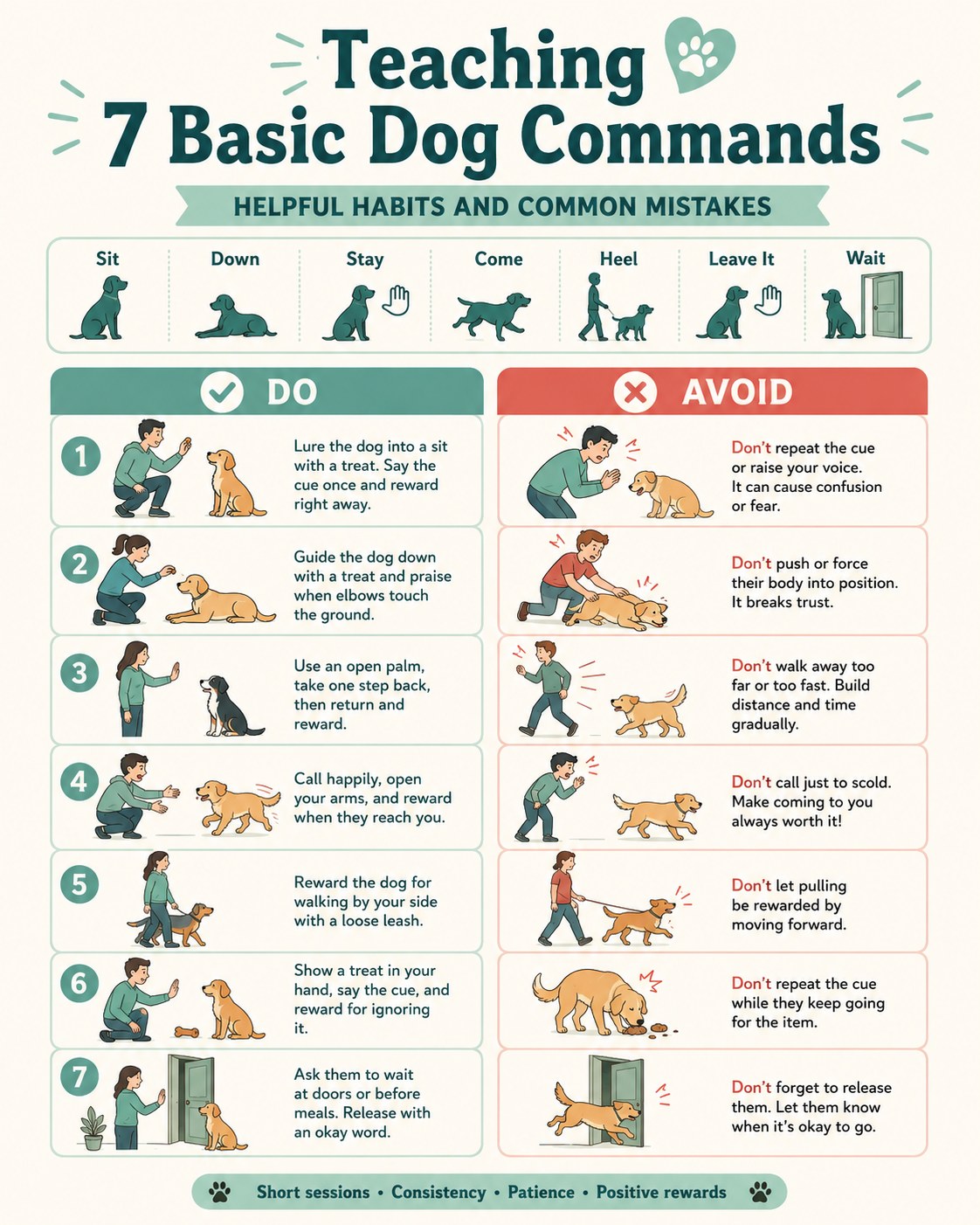
- Do use an open, happy body posture and step backward as you call — movement away invites a dog toward you far more than reaching forward does.
- Do reward every single return generously, even the slow ones, especially early on.
- Avoid calling your dog just to end playtime or to scold them for something — always call to something good.
- Avoid repeating the cue while they wander off toward the thing they wanted; that just teaches them the word is optional.
Management matters here more than almost anywhere else on this list — a long line in open spaces means the dog physically can't rehearse ignoring you while you're still building the habit of coming every time.
Heel: The Slowest Walks You'll Ever Take
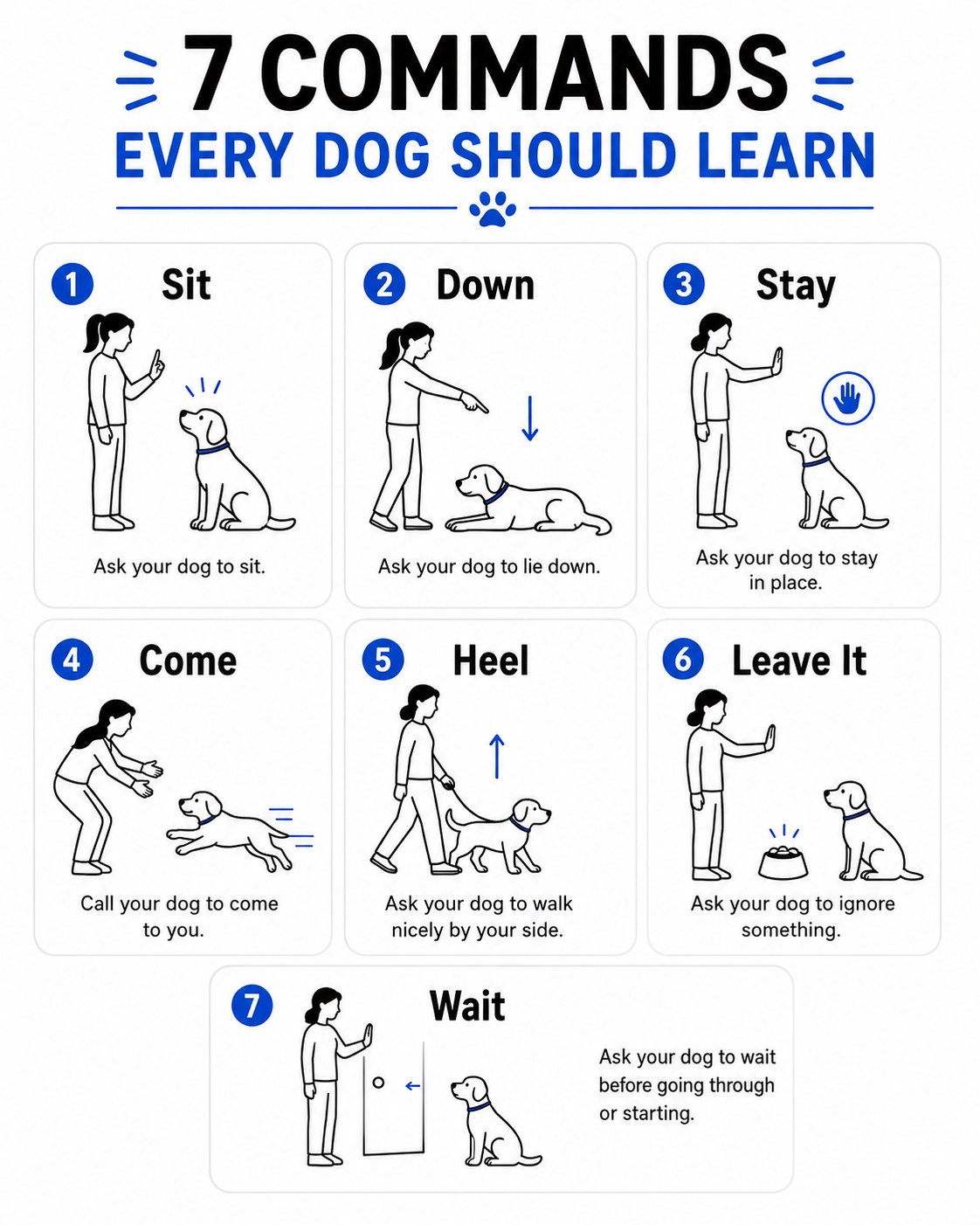
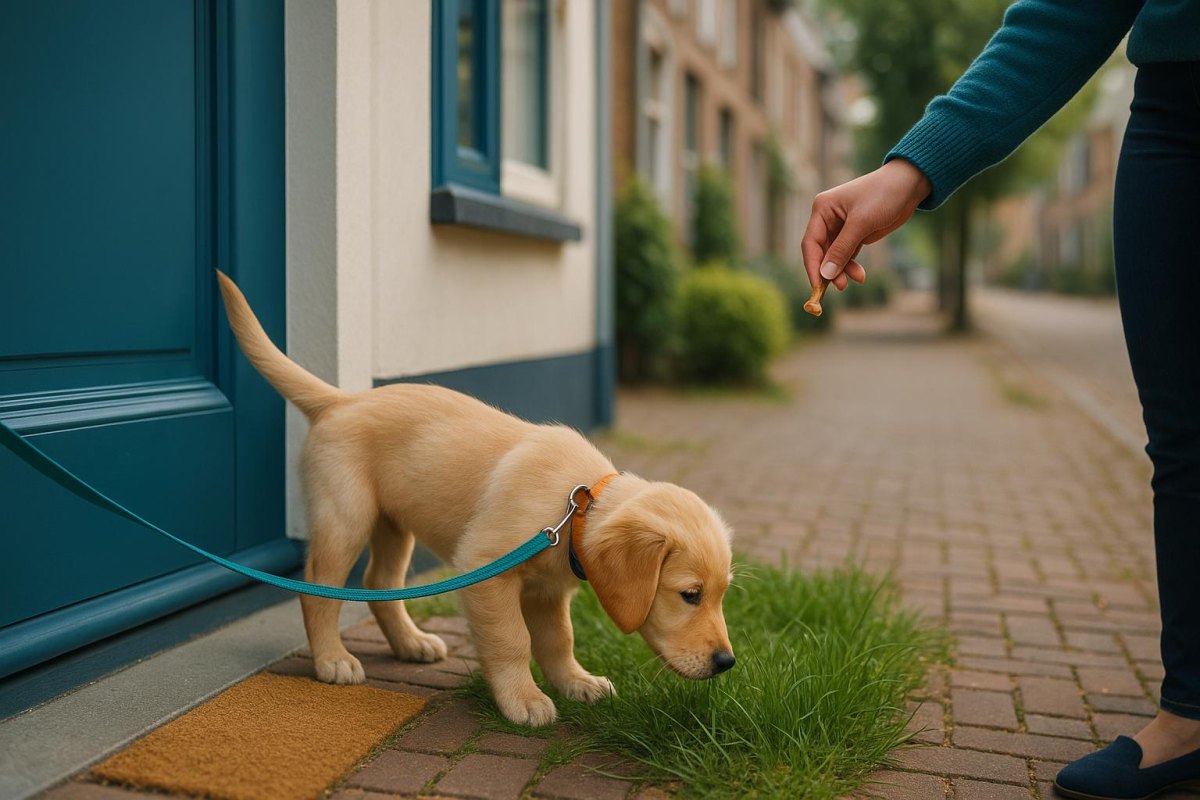
Heel gets requested constantly and taught rushed constantly, and the two things are related. A loose-leash walk isn't a single skill — it's the dog choosing to stay near you instead of pulling toward every smell, dog, and dropped french fry on the sidewalk, and that choice has to be built, not demanded.
Start in a boring hallway or empty parking lot, not the busiest block in the neighborhood. Reward for position at your side, step, reward again, and let the dog learn that staying close is where the good stuff happens. Use a well-fitted front-clip harness rather than anything that tightens or corrects — pulling is a rehearsed habit, not defiance, and it responds to reinforcement, not pain.
The first two weeks of teaching heel are genuinely the slowest walks of your life. That's normal. I still remind clients of it every single time, because the instinct is always to think it isn't working when really it's just working slowly.
Leave It: Teaching Impulse Control at Any Age
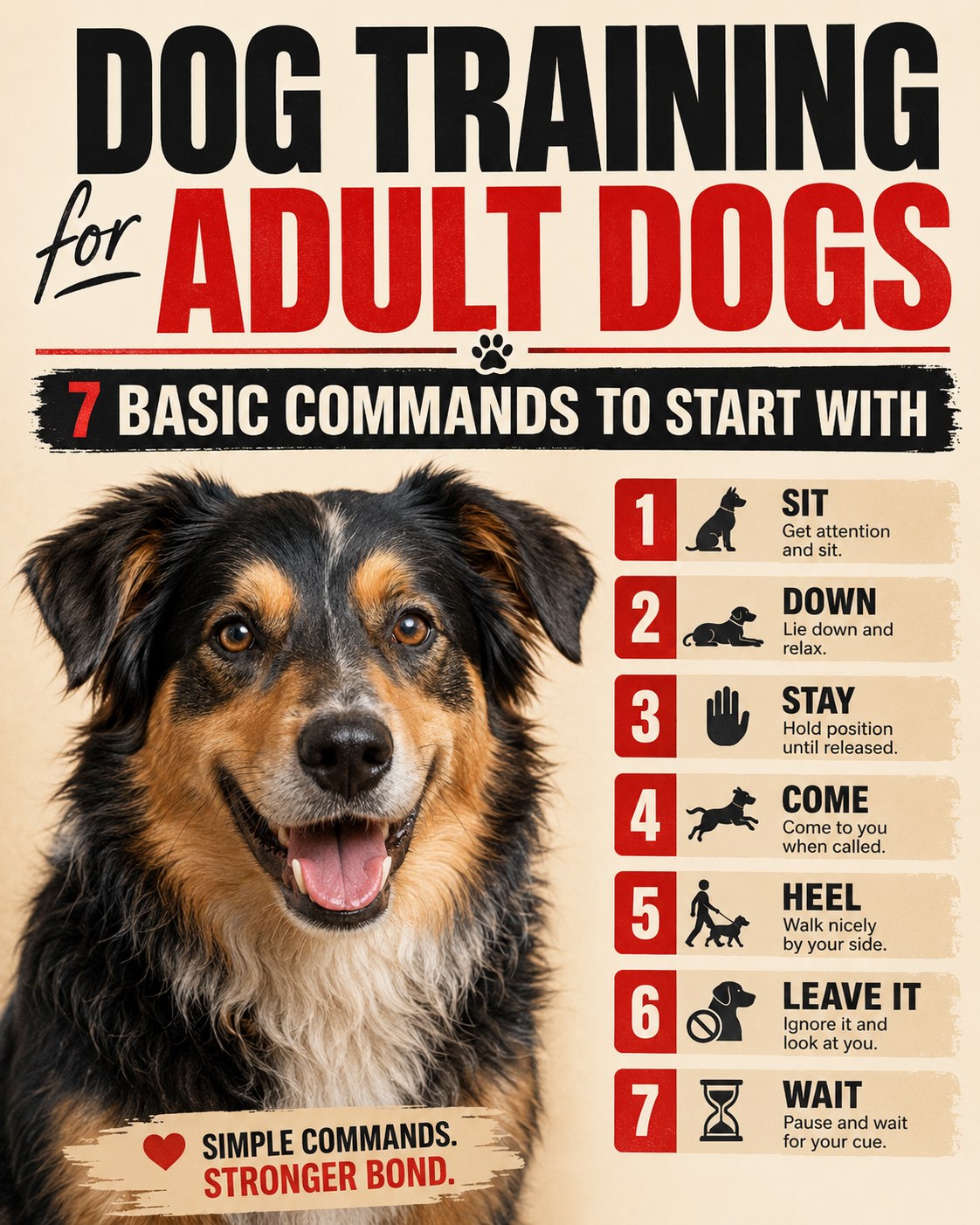
Adult dogs who missed early training aren't behind, exactly — they just need the same steps taught with more patience and better management around real temptations. Leave It is impulse control in its purest form: show a treat in a closed fist, say the cue once, and reward the instant they look away from your hand toward your face.
Building it up
- Fist first, then an open palm with treat visible, then items on the floor.
- Reward generously from your other hand — the dog learns leaving the tempting thing pays better than taking it.
- Practice with low-value items before you ever test it against something the dog really wants.
One important line: if this involves an item the dog has ever guarded with a growl, snap, or bite, that's not a leave-it exercise anymore — that's a resource guarding case, and it needs an in-person certified professional and a conversation with your vet about a veterinary behaviourist, not a blog post.
Wait: The Command That Prevents Emergencies
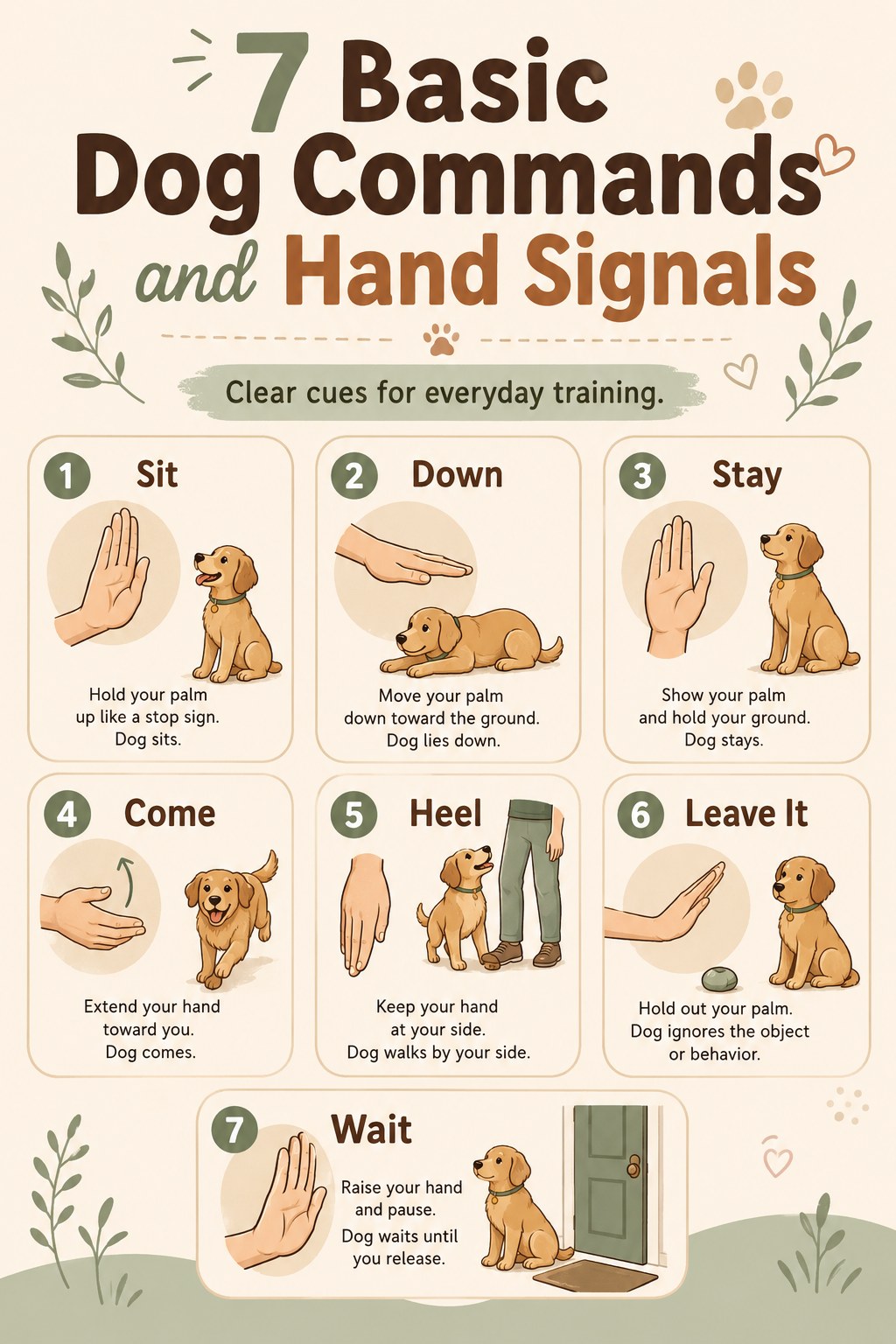
Wait is the quiet workhorse of this whole list — it's what stops a dog from bolting out the front door, launching out of the car, or diving into a bowl before you've set it down. It's a pause, not a full stay: ask for a calm sit, raise your palm, open the door or lower the bowl slightly, and release with a clear word when it's actually safe to go.
I teach the hand signal alongside the verbal cue from day one, because in a genuinely chaotic doorway moment — a UPS delivery, a loose dog outside, a toddler running past — your dog may see your raised hand before they hear anything over the noise.
Difficulty level: easy to teach, easy to skip. This is the command people drop once the novelty wears off, right up until the day a door swings open onto a busy street and they wish they hadn't. Practice it at every doorway and every meal, not just in training sessions.
None of these seven commands are complicated on their own — what makes them work is teaching them in the right order, at the dog's actual pace, and being honest with yourself about which one you're tempted to skip. Usually it's Wait. Go do that one first.

Your Questions, Answered
What order should I teach these 7 commands in?
I usually go Sit, then Down, then Wait, since those build calm default behaviors early. Come and Leave It come next because they have real safety value, and Stay and Heel last since they require the most patience and the slowest progression.
How long does it realistically take to teach all seven?
Most dogs get reliable Sit and Down within one to two weeks of short daily sessions. The full set, generalized to real distractions like other dogs or open doors, usually takes two to three months of consistent practice, not days.
Do I have to use treats forever?
No — treats fade to intermittent rewards once a behavior is reliable, but I never remove reinforcement entirely. Praise, play, and life rewards like getting to go through the door keep the behavior strong long-term.
My dog knows Sit at home but ignores it outside. Why?
This is one of the most common questions I get, and it's not stubbornness — it's that behaviors don't automatically transfer across environments. Practice each command in new, gradually more distracting locations to help it generalize.