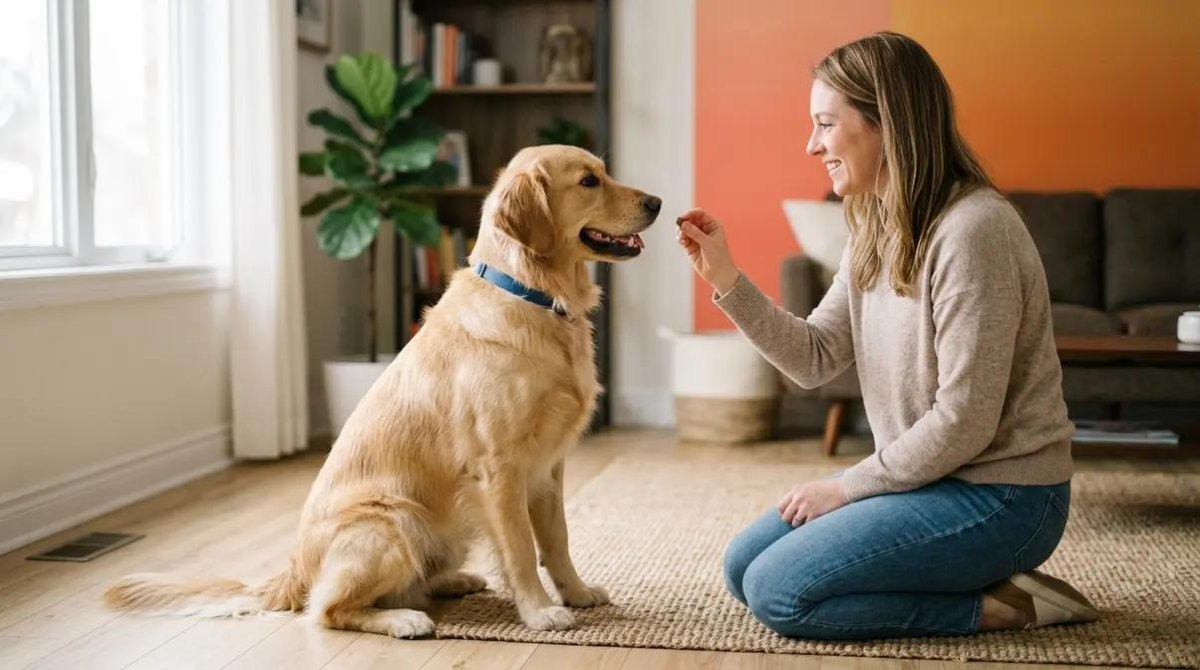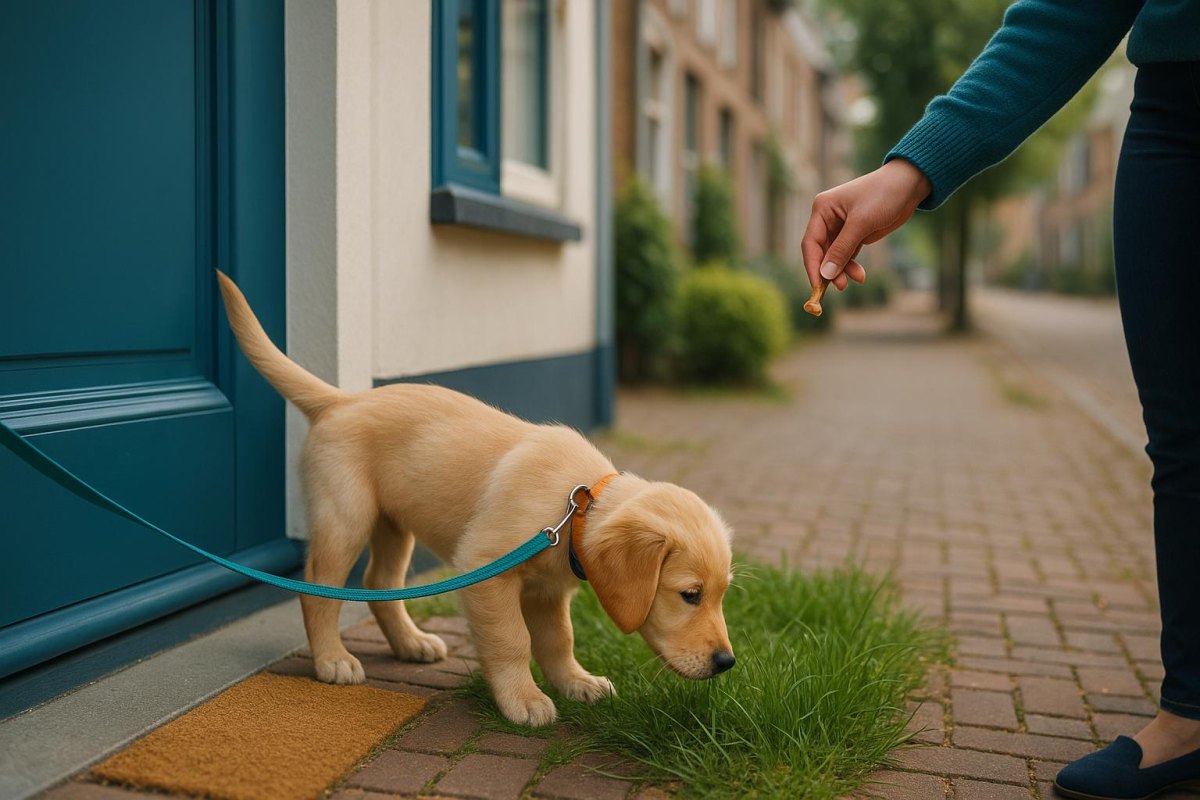
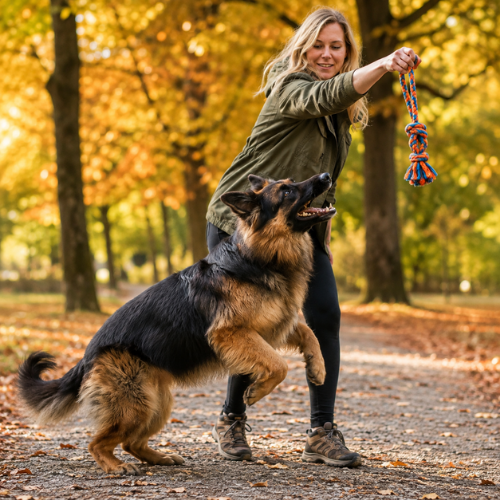
The first time a dog learns to roll over, it usually looks less like a polished trick and more like a confused pancake trying to find its way home. I have taught this behavior to plenty of dogs, and the biggest mistake I see is rushing the movement before the dog understands the pieces. Roll over training works best when we slow down, reward small wins, and make the process comfortable for the dog.
I teach this trick with reward-based methods because dogs learn best when they understand what earns them success. The American Veterinary Society of Animal Behavior recommends reward-based training for canine training and behavior work.
What you need to teach roll over
- A dog who is comfortable lying down
- Small treats or another reward your dog loves
- A quiet space with enough room to move safely
Prepare Your Dog for the Roll Over Trick
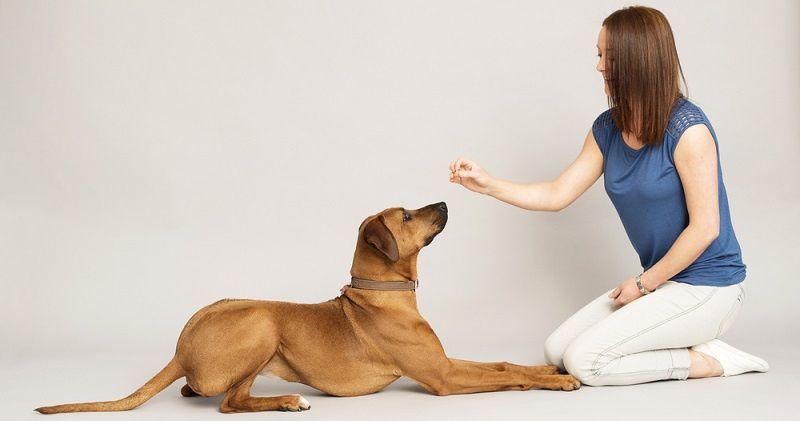
Before I ask a dog to roll, I make sure the environment is helping us. A slippery floor, too much noise, or a dog who is already worried can make this simple trick feel impossible. A calm training setup is where I start because learning happens when your dog feels safe.
I also check that the dog is comfortable being touched and moving into different positions. If your dog suddenly avoids lying down, seems stiff, or shows changes in normal behavior, I recommend checking with your veterinarian before starting new training. I spent years in veterinary clinics, and pain is one of the things we always want to rule out first.
Short sessions are my favorite here. Five minutes of success beats twenty minutes of frustration.
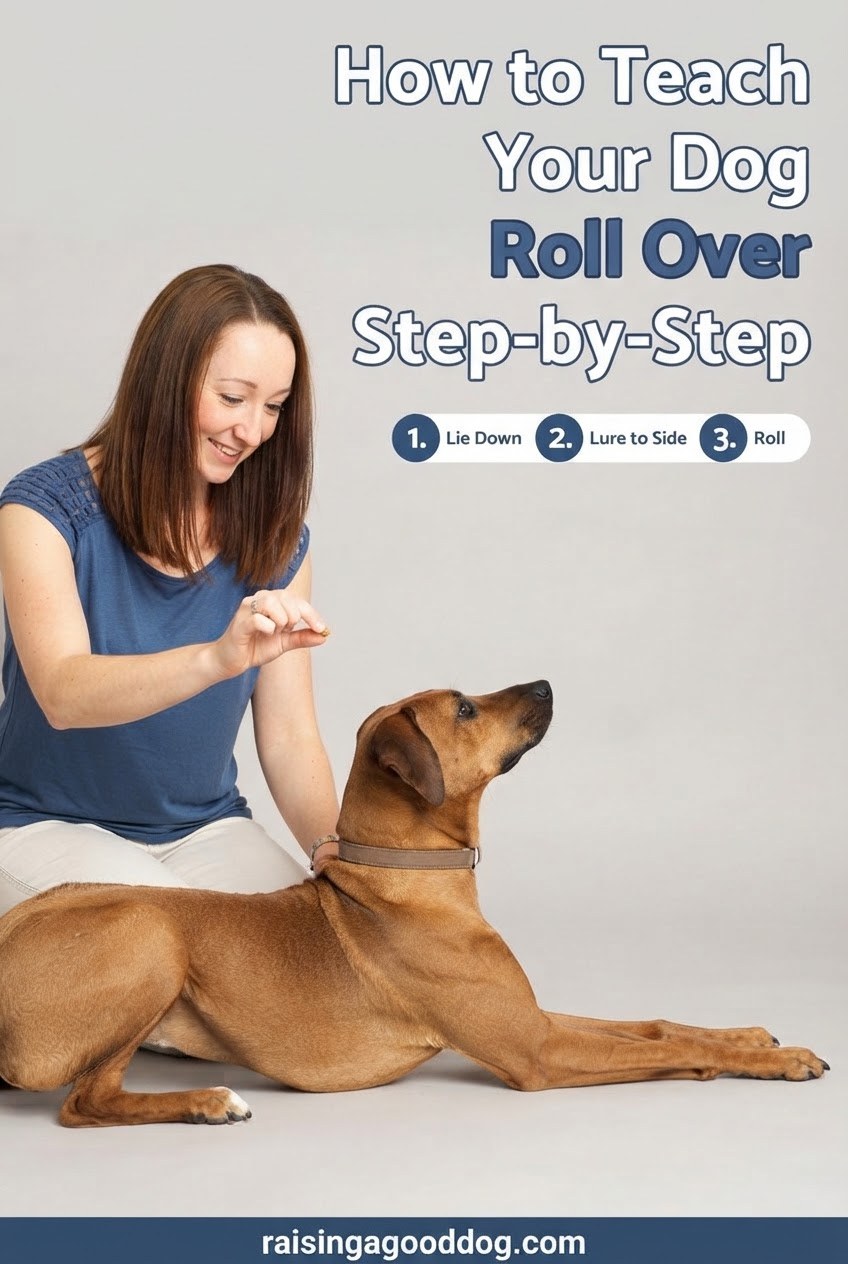
Teach the Down Position Before Rolling
The roll over trick starts with a solid down position. I do not skip this part because the down gives your dog a clear starting point and makes the movement much easier to understand. The American Kennel Club also recommends teaching the down cue before beginning roll over training.
Watch your dog's body language while practicing. A relaxed mouth, soft eyes, and loose muscles tell me the dog is comfortable. A frozen body, tucked tail, or repeated lip licking means I make the exercise easier.
Guide Your Dog Through the Rolling Motion
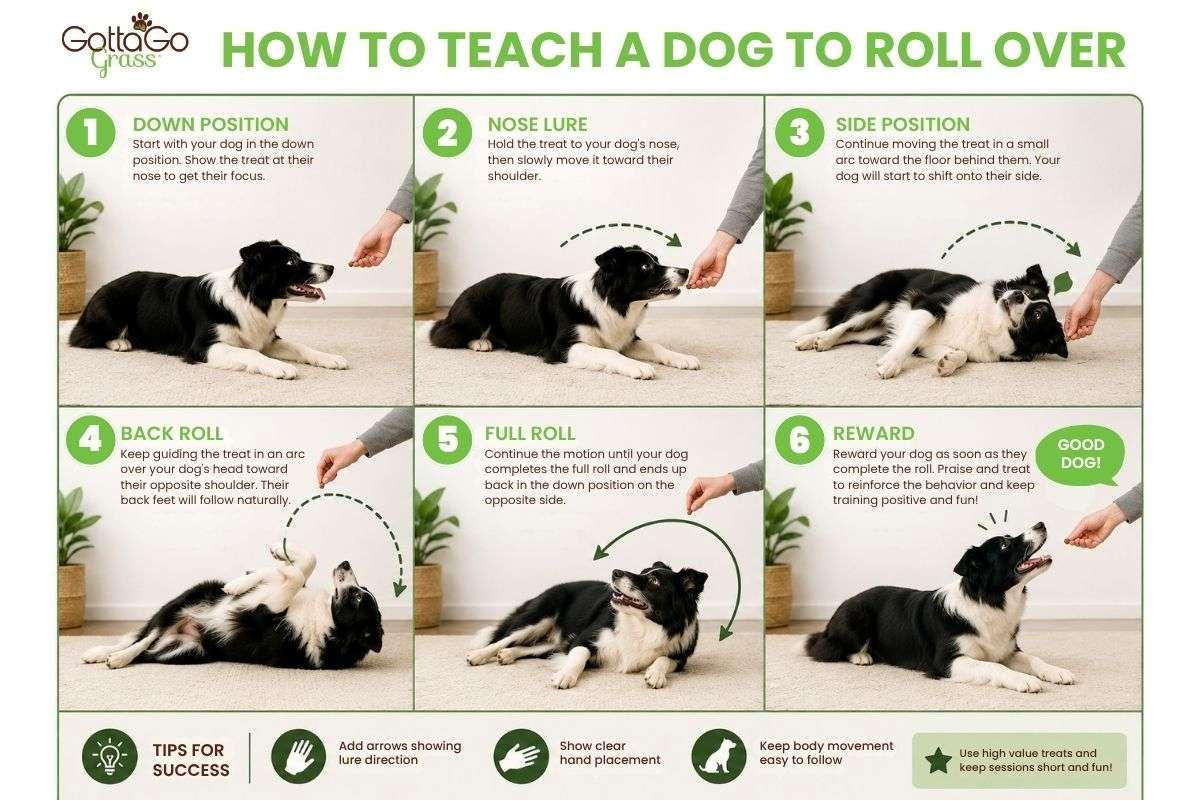
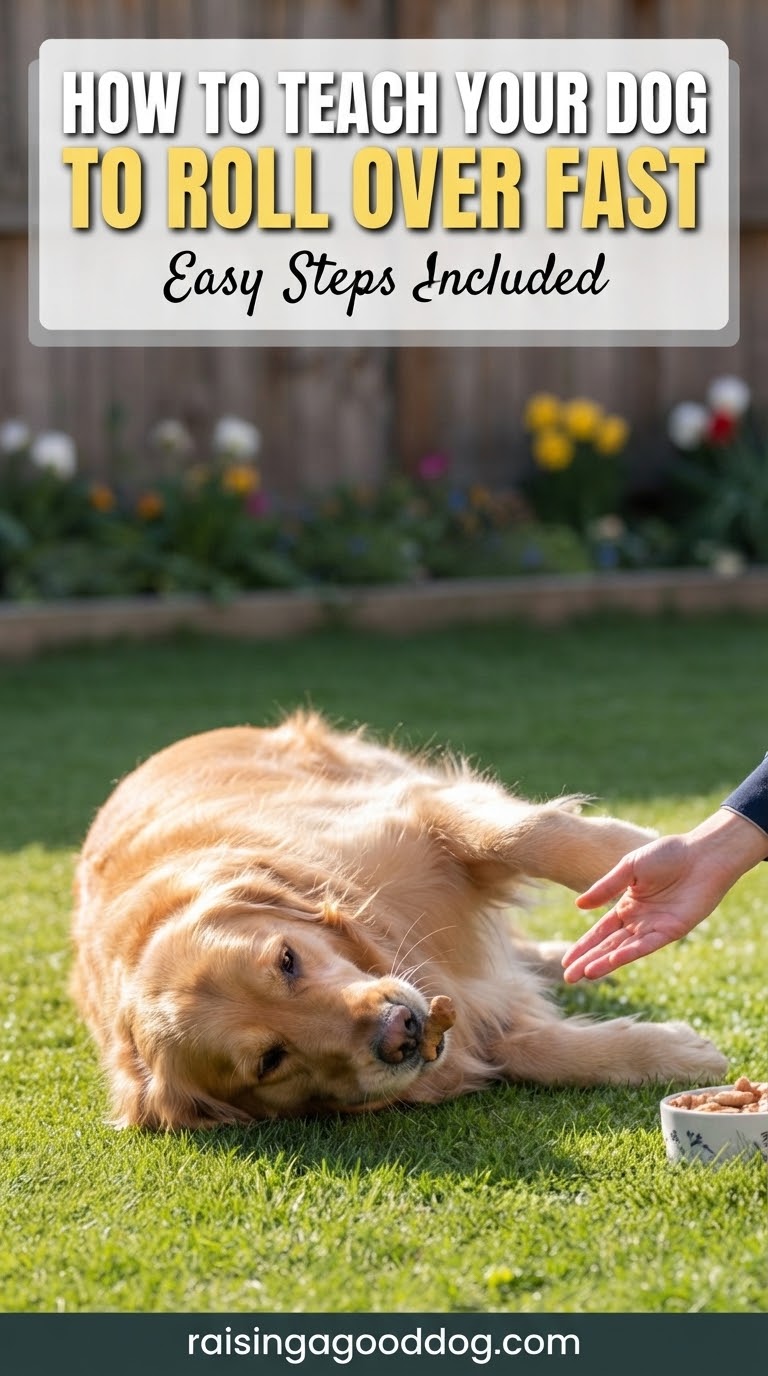
Now comes the part everyone wants to jump to: the actual roll. I use a treat lure and guide the dog's nose slowly toward the shoulder, then across the body. This follows the same basic progression used in many reward-based roll over lessons.
Training tip
If your dog pops up instead of rolling, do not keep repeating the cue. Lower the difficulty and reward the part they can already do.
The rolling motion should feel like your dog is choosing to follow the movement, not being physically placed into position.
Reward and Practice the Roll Over Command
Once your dog is completing the movement, I begin adding the verbal cue. I say “roll over” right before the movement they already understand, then reward after the successful finish. This helps the word become connected to the action instead of becoming background noise.
| Stage | What I reward |
|---|---|
| Beginning | Following the lure and lying on the side |
| Middle | Completing more of the rotation |
| Advanced | Rolling from the verbal cue |
I keep rewards frequent while the behavior is new. The goal is not to test the dog; the goal is to build confidence. Positive practice creates a dog who wants to try again.
Common mistake
Do not repeat “roll over” ten times while your dog is confused. The cue only becomes meaningful when the dog has a clear path to success.
Build a Reliable Roll Over Trick With Regular Practice
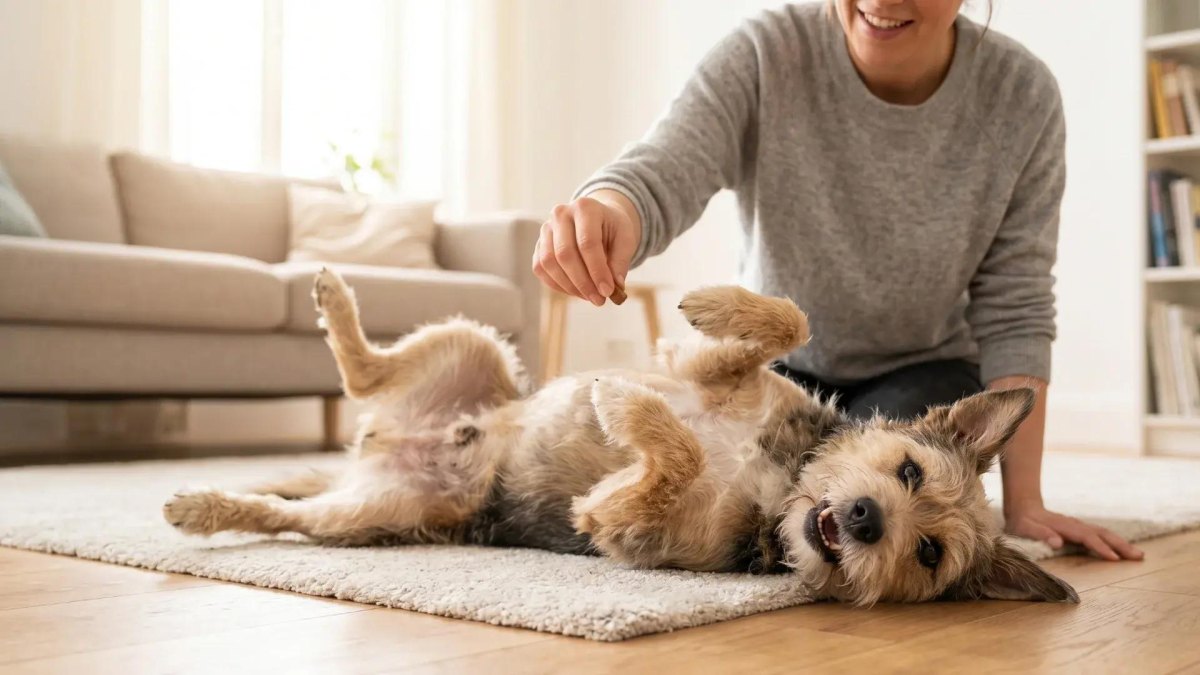
A reliable trick is built over weeks, not one afternoon. I usually tell clients to practice a few minutes at a time and expect some uneven days. Dogs are not machines, and even my own Bruno has days where his enthusiasm is stronger than his attention span.
Benefits of regular practice
- Builds communication between dog and handler
- Improves confidence with body movement
- Keeps training enjoyable
Things to avoid
- Practicing when your dog is tired or stressed
- Forcing physical positions
- Expecting perfection immediately
Consistent repetition matters more than long sessions. A dog who happily offers two good rolls today is learning more than a dog pushed through twenty frustrated attempts.
Keep the trick fun, finish while your dog is still enjoying it, and remember that the best training sessions are the ones where both ends of the leash leave feeling successful.
More Pinterest Visuals