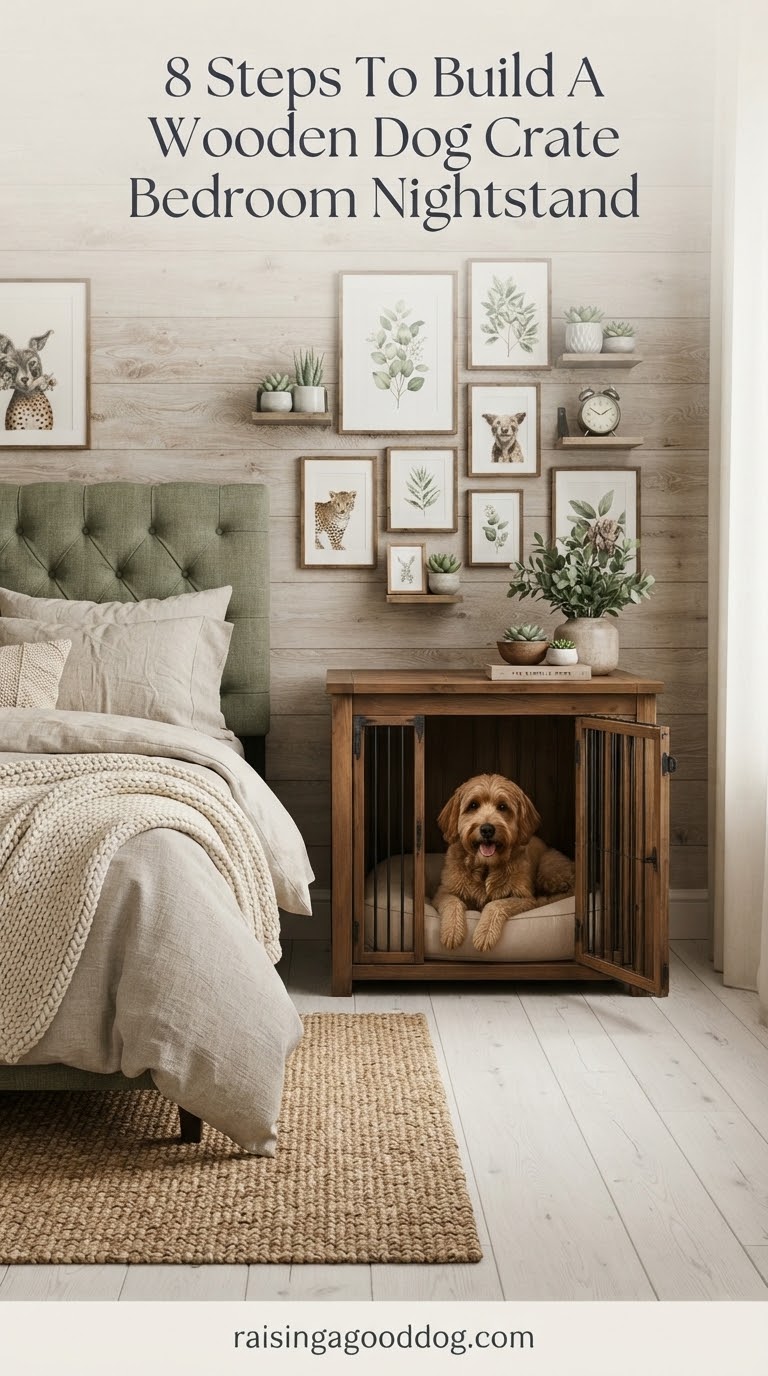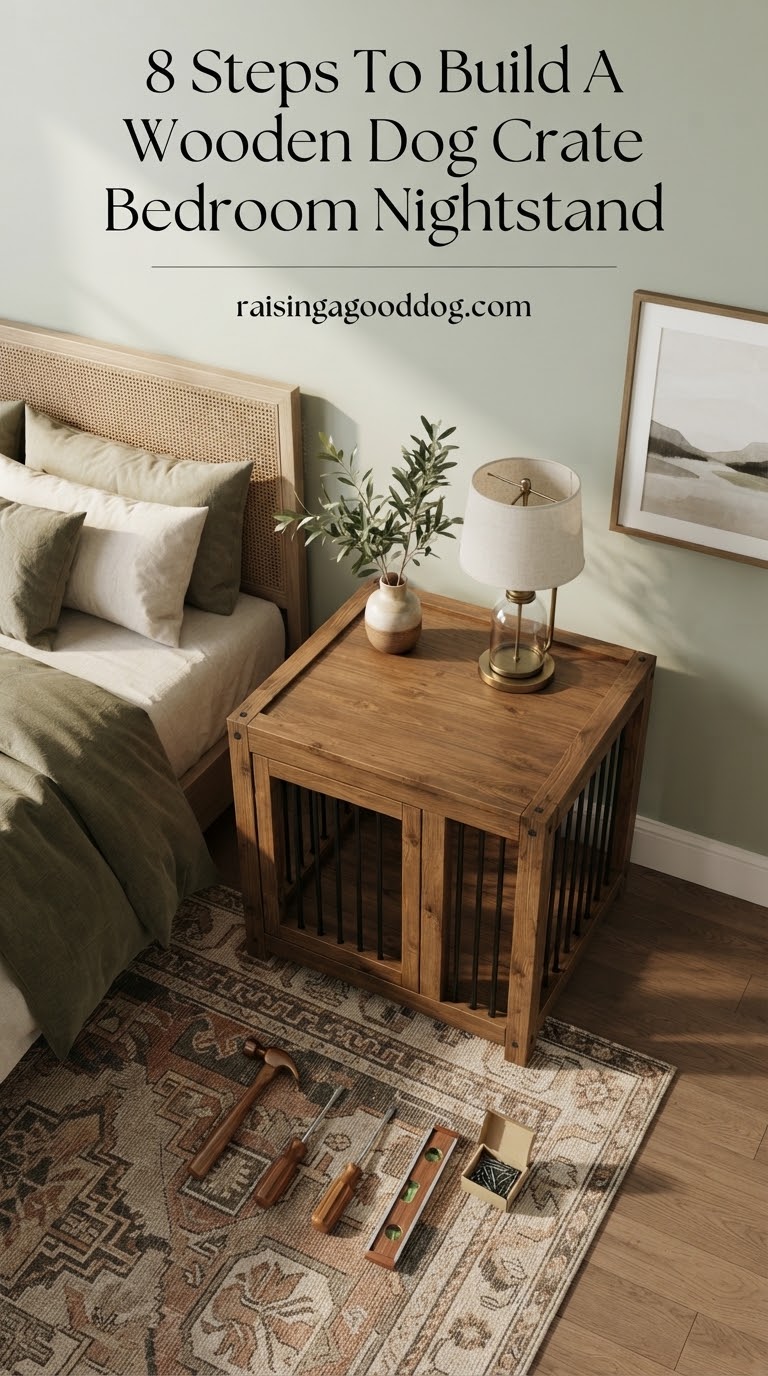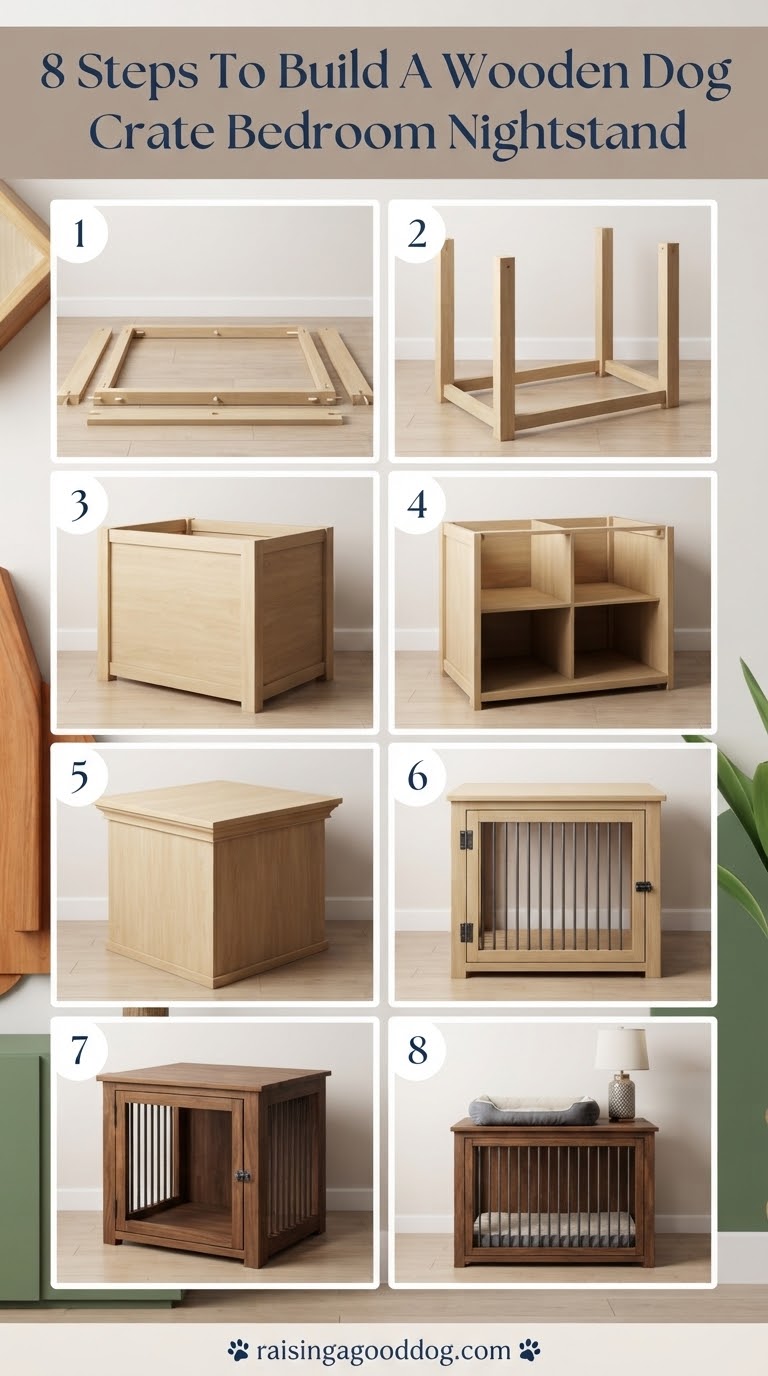

I get asked about crate furniture almost as often as I get asked about leash pulling, usually from clients who've finally accepted their dog sleeps better near them but don't want a wire cage next to a nice bed frame. A wooden crate nightstand can absolutely work for both of you — but the parts that make it good furniture and the parts that make it a safe, trustworthy den for your dog aren't always the same parts, and I've seen beautiful builds fail because nobody checked the second half.
Measure the Space — and the Actual Dog — First
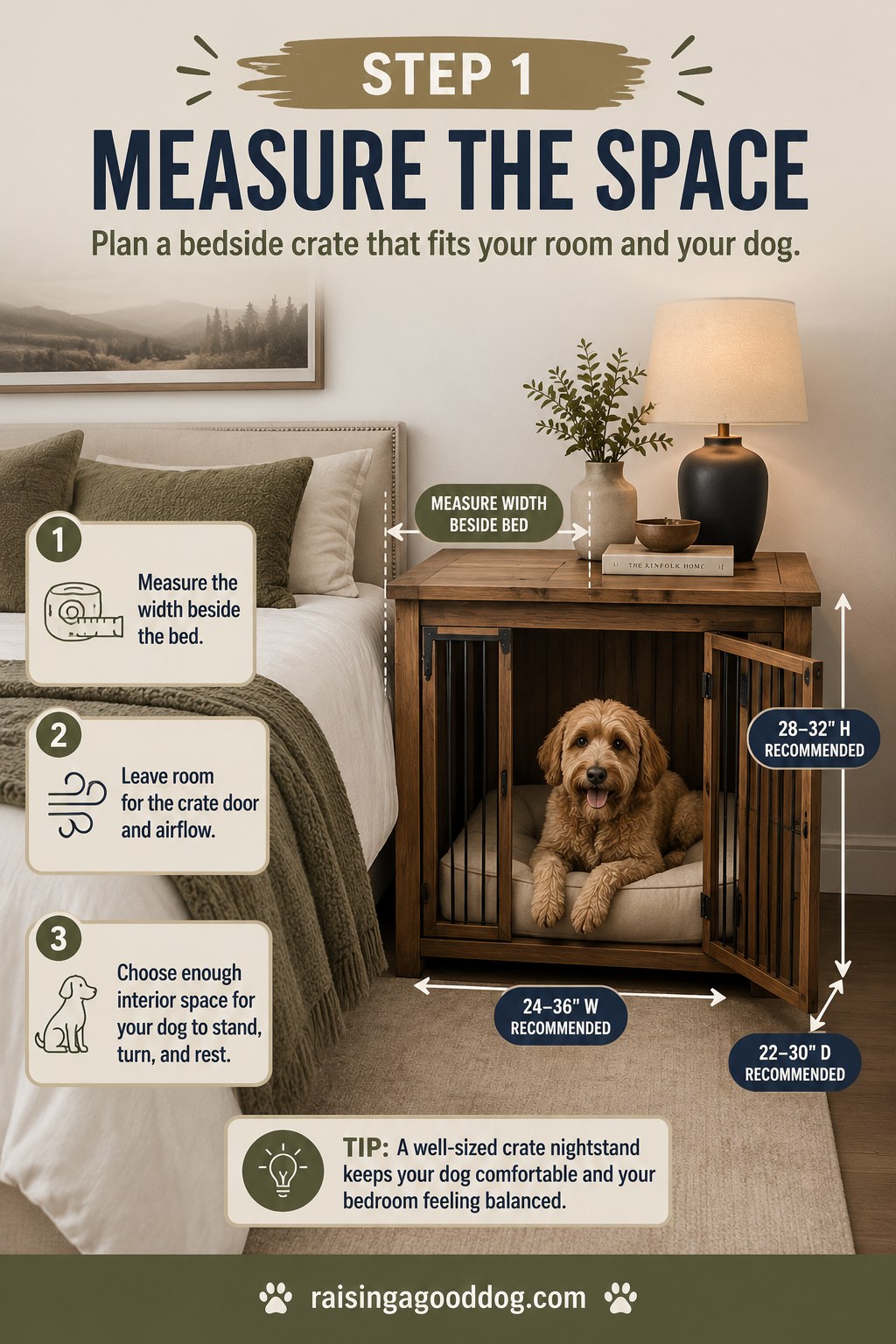
Before anyone picks a stain color, I want the dog's real measurements in hand: nose-to-tail length lying flat, and height at the shoulder while standing. A crate that looks right beside your bed can still be too short for a dog to stand without ducking, and that's a comfort problem you won't notice until he's already avoiding it.
- Width: roughly your dog's length plus a few inches, not doubled — a den should feel snug, not like a spare room.
- Height: enough to stand fully upright without lowering the head.
- Airflow: gaps or slats on at least two sides so it doesn't turn stuffy with the door shut.
Bruno's crate at home is sized almost exactly to him at eight — a big shepherd doesn't need a suite, he needs a good fit near where I sleep.
Picking a Finish That's Actually Safe for a Mouth
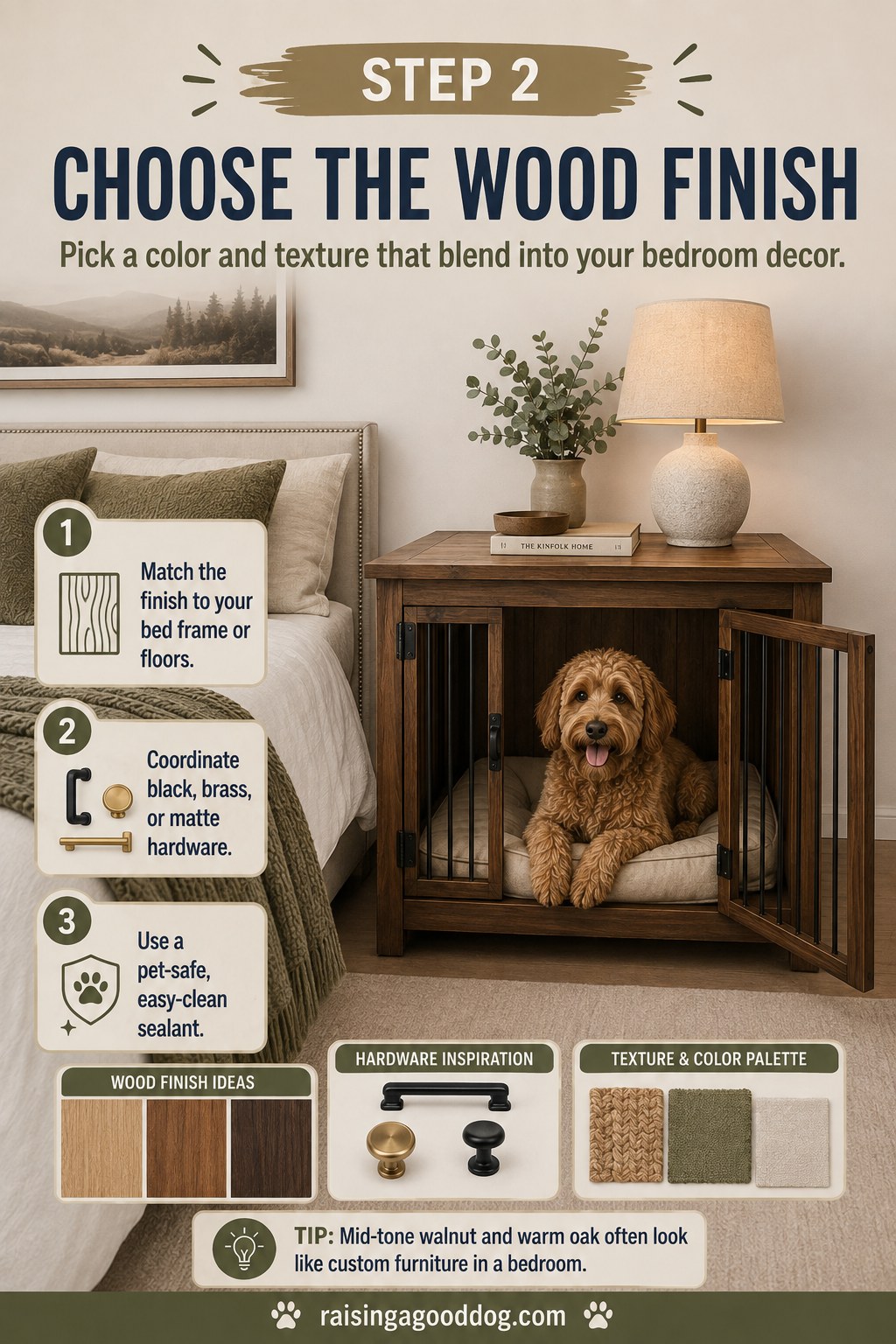
Matching the wood tone to your bed frame is the fun part. The part I care about more is what's on the surface: a pet-safe, non-toxic sealant that's fully cured before your dog ever gets near it, because puppies and plenty of adult dogs will mouth a bar or a corner out of boredom or teething, and that's normal, not naughty.
I've watched a client's build get chewed raw at the front bars within a week — not because the dog was destructive, but because a young dog left alone with an unsealed edge will always find it.
Ask the maker (or check the listing) specifically about food-grade or water-based finishes, and steer clear of anything glossy that hints at heavy varnish. Coordinated black or matte brass hardware is a nice touch, but it means nothing if the wood underneath isn't something you'd be fine with your dog licking.
A Frame Has to Survive Real Dog Behavior, Not Just a Showroom Photo
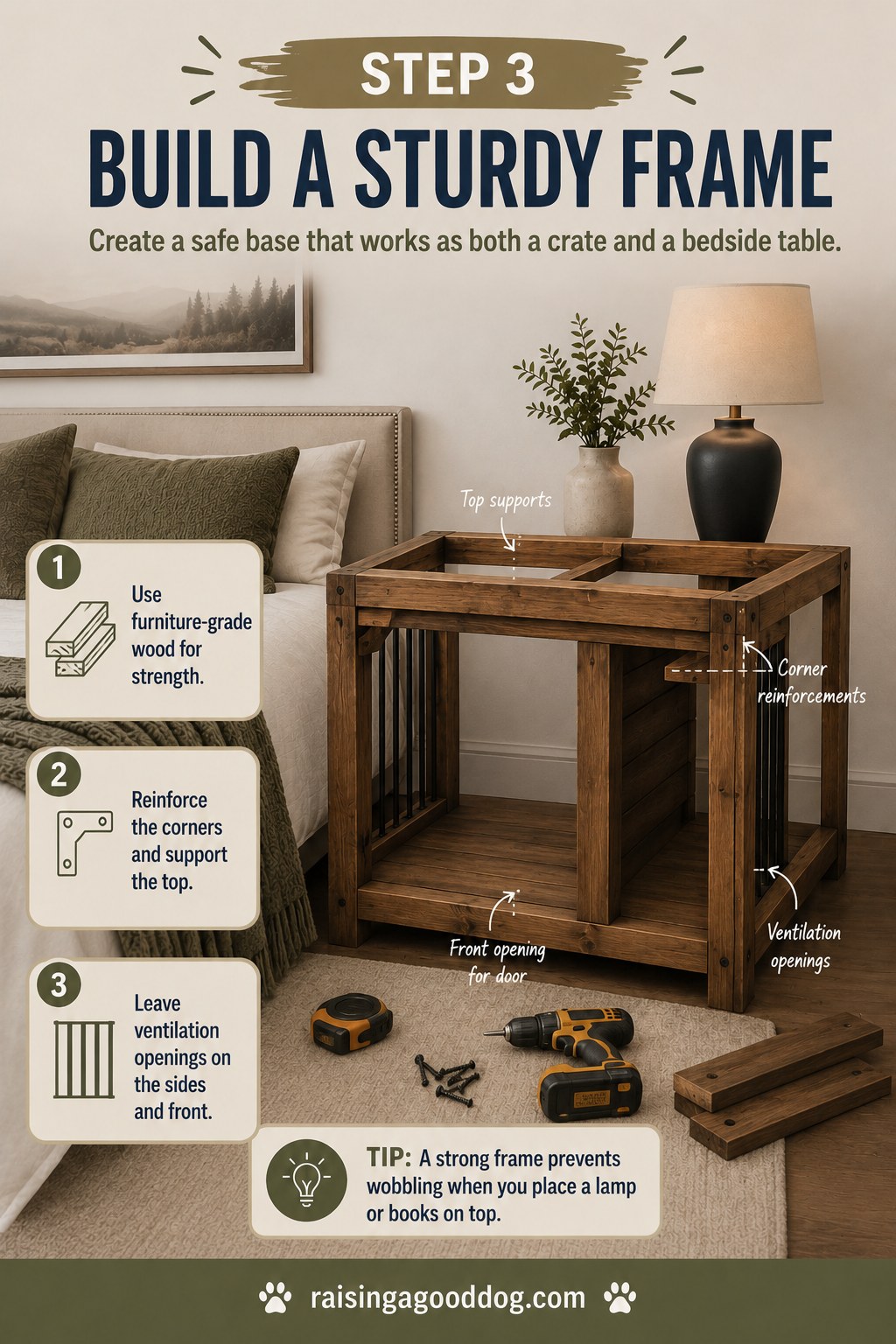
Furniture-grade wood and reinforced corners aren't decoration talk, they're a stability issue. Dogs lean into crate walls, dig at bedding, and shift their weight against the sides when they're settling — a frame that wobbles under that isn't going to hold up, and a crate that moves when a dog is inside it can genuinely spook a nervous one.
- Reinforced corners keep the top from sagging once you set a lamp or books on it.
- Ventilation openings on the sides and front matter more than people expect — dogs regulate temperature through panting, and a boxed-in frame with no airflow gets uncomfortably warm fast.
This is the step I'd least want to skip on a DIY build, because a startled dog inside a shaky crate can turn one bad moment into a crate he won't reenter for weeks.
The Door Is Where Most Crate Training Actually Goes Wrong
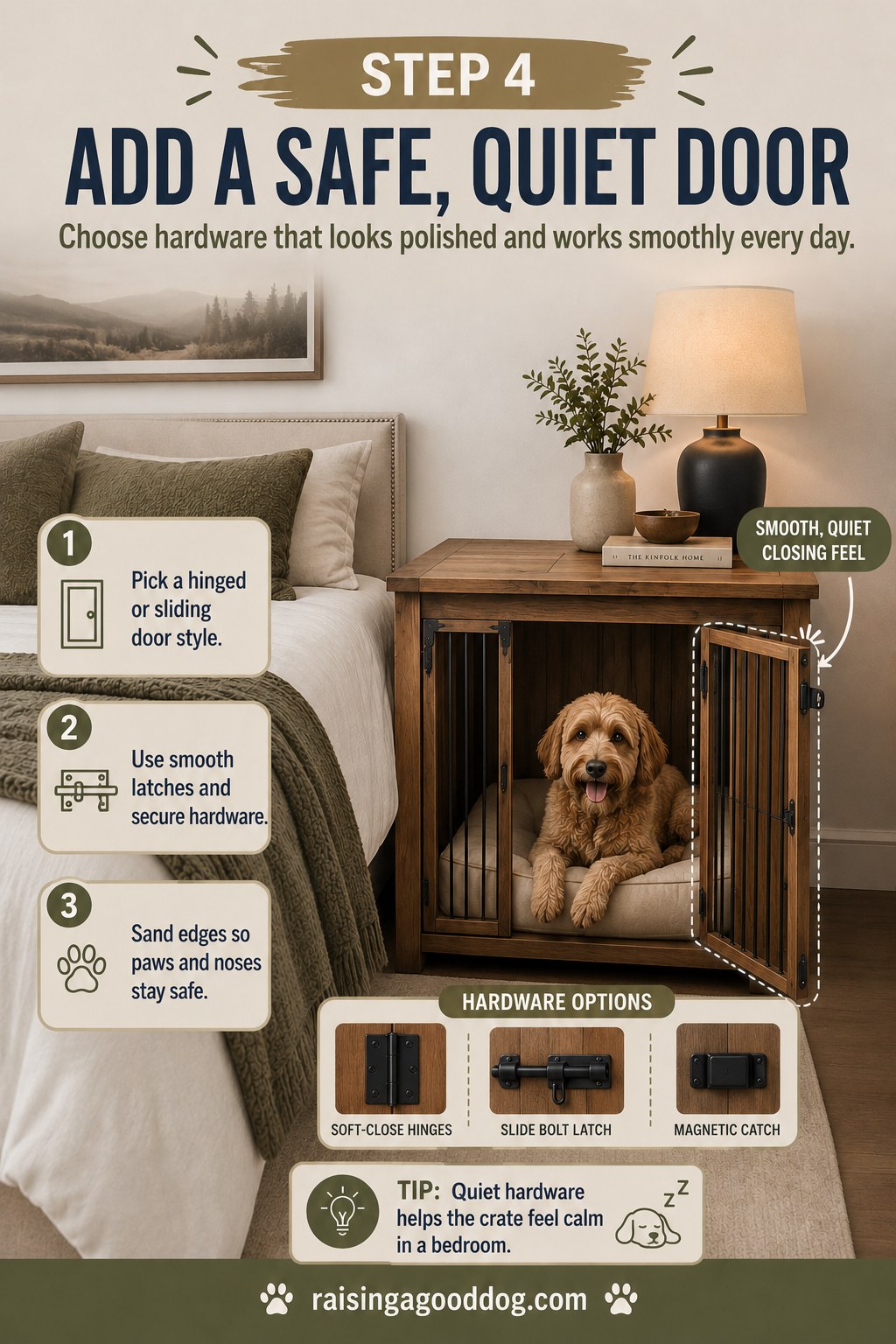
I've had more clients undone by a loud latch than by anything in a training plan. A door that clangs shut or a slide bolt that scrapes can create a startle response fast enough to poison weeks of positive crate association — and dogs generalize that fear to the whole piece of furniture, not just the noise.
- Soft-close hinges or a magnetic catch keep the closing sound low and predictable.
- Smooth, secure latches that won't pop open under a curious paw.
- Sanded edges everywhere a nose or paw makes contact daily.
If you're building rather than buying, test the door yourself, eyes closed, a dozen times, before your dog ever hears it.
Making the Top Earn Its Keep
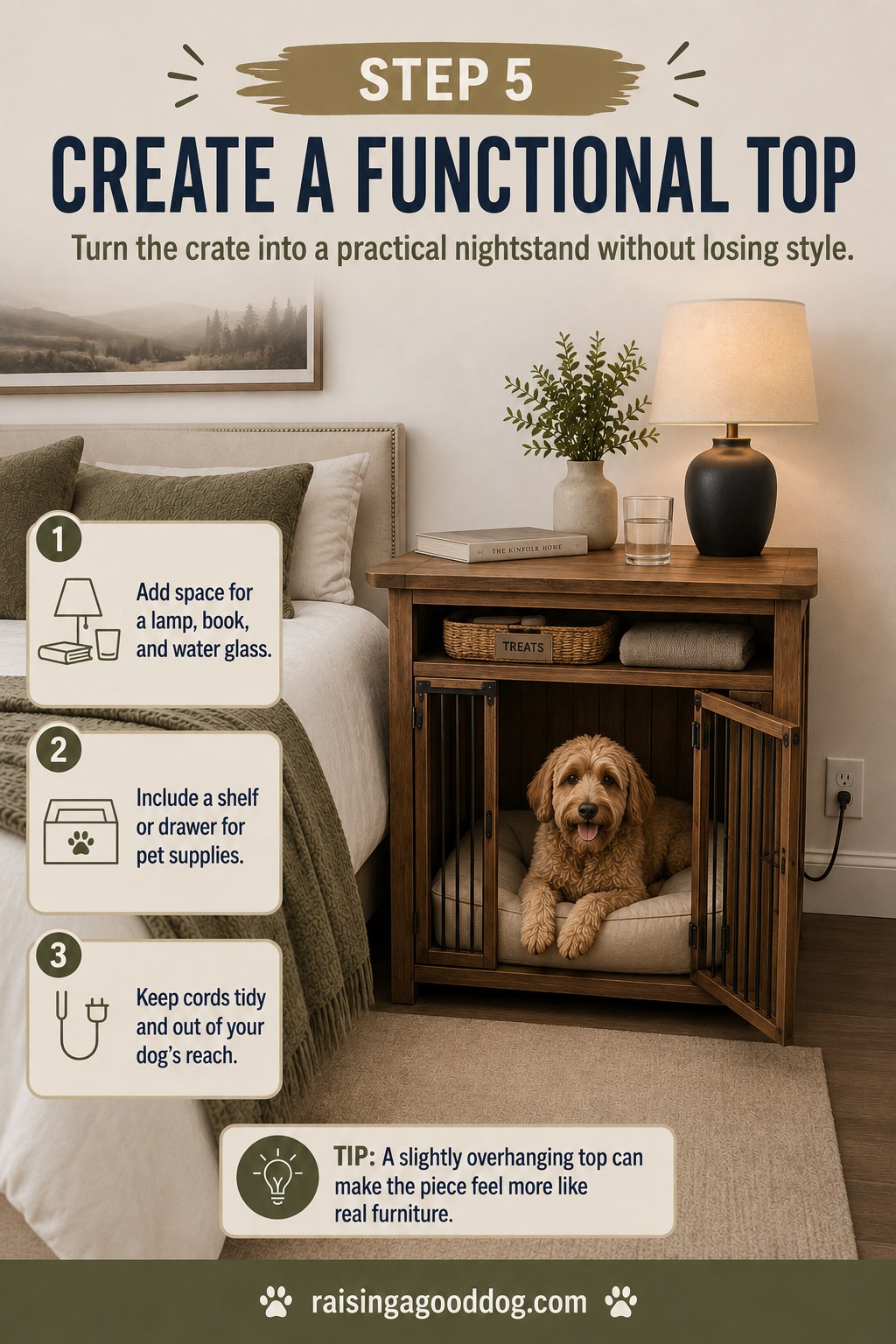
Once the crate is sound, the surface on top is where it stops looking like a cage and starts looking like your nightstand — lamp, book, water glass, a small drawer or shelf for supplies. My only real rule here is practical: keep cords tied up and out of reach. A lamp cord dangling near crate bars is an easy target for a bored dog, and it's an easy fix to prevent, not a training problem to solve after the fact.
A shelf underneath is a good spot for a spare leash, poop bags, or a stash of treats — as long as it's positioned where you can reach it and your dog, from inside the crate, can't.
The Inside Is the Only Part Your Dog Actually Grades
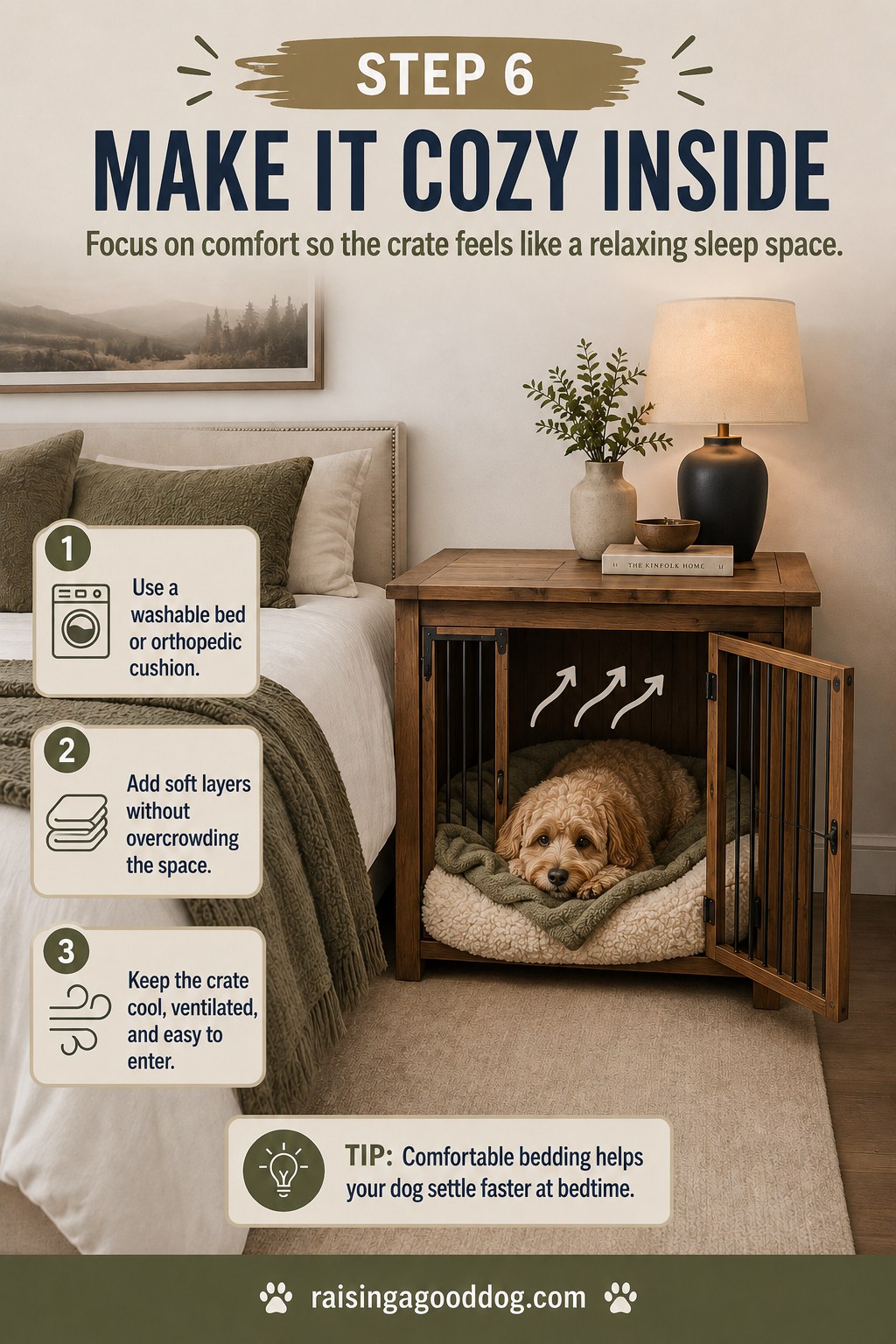
Everything outside this step is for you. The inside is for him, and it's simpler than people expect: a washable bed or orthopedic cushion, soft layers without overcrowding the space, and enough clearance to turn a full circle without bedding bunching against the walls.
For older dogs — Bruno's eight now, and his joints tell on him some mornings — an orthopedic base isn't a luxury, it's the difference between a crate he settles into and one he avoids. Keep the interior cool and easy to enter; a crate that traps heat or requires an awkward duck to get inside will get used less, no matter how nice it looks from the doorway.
Styling It So the Crate Disappears Into the Room
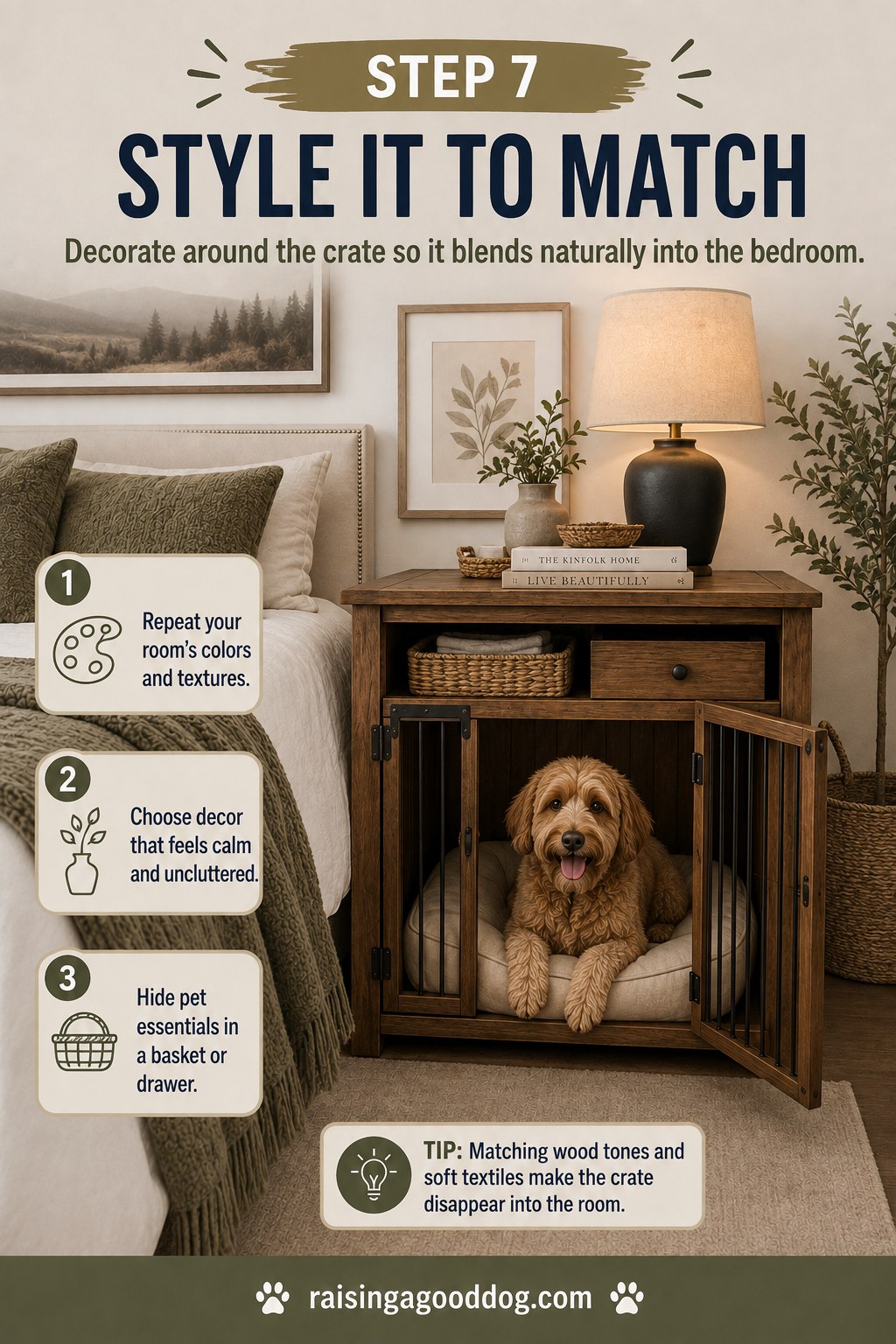
Repeating your room's colors and textures around the crate is genuinely more than an aesthetic choice — a calm, uncluttered space around a resting spot tends to lower general household arousal, and that matters for dogs who startle easily or who are still building trust in a new environment.
- Matching tones so the eye slides past it rather than fixating on “cage.”
- Hidden essentials — leashes, bowls, treats — tucked into a basket rather than left visible and cluttered.
- Soft textiles nearby that echo the bedding inside, which helps it read as one cohesive resting zone rather than two competing pieces of furniture.
The Safety Check I'd Do Before My Dog Ever Steps In
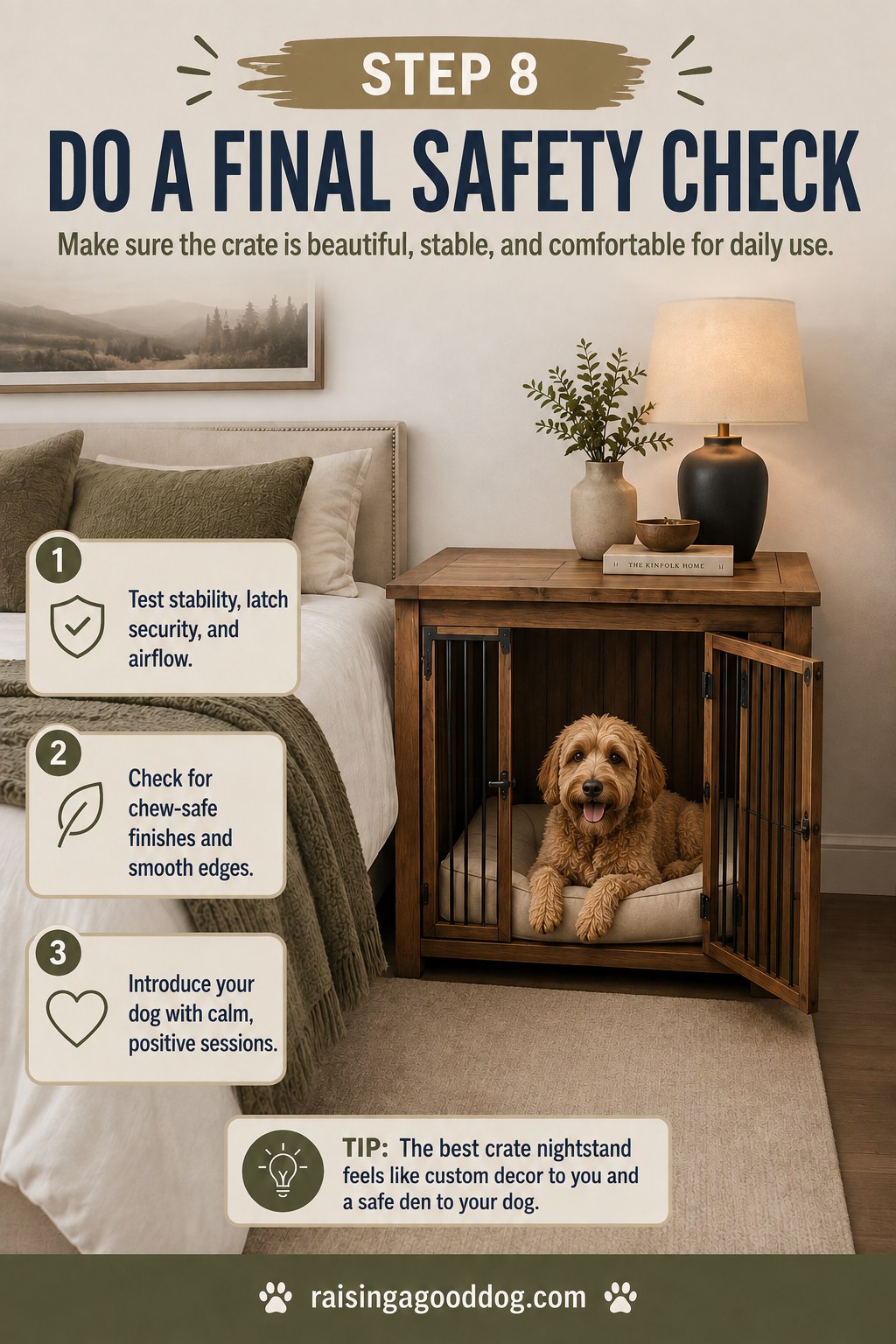
Before I'd let any dog I work with settle into a new crate, I'd want to physically test it myself: rock the frame for wobble, pull on the latch, check for rough edges where a nose or paw makes contact, and confirm airflow with the door closed.
Then comes the part that actually determines whether this furniture becomes a den or just an expensive box: introduce it slowly, door open, treats scattered inside, no pressure to enter and definitely no closing the door on day one. This is the management-first piece I say in almost every crate post — a gorgeous build with a rushed introduction fails just as often as a bare wire crate does. Give it days, sometimes a couple of weeks, before you judge whether he's settled.
None of this replaces the slow, boring, treat-scattered work of actually introducing the crate — that part is still on you and it still takes as long as it takes. But get the sizing, the finish, and the hardware right first, and you're not fighting the furniture while you do it.




Frequently Asked Questions
How do I know if the crate is actually the right size for my dog?
Measure your dog lying flat, nose to tail, and standing at the shoulder. The crate should let him stand fully upright and turn around without his body pressing the walls — snug enough to feel den-like, not so tight it's uncomfortable.
Is real wood safe if my dog is a chewer?
Wood itself is generally fine, but the finish matters — ask specifically about a pet-safe, non-toxic sealant that's fully cured. If you have a known chewer, expect to supervise the first few weeks regardless of the furniture.
My dog has never used a crate before — will a nicer-looking one help him accept it faster?
Not on its own. The introduction process is what builds the association, not the aesthetics. Go slow, use treats, leave the door open at first, and expect this to take days to a couple of weeks rather than one evening.
What if my dog seems distressed inside the new crate even though it looks comfortable?
Treat that as information, not stubbornness — back up a step in the introduction, shorten sessions, and rule out anything painful with your vet if the distress is sudden or intense. Crates aren't mandatory; there are other ways to give a dog a safe resting space if this one truly isn't working for him.