I see the same thing every week: a puppy who can focus beautifully in the kitchen but forgets their own name when a leaf blows past outside. That is normal. Focus is a skill we build, not a personality trait some dogs magically arrive with.
I start with short sessions, easy wins, and a setup where the puppy can succeed. Reward-based training helps dogs understand which behaviours earn good things, and it keeps the conversation between you and your puppy clear.
Name Recognition and Attention Training
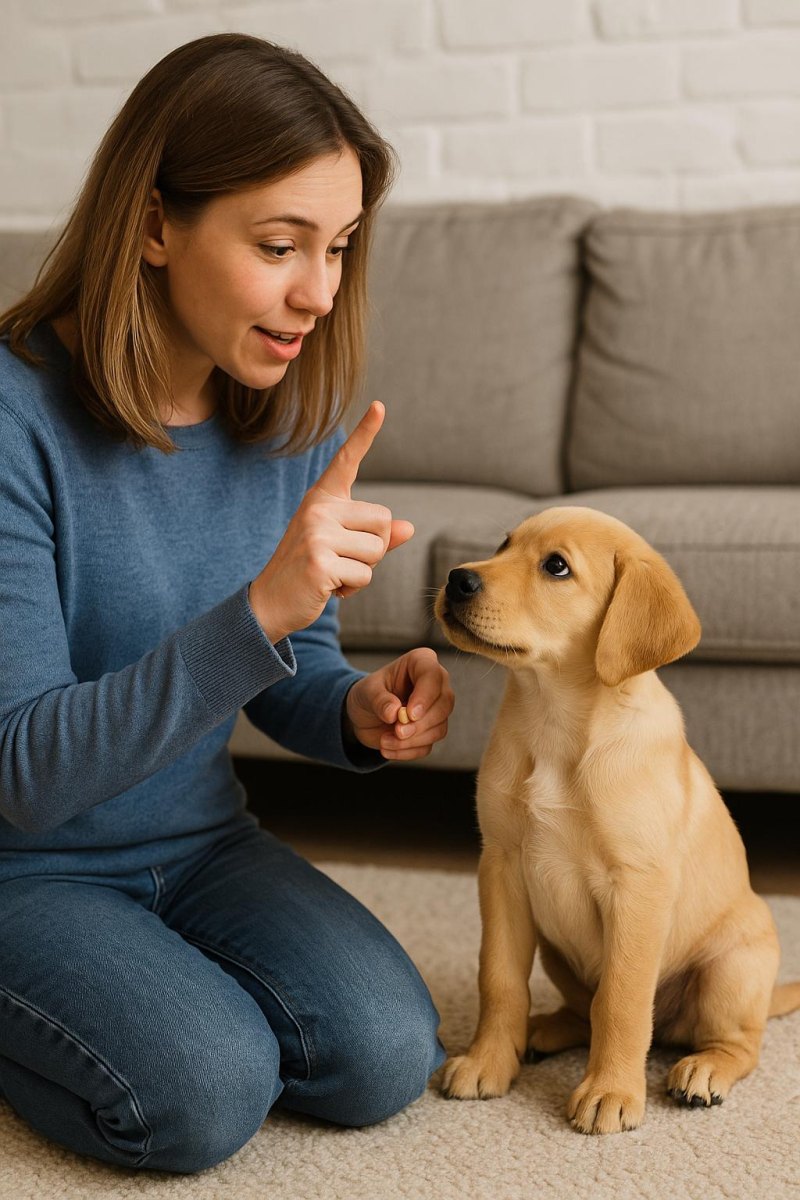
Before I ask a puppy for complicated behaviours, I want their name to mean one simple thing: turn toward me. The name game is the foundation for attention because a puppy who hears their name and checks in is ready to learn.
I practise this in quiet places first. Say the name once, reward the head turn, and stop before your puppy gets bored. If your puppy ignores you, I make the environment easier instead of repeating the cue ten times. That tiny adjustment prevents the name from becoming background noise. Short sessions win here.
- Say. Use your puppy's name in a cheerful voice when they are not already looking at you.
- Reward. Mark the moment they turn toward you and give a small reward.
- Build. Add mild distractions only after the response is reliable indoors.
Trainer tip
I never use a puppy's name as a warning. I want it to predict connection, not trouble.
Eye Contact and Focus Building Exercises
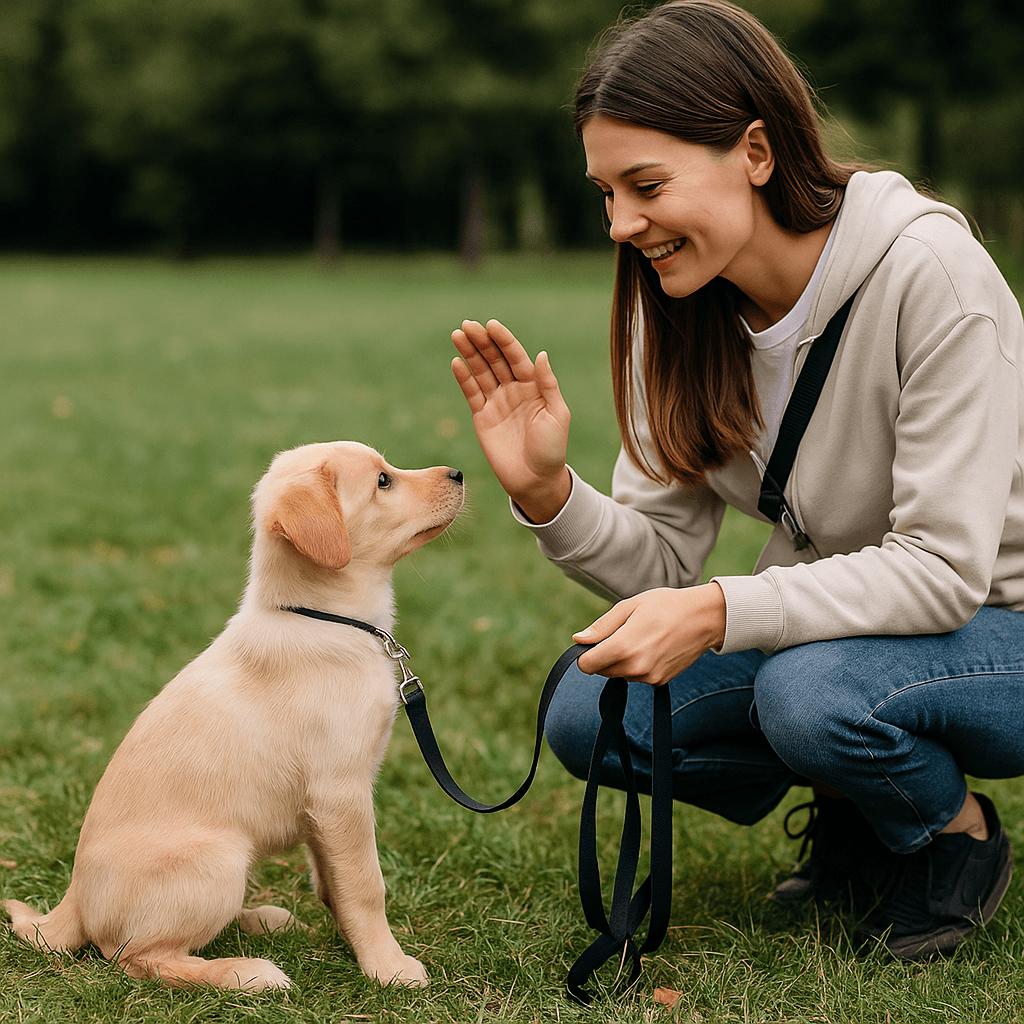
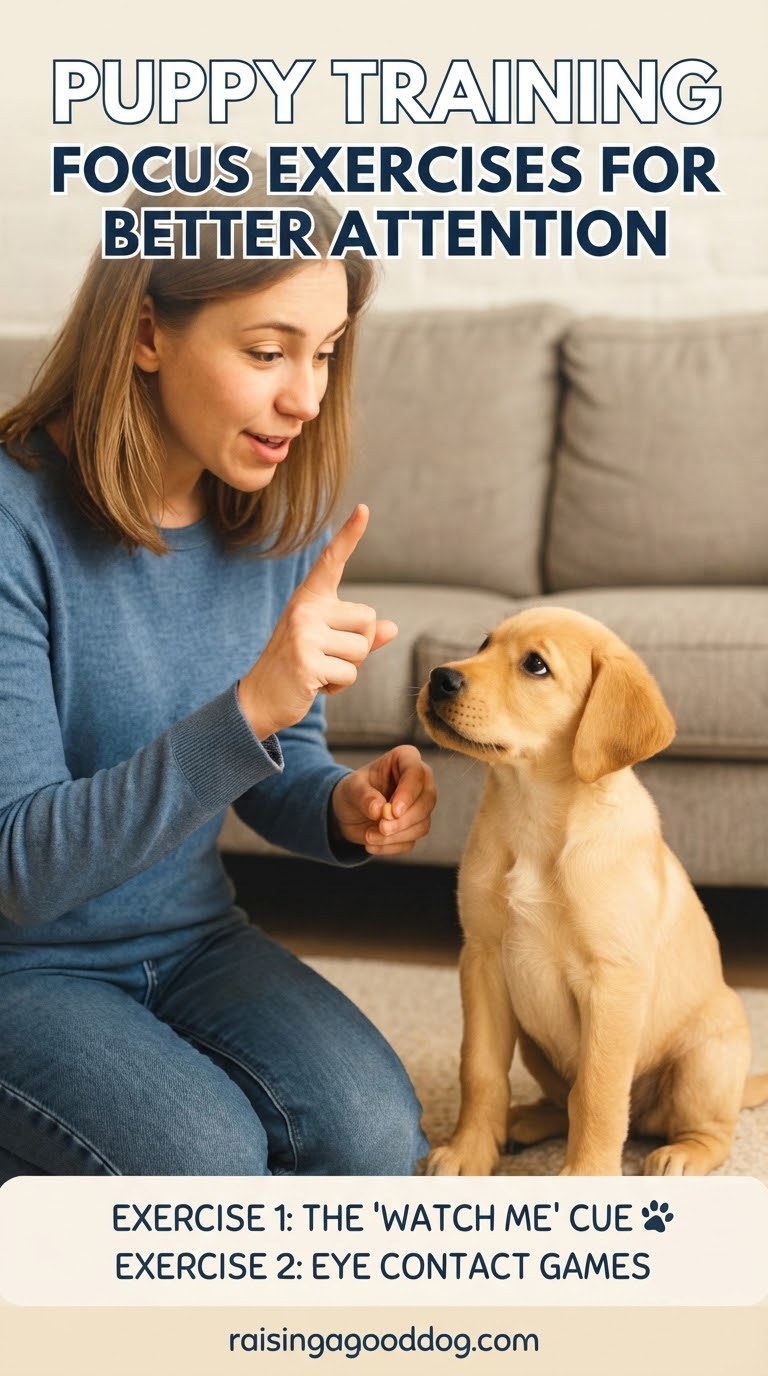
Eye contact is not about making a puppy stare at you. I am looking for a voluntary check-in: the moment your dog says, "Are we doing something together?" Reward-based eye contact exercises teach that looking at you can be worthwhile.
I begin in a boring room because puppies are not robots. If Bruno had been asked to focus on me next to a busy trail when he was young, he would have made the very reasonable choice to focus on squirrels instead.
Watch the body language
If your puppy freezes, turns their head away repeatedly, stops taking treats, or shows tight facial muscles, the exercise is too difficult right now.
Impulse Control and Patience Practice
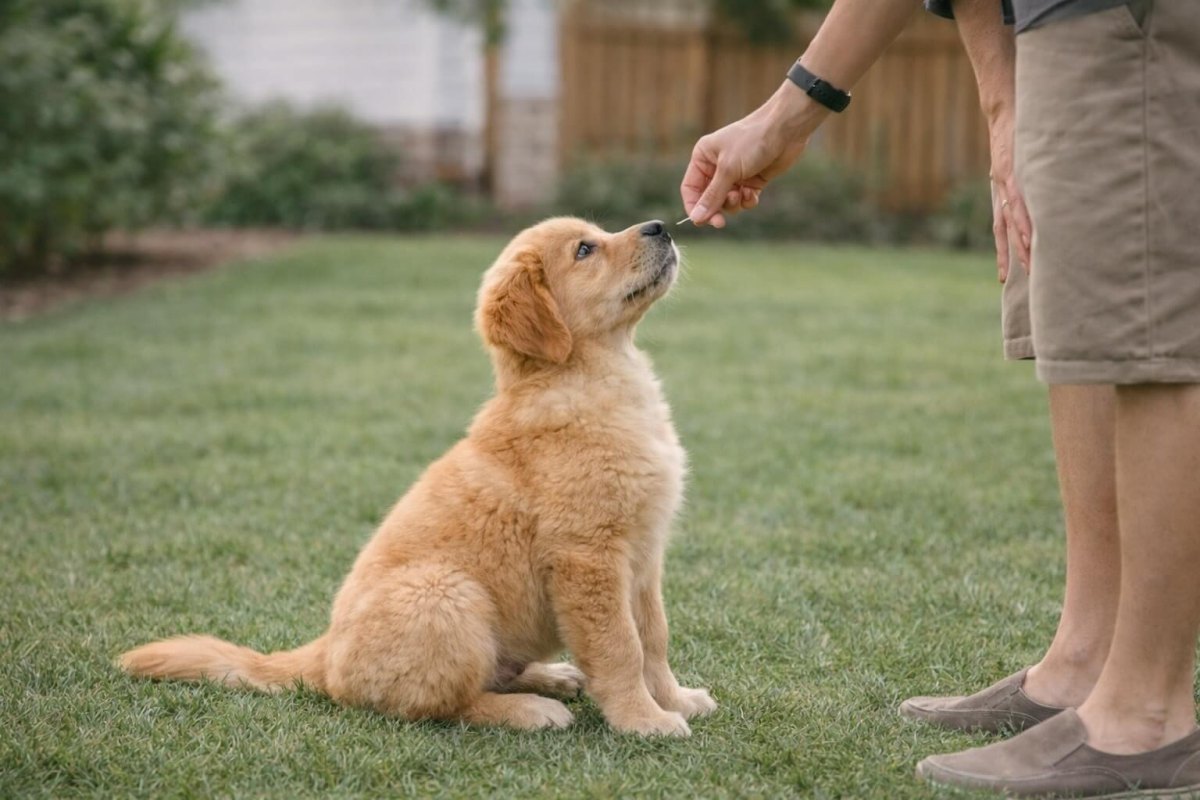
A puppy who grabs the toy, launches through doors, or jumps at dinner is not being stubborn. They are practising the fastest way to get what they want. I teach impulse control by showing them that calm choices also work.
This takes weeks and months, not one afternoon. I like simple daily moments: waiting for a food bowl, pausing before a toy starts, or choosing four paws on the floor before greetings.
| Exercise | Skill built |
|---|---|
| Wait for food | Patience around rewards |
| Leave it game | Choosing not to chase |
| Pause during play | Emotional regulation |
Common mistake
Do not make the challenge harder because your puppy failed once. Lower the difficulty and give them a chance to succeed.
Distraction Training for Better Concentration
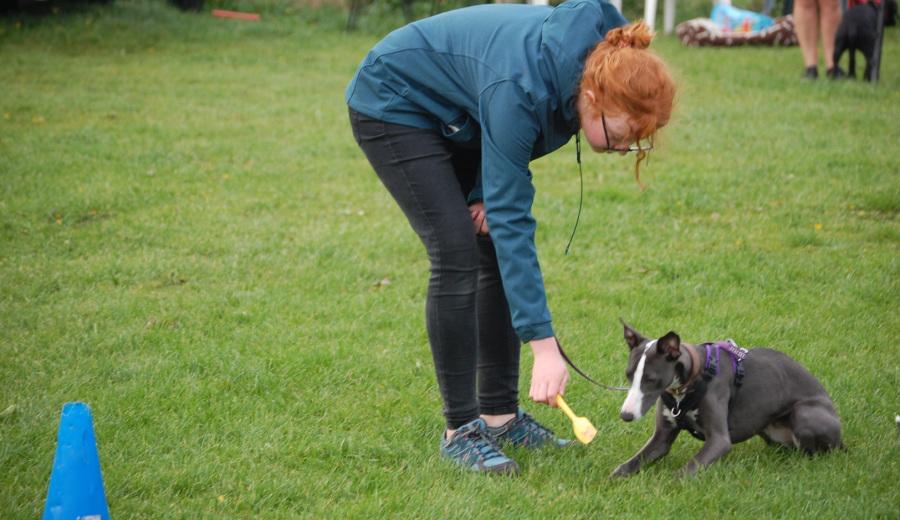
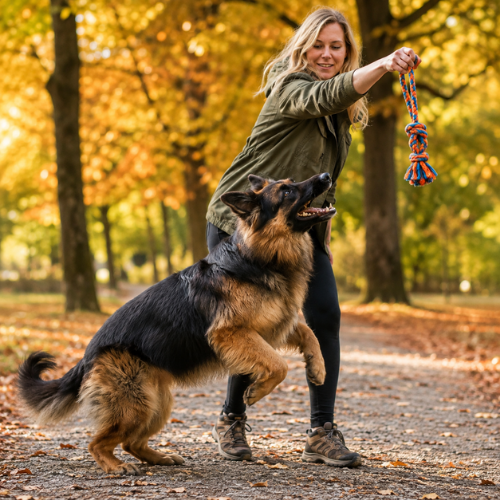
The park is where many owners discover their puppy has apparently forgotten every lesson they learned at home. I have been there. The problem is usually not disobedience; it is that the environment changed.
I build distraction training gradually. A puppy who can focus in the living room may need many smaller steps before focusing near dogs, bicycles, or exciting smells. The same principle applies in recall and attention work: add distractions after the behaviour is strong in easier places.
My setup rule
- Train below your puppy's stress limit.
- Increase one difficulty factor at a time.
Recall Games for Mental Focus
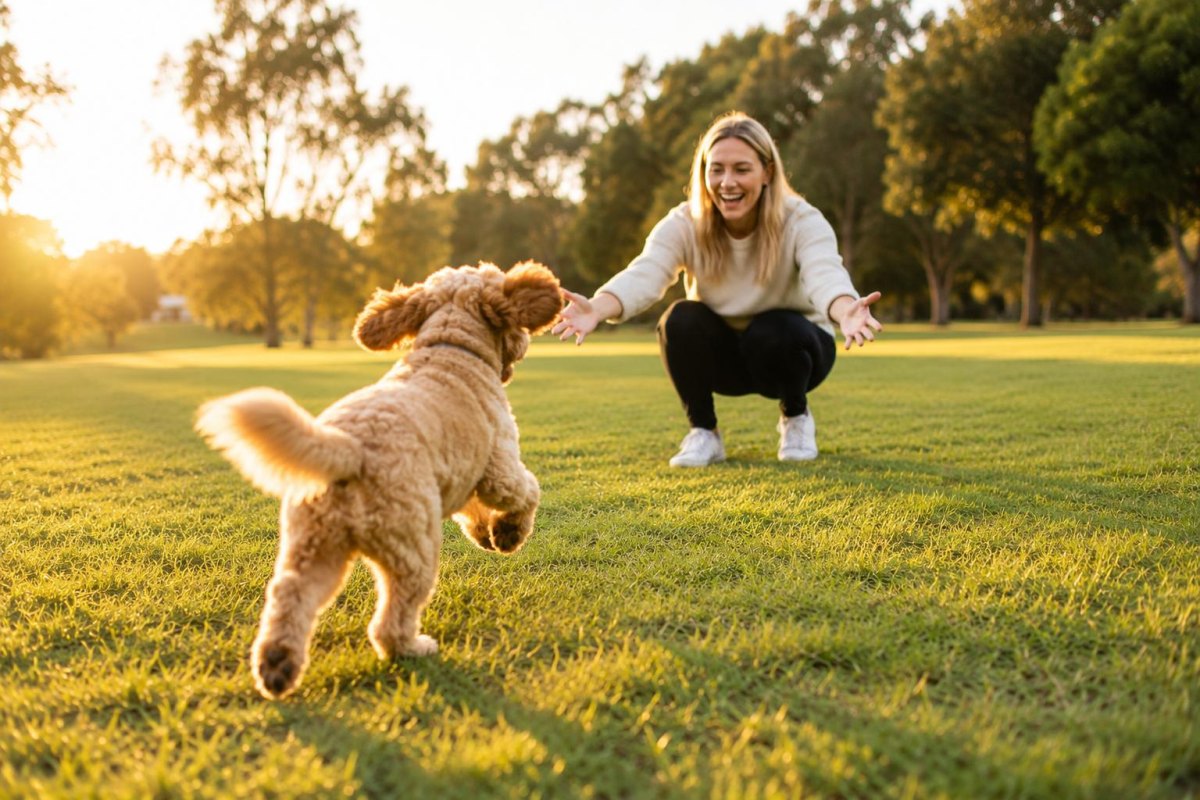
Recall is one of my favourite focus games because the puppy is choosing to leave distractions and reconnect with you. I do not start with a field full of smells; I start where success is likely and build from there. Reliable recall is created through many positive repetitions.
My favourite games include calling between two people, hiding and letting the puppy find me, and rewarding enthusiastic check-ins. If a puppy ignores the cue, I do not punish the return. Coming back should always remain safe and rewarding.
Helpful recall habits
- Reward fast responses.
- Practise in controlled environments.
Things that slow recall
- Calling only when fun ends.
- Testing too much too soon.
Puzzle and Problem-Solving Activities
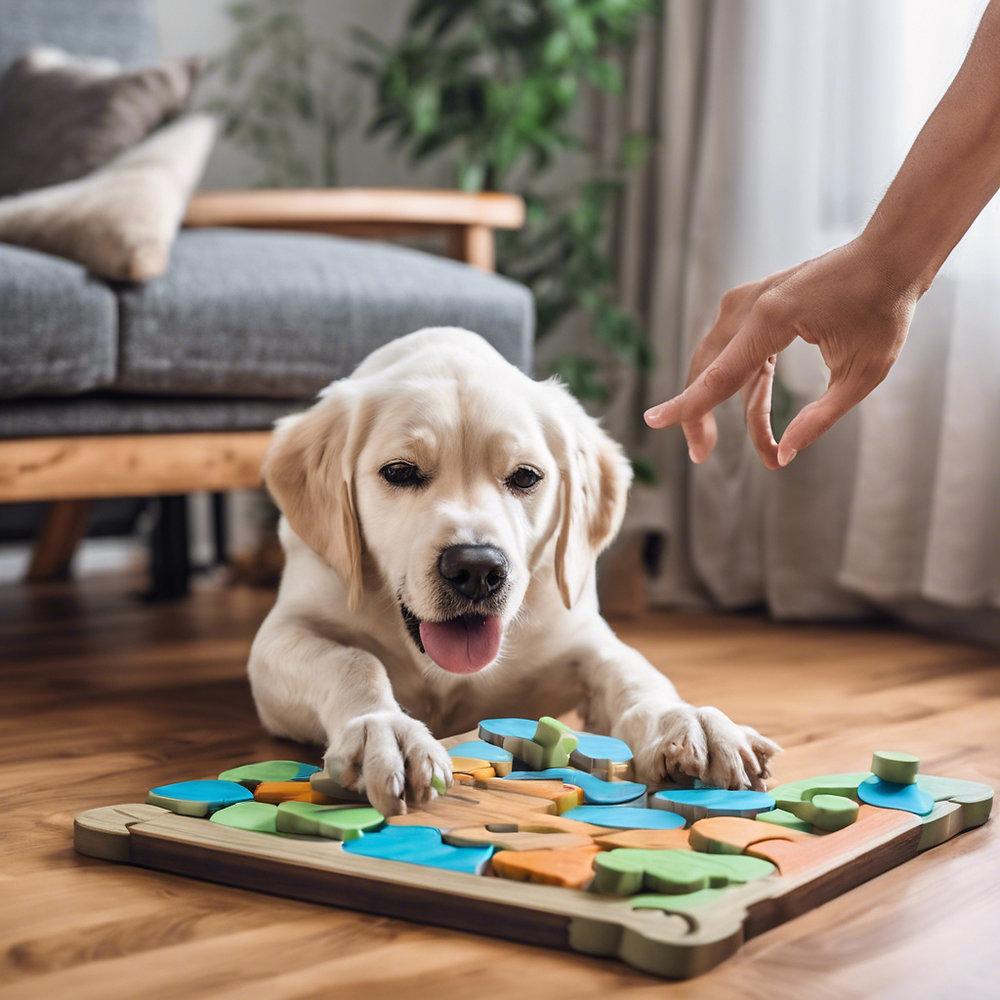
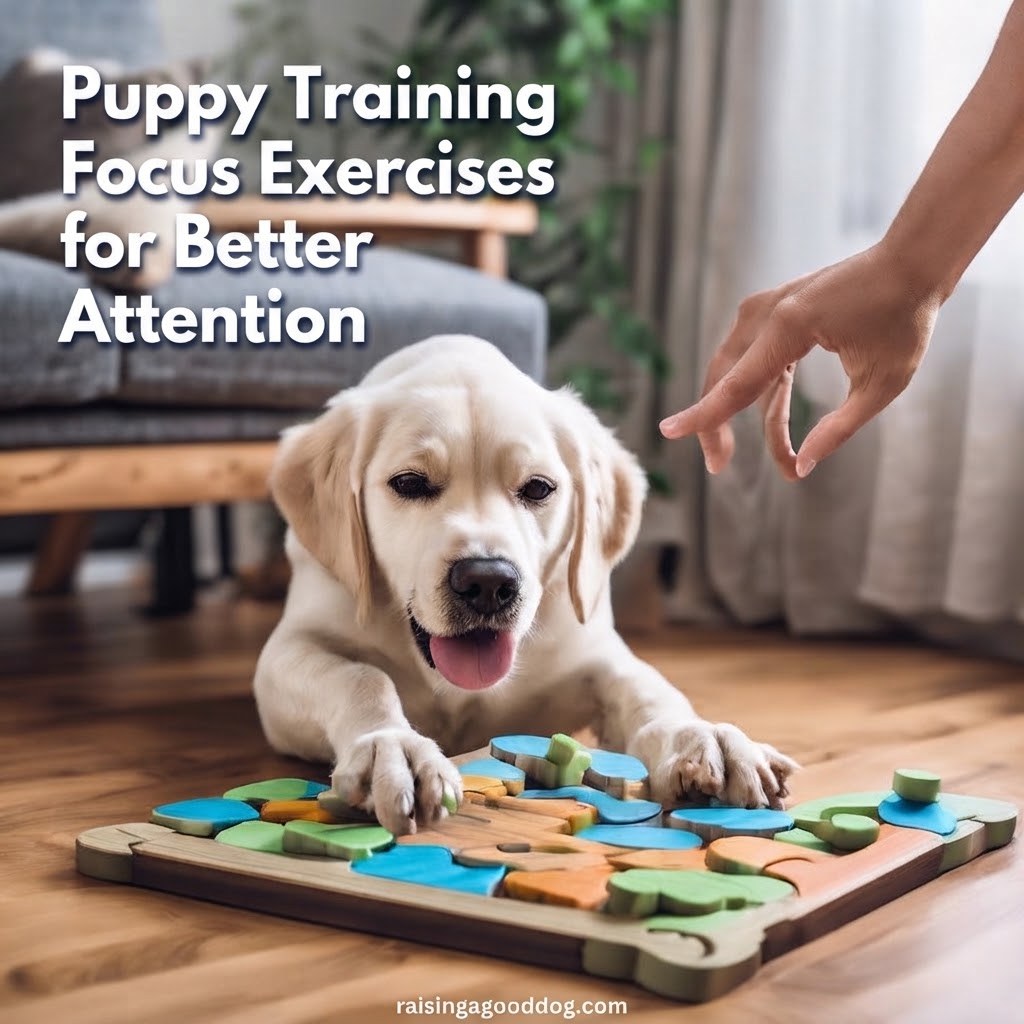
Mental work is not a replacement for training, but it is a wonderful way to give a busy puppy an appropriate job. Puzzle games encourage sniffing, thinking, and persistence instead of inventing their own entertainment with your shoes.
I like activities that let puppies experiment safely: food puzzles, simple scent games, and beginner problem-solving tasks. The goal is not perfection. The goal is building a puppy who learns that trying calmly is valuable.
5–10 minutes
A useful starting length for many focused puppy enrichment sessions
A small game I use often
I hide a few treats around an easy room and let the puppy search. Sniffing lowers the pressure, and the puppy practises staying engaged without needing constant direction.
More Pinterest Visuals