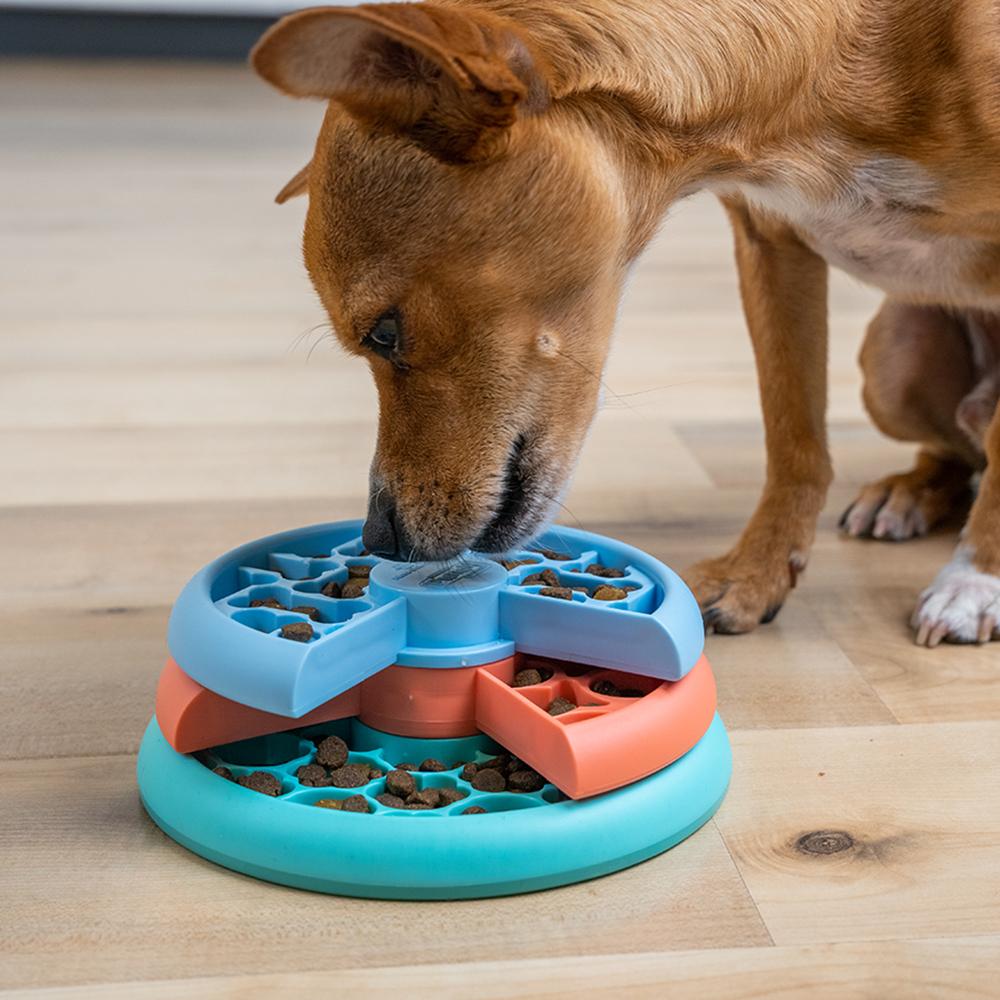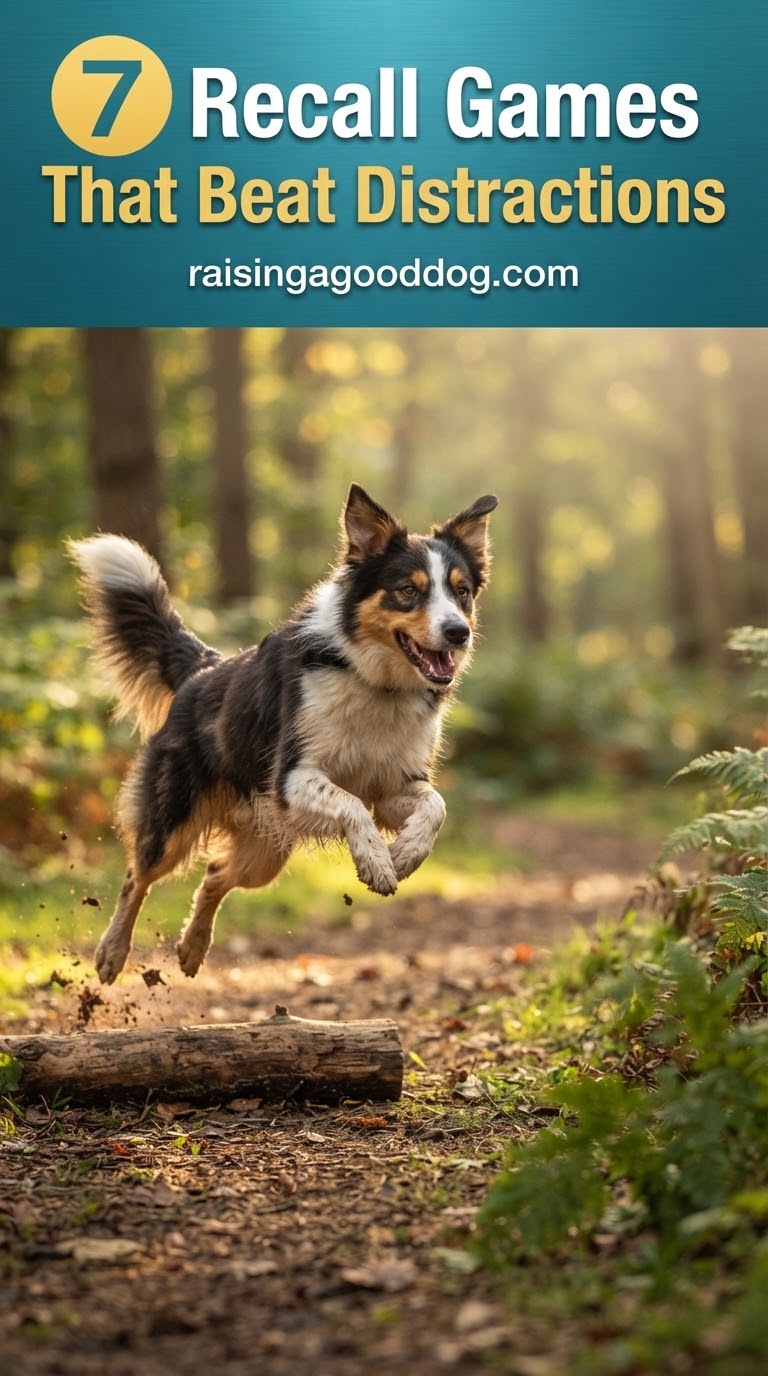
Recall games get pitched like a magic trick — toss a treat, dog comes running, problem solved. Then you take that same game to the park, a squirrel shows up, and your dog looks at you like they’ve never heard the word ‘come’ in their life. I see this constantly in group class: a beautiful indoor recall that evaporates the second real distraction shows up. The seven games below aren’t tricks — they’re a ladder, from boring-safe to genuinely distracting, and the order you climb it in matters more than the games themselves.
Treat Toss Return
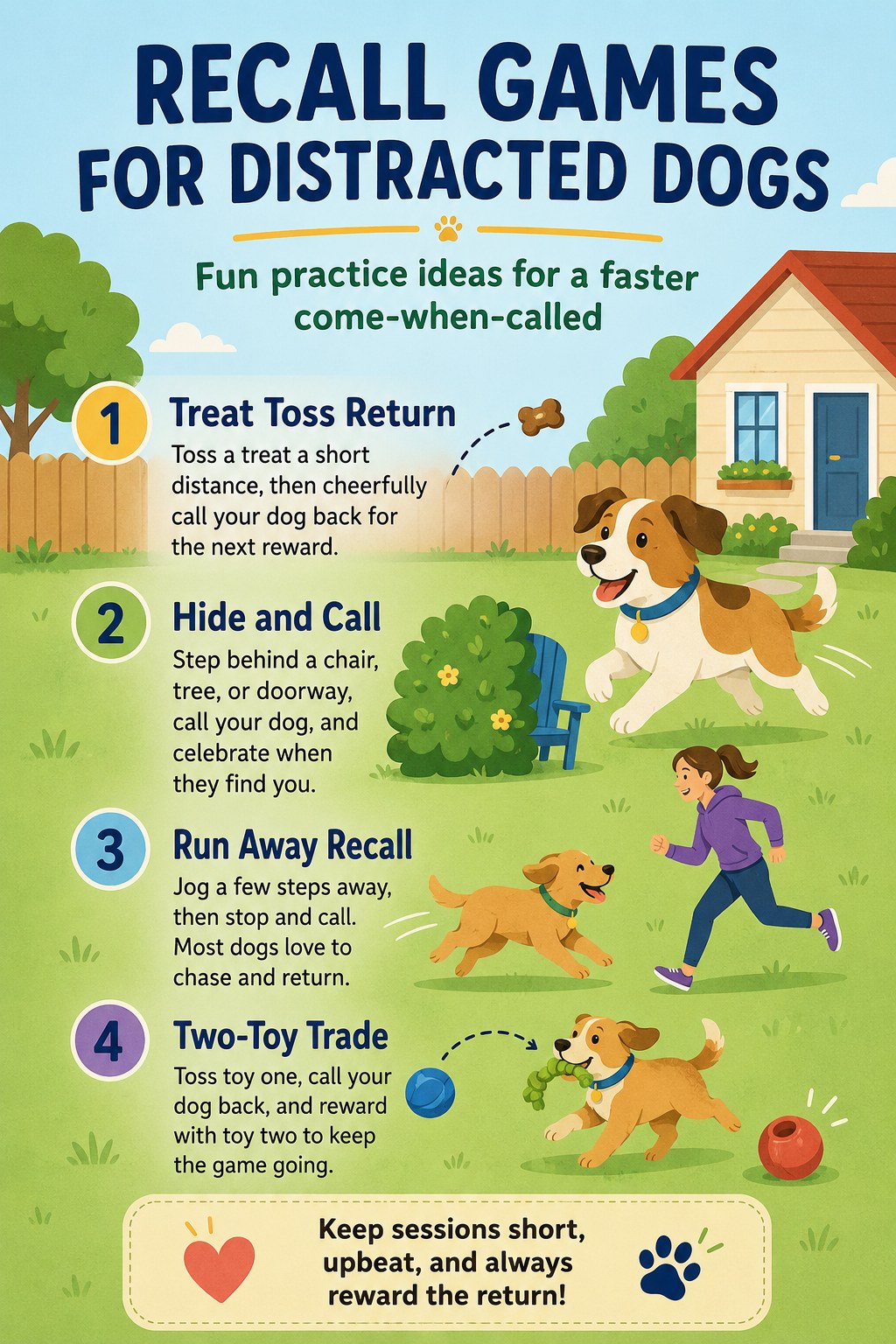
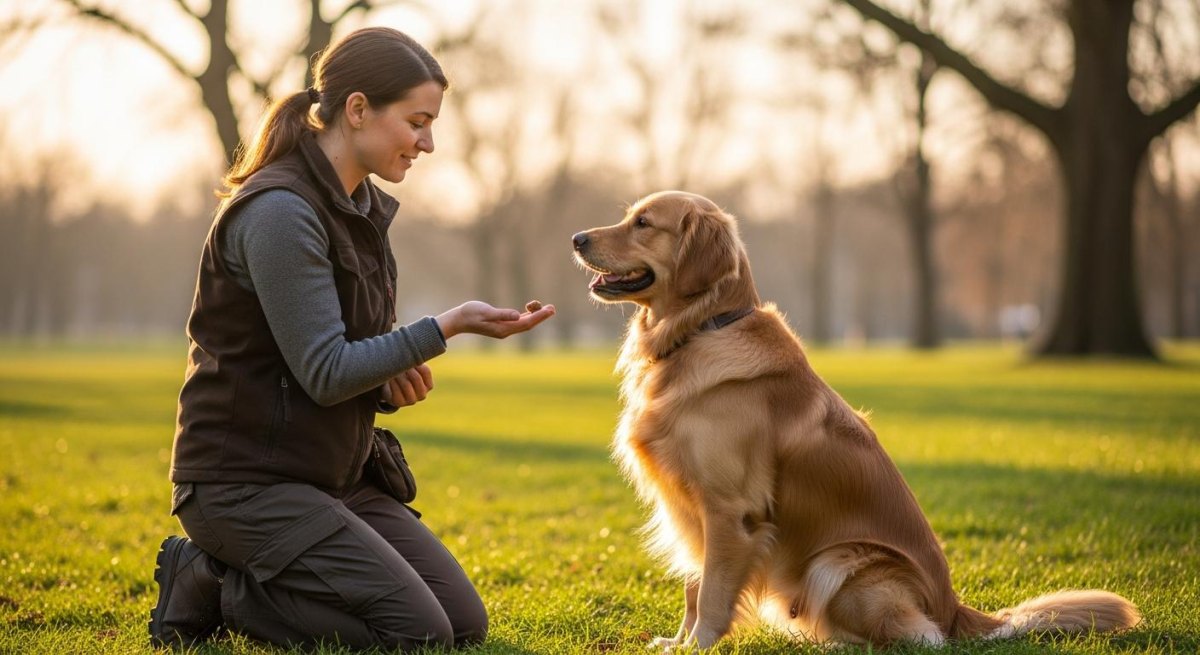
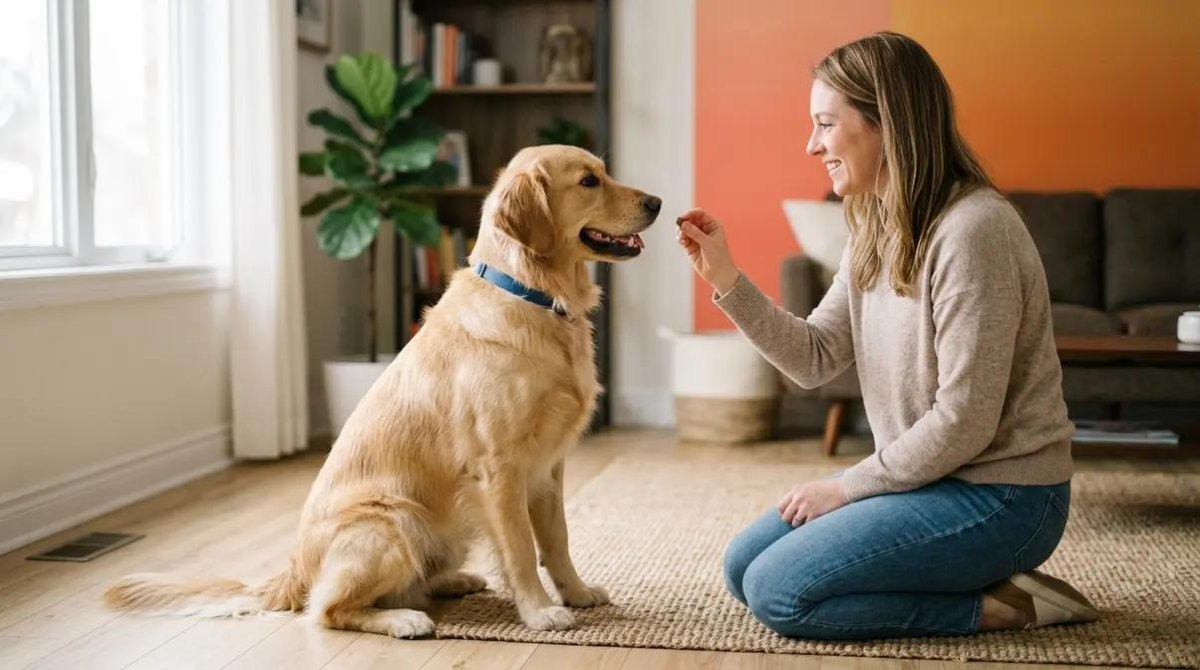
Treat Toss Return is the game I hand almost every new client because it does one specific job well: it teaches the dog that turning away from you and coming back is the most reliably rewarding thing that happens in the yard.
The mechanics are simple — toss a treat a few feet away, let the dog go get it, then call cheerfully as they finish eating, and reward again the second they turn. That return-and-reward moment is the whole game. Nothing else matters yet.
- Keep it boring-easy at first — a quiet yard, no other dogs, no bikes going by.
- Reward the turn, not just the arrival — mark the instant your dog’s body swings toward you.
- End before they’re bored — five or six reps, then stop.
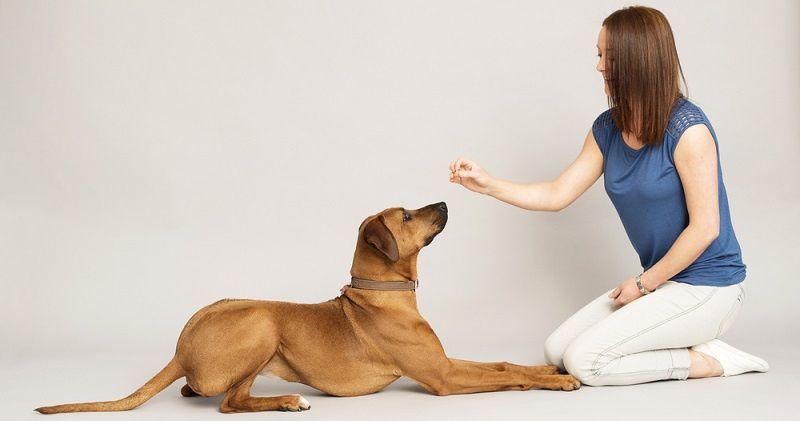
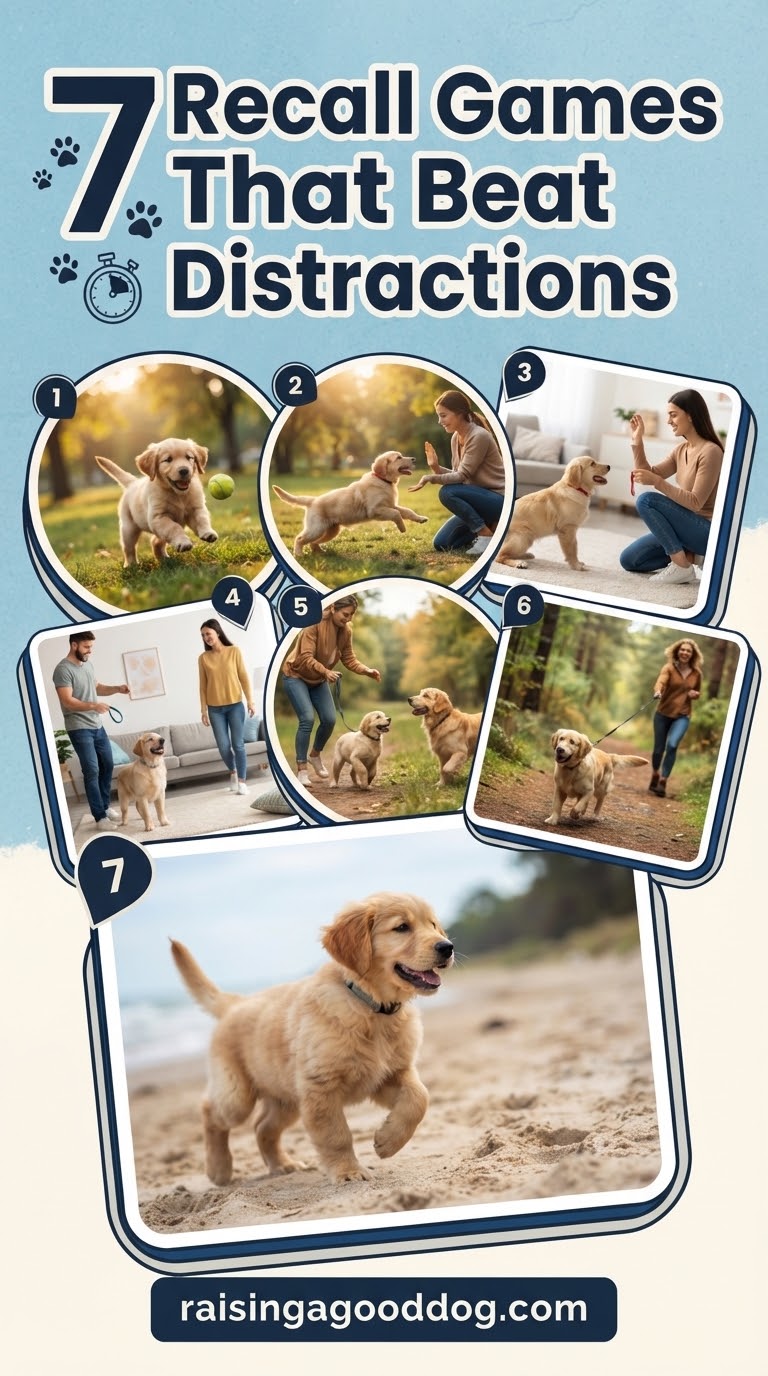
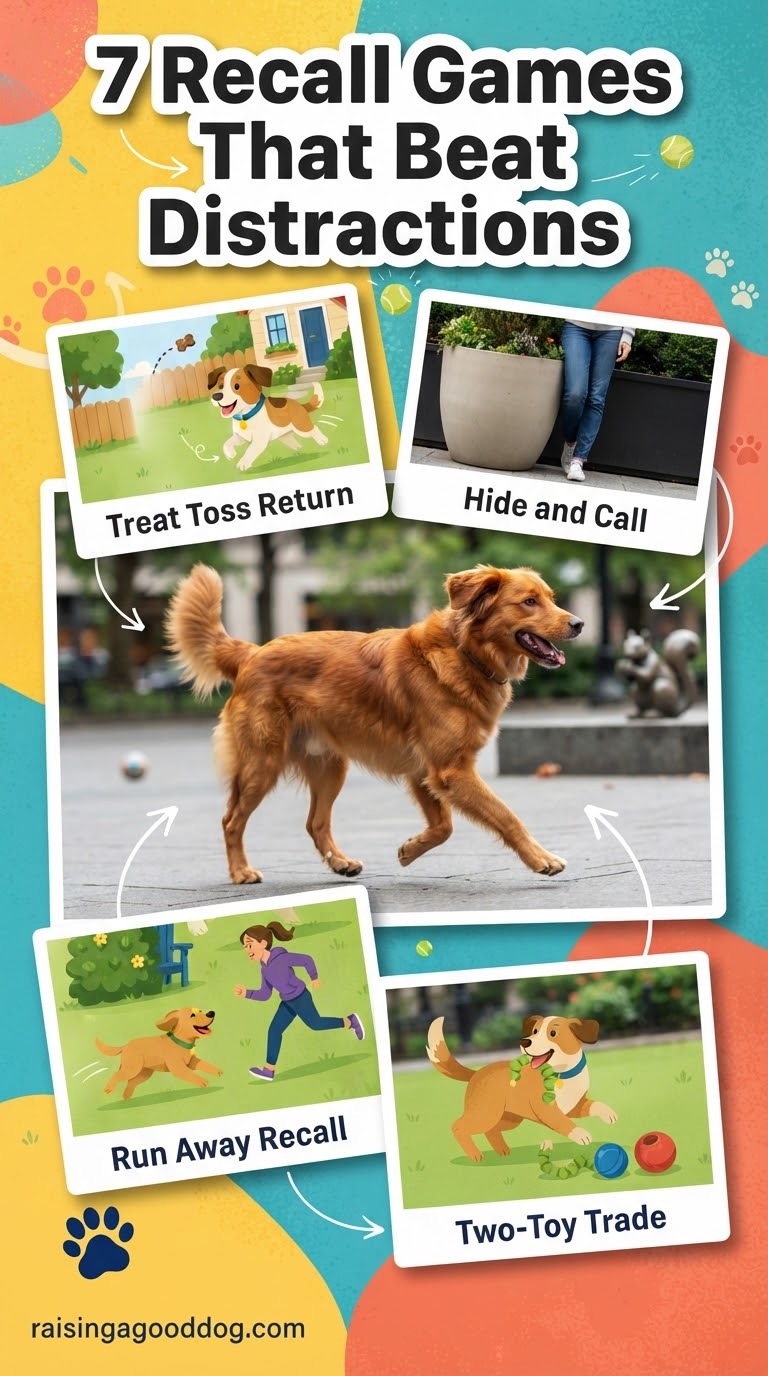
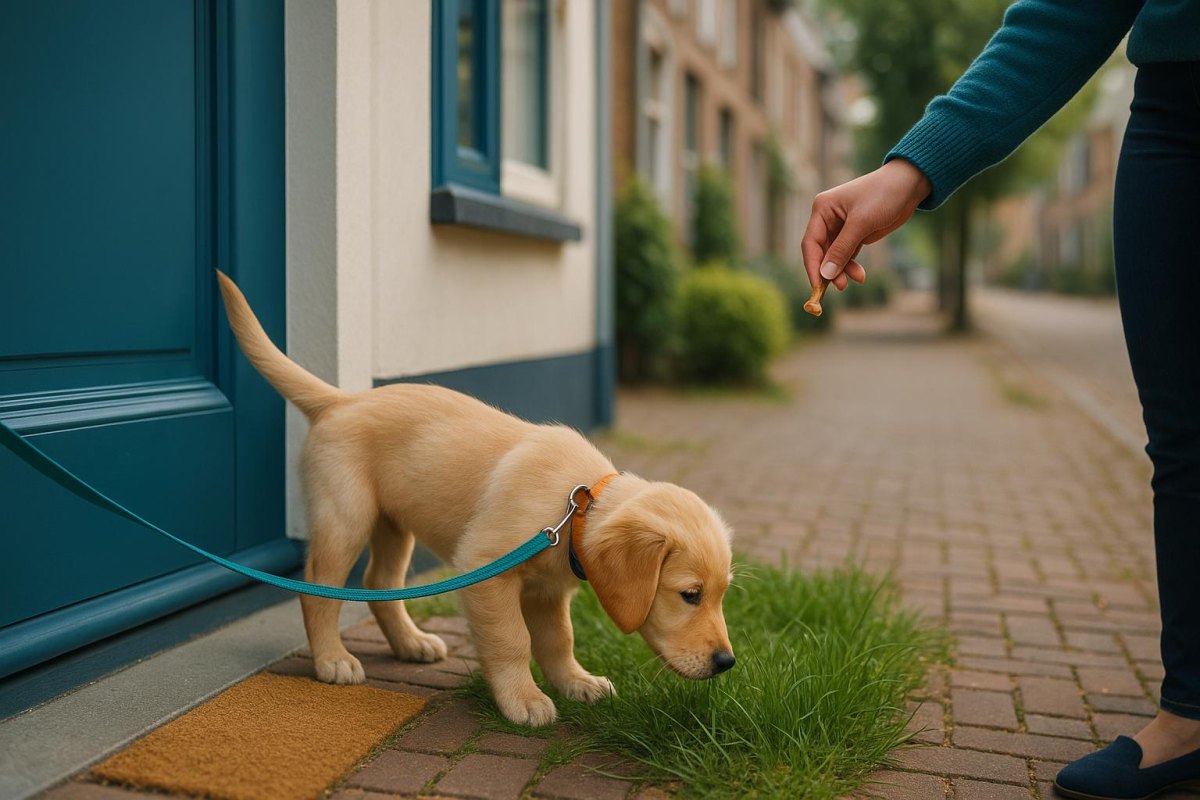
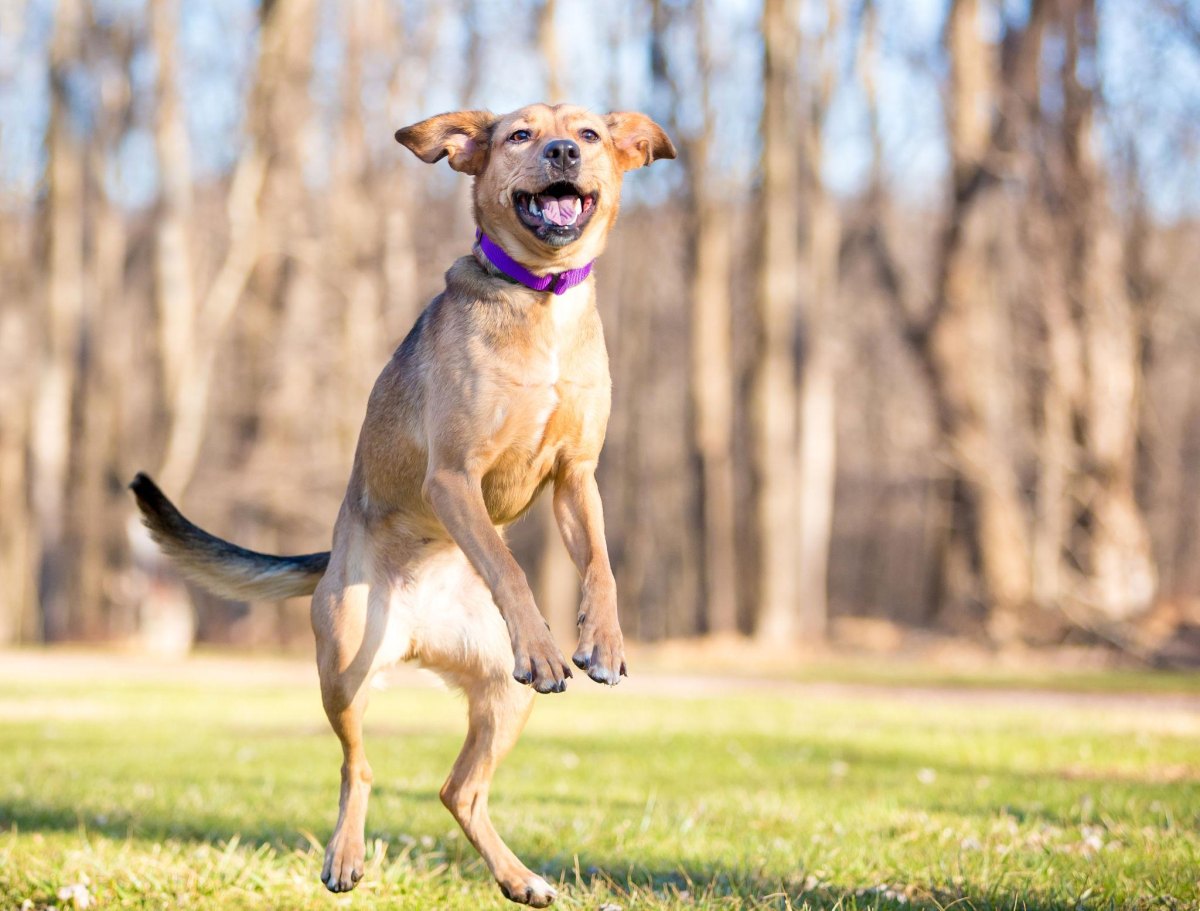
Once that’s fluent, the other three games sharing this graphic — hiding and calling, jogging away and calling, trading one toy for a better one — are the same mechanic wearing a different costume. They all reward the turn-and-return, which is the only part of recall that matters once a real distraction shows up later.
Partner Recall
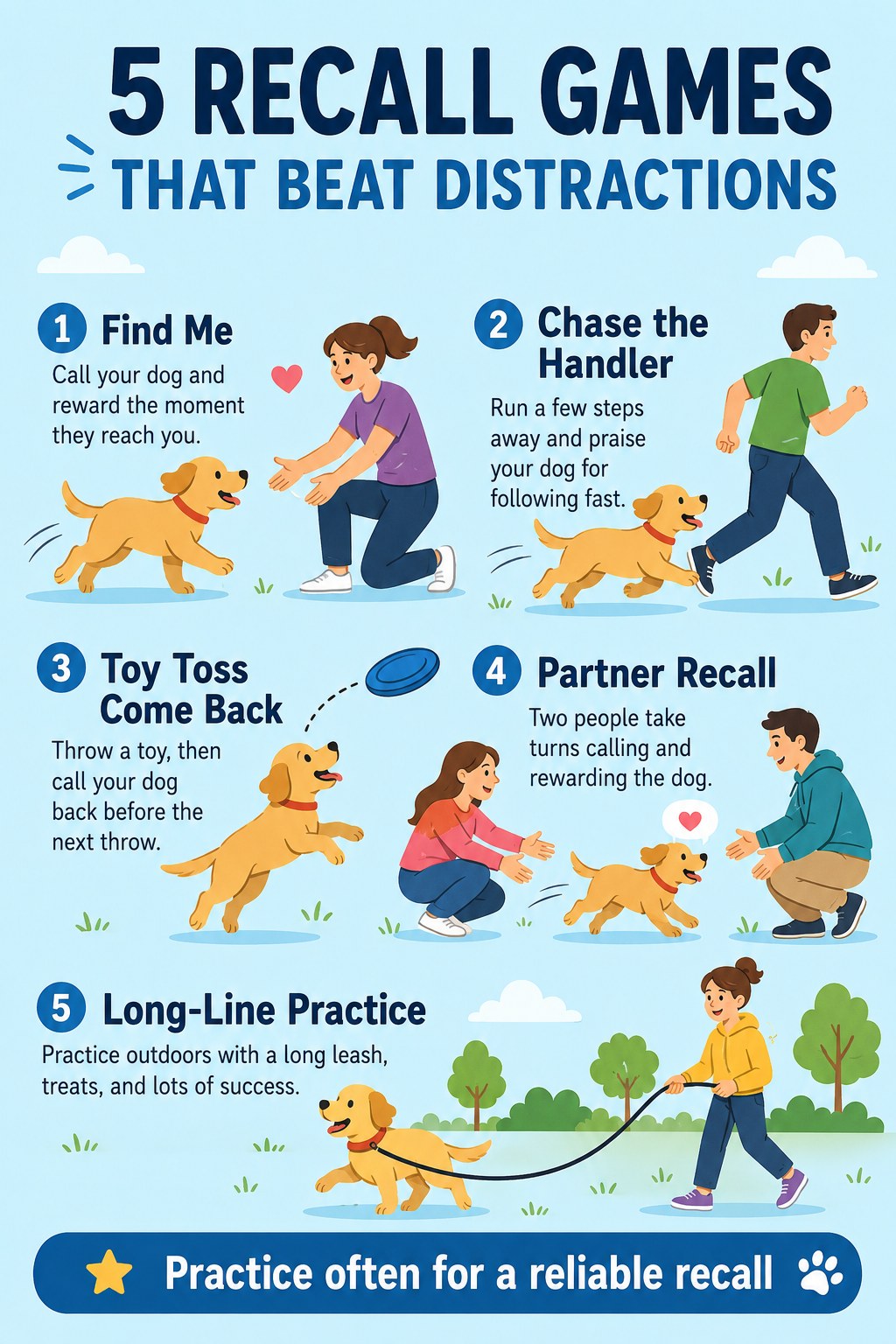
If your dog has a rock-solid recall with you and falls apart the second another person is holding the leash, Partner Recall is the fix, and it’s the one game on this list I ask clients to run with whoever else lives in the house.
Two people stand ten or fifteen feet apart. One calls, the dog runs over, gets rewarded and released; the other person calls next. You’re not testing the dog’s love for either of you — you’re building the idea that ‘come’ pays off no matter who says it, which matters enormously in a house with kids, a partner, or a dog walker.
I’ve had clients whose dog had a flawless recall to them and near-total selective deafness to a spouse — not stubbornness, just a much thinner reinforcement history with that person’s cue.
Adapt this by rotating who calls first, varying reward value between people so neither becomes ‘the boring one,’ and eventually adding a small distraction — a dropped toy, a second dog on leash — once both individual recalls are reliable on their own.
Mix It Up: The Multi-Game Session
Why More Games Beat One Perfect Game
A page like this one — a stack of quick recall ideas in a single list — exists because recall breaks down when it becomes predictable. If the only game you play is the same three reps in the same corner of the yard, your dog learns the game, not the skill.
What I actually want clients doing is rotating through three or four short games inside one five-minute session: a toss-and-return, a hide-and-call, maybe a quick chase-me. Each one teaches the same underlying behaviour — orient to me, move toward me, get paid — from a slightly different angle, so the dog generalises ‘come’ instead of memorising one specific setup.
- Rotate locations — inside the house, then the yard, then a quiet street.
- Rotate rewards — food, a toy, a game of tug — so recall doesn’t depend on one motivator.
- Keep total time short — five minutes of variety beats twenty minutes of repetition.
Color Spot Recall
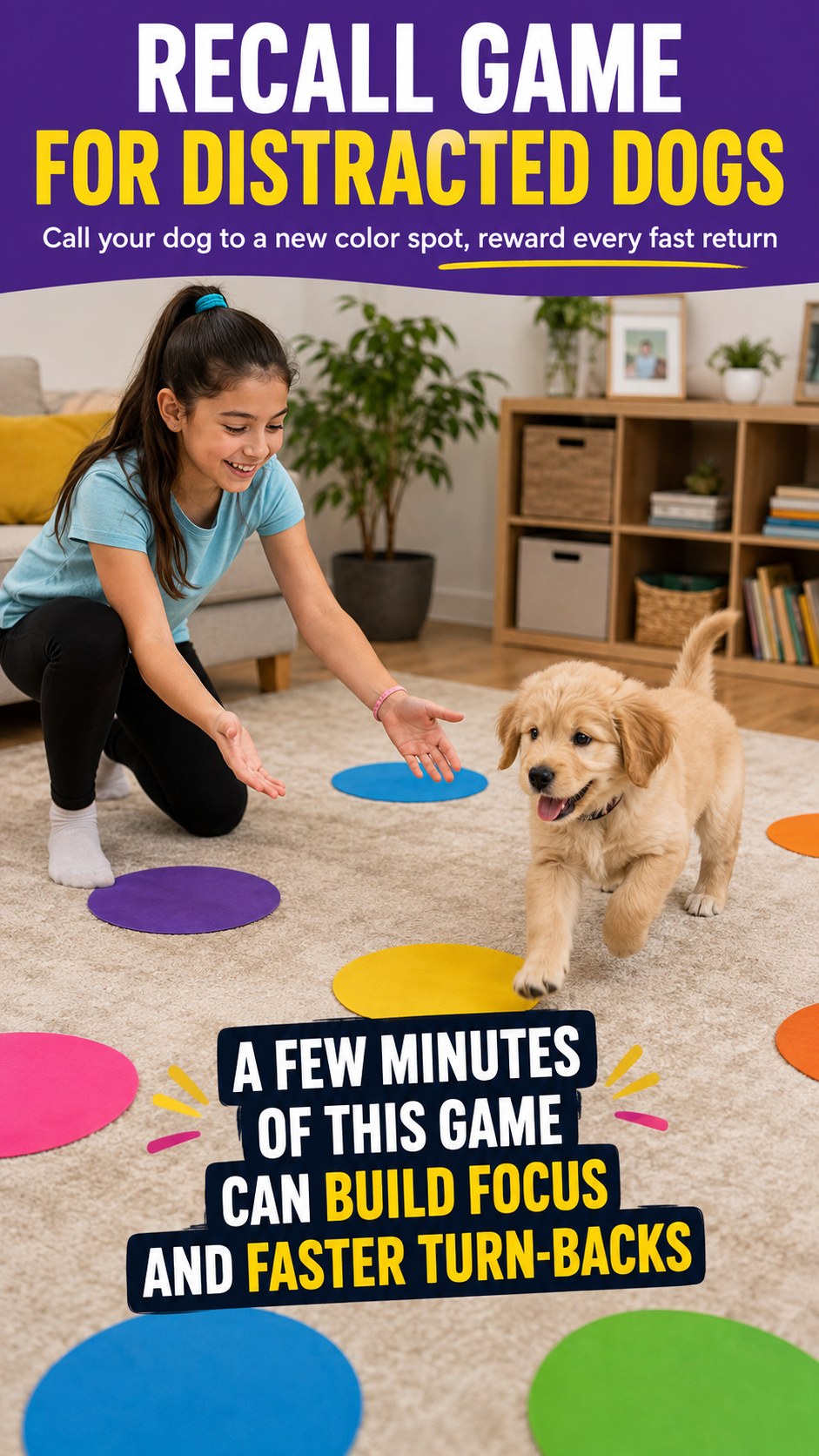
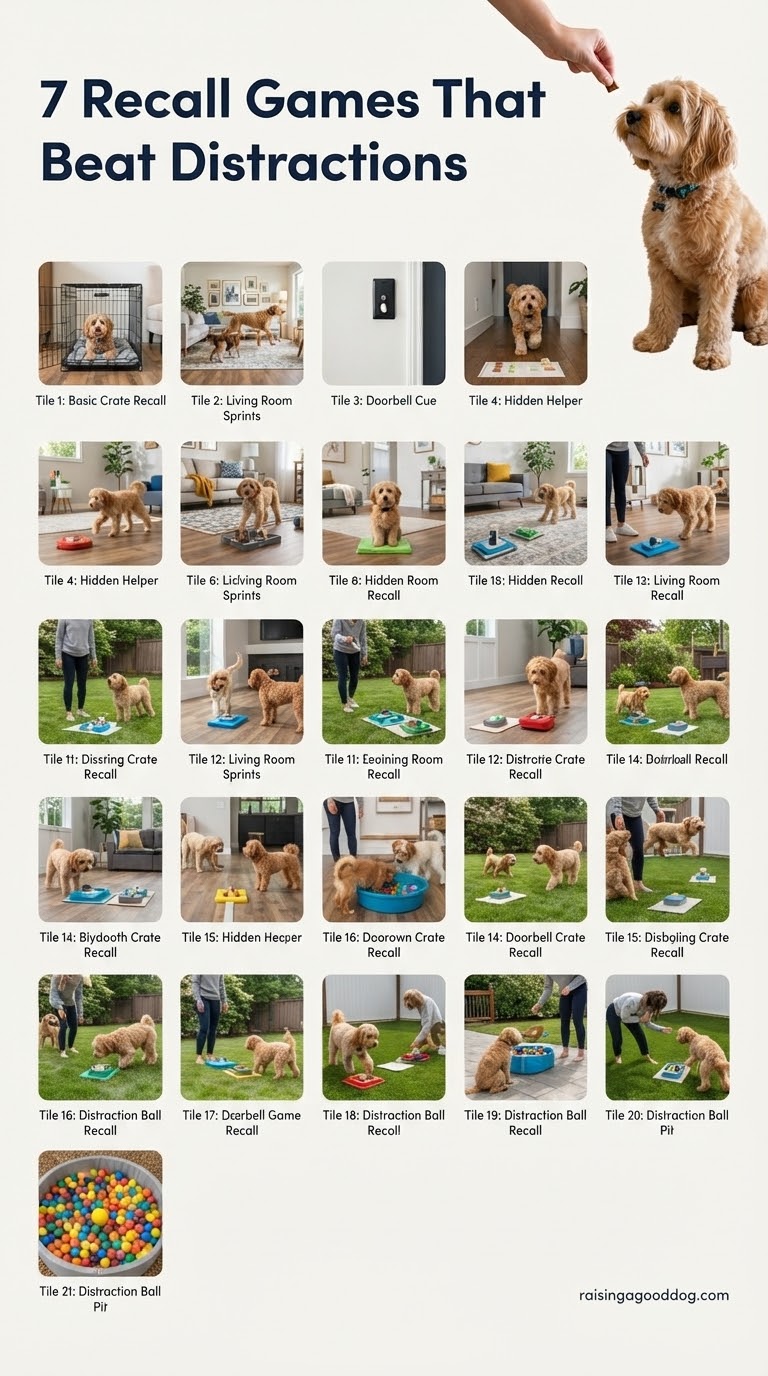
This one earns its keep with puppies and young, bouncy dogs who need somewhere for all that motion to go: scatter a handful of colored spot markers around the room and call your dog to a new one each time, rewarding the instant they land on it.
What it actually builds isn’t just recall — it’s a fast turn-back, the specific skill of a dog changing direction toward you mid-motion instead of finishing whatever momentum they were already on. That’s the exact skill that fails at the dog park, where your dog is already running the other way when you call.
Start with two or three spots close together and add distance and spots as your dog gets faster and more accurate. A few minutes of this most days builds noticeably quicker turn-backs within a couple of weeks — one of the faster payoffs on this list, though it’s still an indoor rehearsal game, not a substitute for practicing around real distractions later.
DIY Recall Box Game
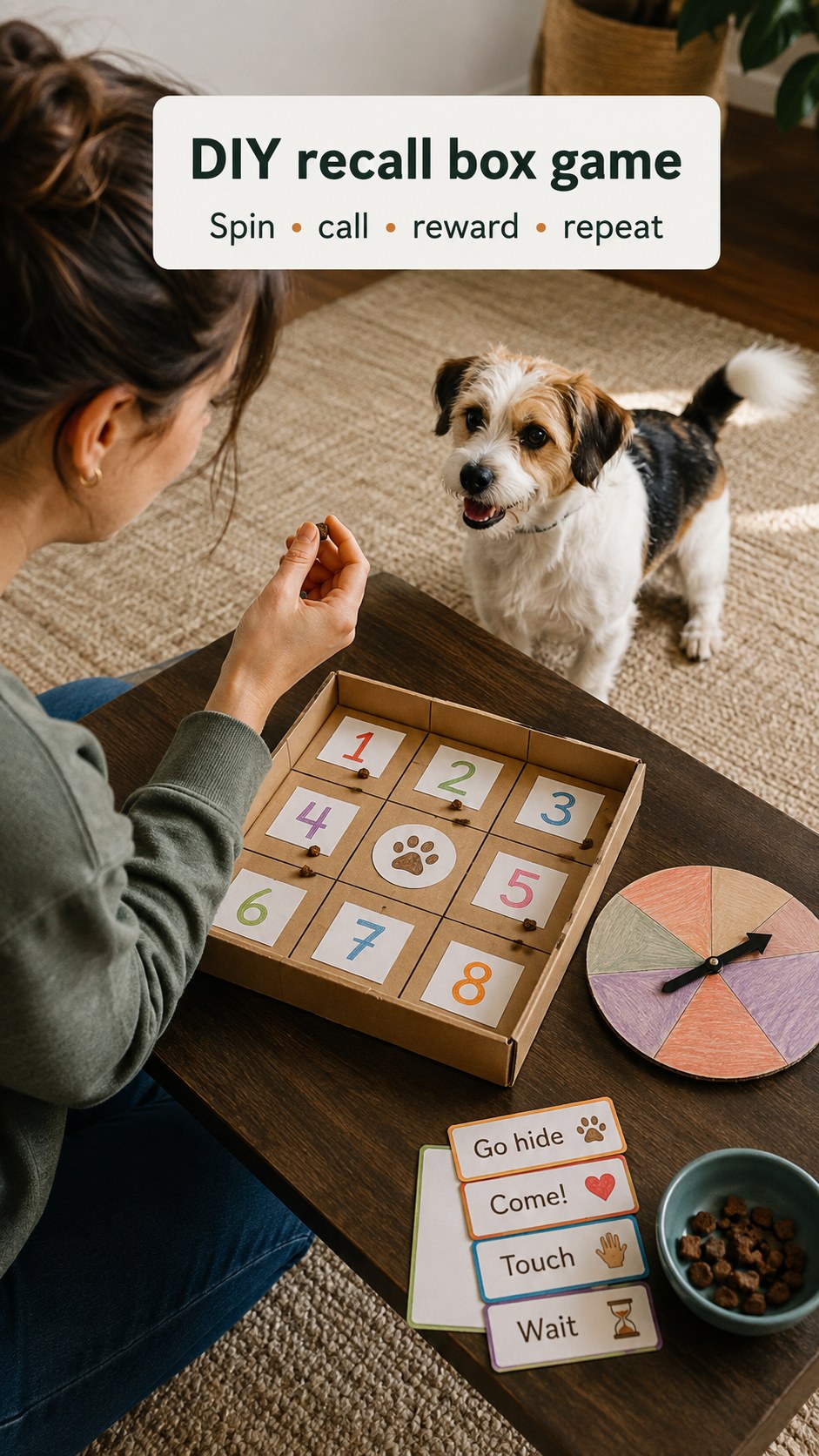
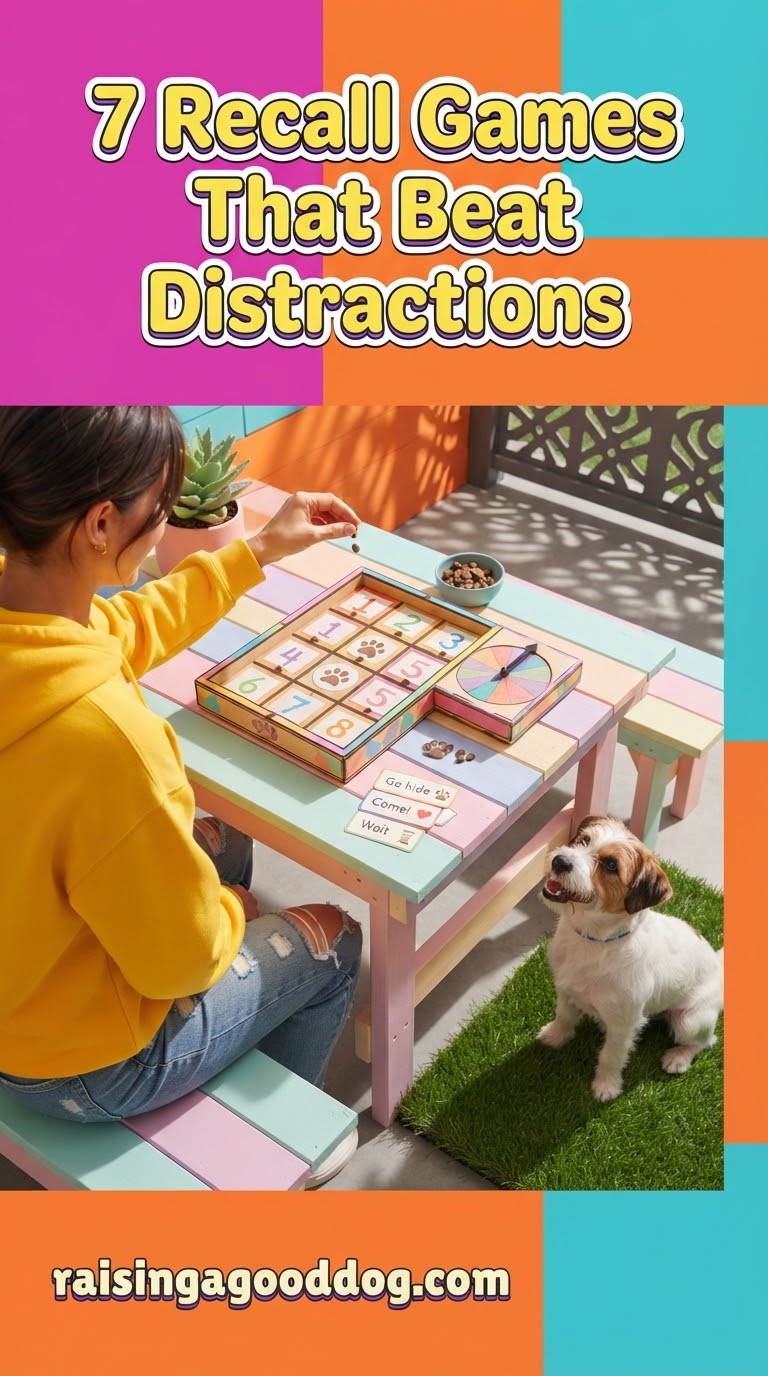
The DIY Recall Box Game takes the predictability out of a session, and for a dog who’s food-smart enough to have figured out your routine, that unpredictability is the whole point.
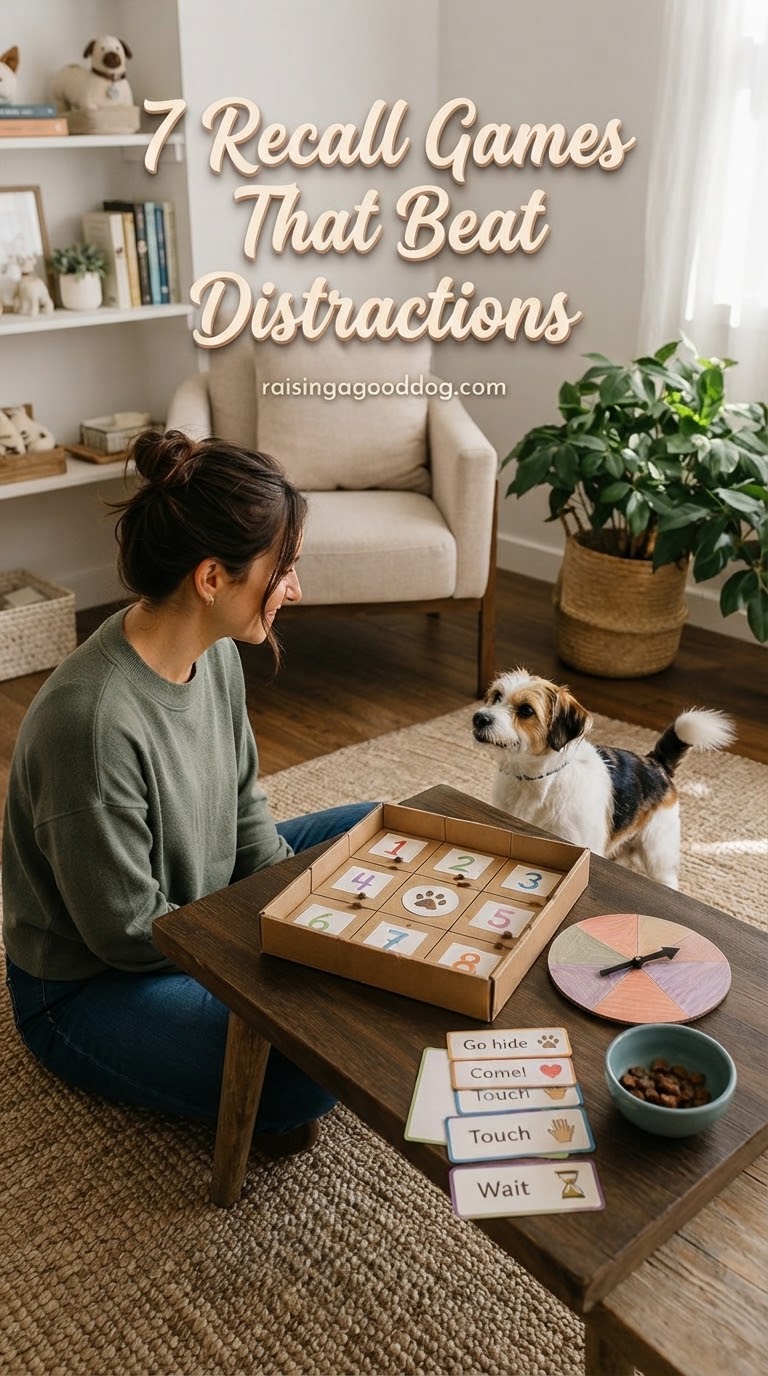
Set up a box or spinner with a few simple cues your dog already knows — go hide, come, touch, wait — and spin before each rep, so your dog never knows exactly what’s coming next. Call, reward, spin again.
- Great for scent hounds and terriers who lose focus fast on repetitive drills.
- Doubles as a rainy-day option when you can’t get outside at all.
- Works the brain, not just the legs — tired dogs from mental games sleep as hard as dogs from a run.
Adapt it by keeping the cues on the spinner familiar rather than new — the novelty should come from the sequencing, not from asking for something the dog doesn’t understand yet under the pressure to perform.
Tracking the Distraction Ladder
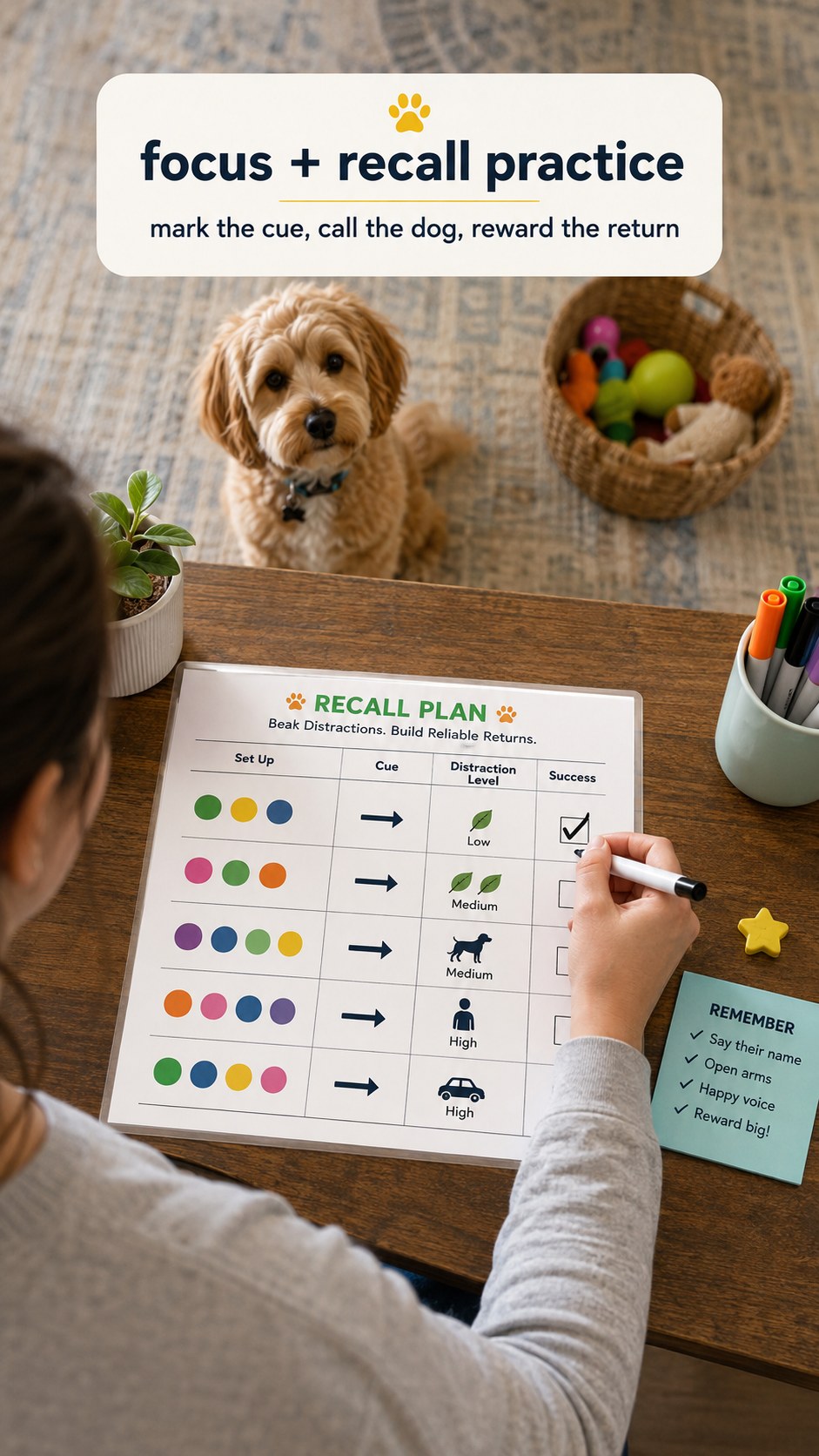
This is the part almost everyone skips, and it’s the actual engine behind a recall that holds up outside the living room: tracking the distraction level, not just running the game.
Set up a low-distraction rep, call, reward, note whether it worked. Only move to medium distraction — another person in the room, a toy on the floor — after several clean successes at the easier level. Only move to high distraction — a car outside, another dog — after medium is solid. This is management before training in spreadsheet form, and it’s the reason ‘he’s great at home but ignores me outside’ is almost always a distraction jump that was too big, not a stubborn dog.
Before you call at a harder level, read your dog first: a stiff body, ears locked forward, weight leaning toward the distraction — that’s a dog who isn’t going to hear you yet. Wait for a glance back your way, or add distance, before you cue anything.
Five-Minute Brain Games
Every one of these games works better in short, five-minute sessions run often than in one long weekend drill, and this is the piece I wish more people believed the first time I say it: recall is a rehearsed behaviour, and rehearsal quality matters more than session length.
Realistically, a young or previously untrained dog needs several weeks of daily short sessions before recall holds up around mild distractions, and months before it’s reliable around the hard stuff — other dogs, wildlife, a full park on a Saturday. Plateaus around week three or four are normal; that’s not the plan failing, that’s the schedule doing exactly what schedules do.
My own dog, Bruno, is eight now, thoroughly practiced, and still not a dog I’d call off a squirrel at a crowded festival — that’s not a training failure, that’s an honest ceiling for his particular dog, and it’s worth knowing yours before you’re standing in a field being disappointed in a good dog for being exactly who he is.
None of these games are complicated, and that’s sort of the point — the skill isn’t the trick, it’s the order you build it in and the patience to keep the reps easy longer than feels necessary. Pick two, run them for a week before adding a third, and let the distraction level climb slower than your instincts want it to.

Your Questions, Answered
How long before my dog has a reliable recall around distractions?
For most dogs, a solid recall around mild distractions takes several weeks of short daily sessions, and reliable recall around real hard distractions — other dogs, wildlife, a busy park — takes months, with plateaus along the way. That’s the normal timeline, not a sign something’s wrong.
Should I let my dog off leash to practice these games outdoors?
Not until recall is reliable at a high distraction level in a controlled setting. Use a long line outdoors so your dog can range and explore without the option of practicing running off on you, which just rehearses the thing you’re trying to fix.
My dog only comes back when I have treats — is that a problem?
It’s a normal early stage, not a flaw. Once the behaviour is fluent, fade to rewarding intermittently and randomly big instead of every single time, so the dog keeps checking whether this rep is the jackpot.
Can these games help a reactive dog’s recall around other dogs?
They can build the underlying skill, but recall isn’t a fix for reactivity itself — distance and management come first. If your dog has a bite history or genuine aggression around other dogs, that’s a case for an in-person certified trainer and a conversation with your vet about a veterinary behaviourist, not a blog post.