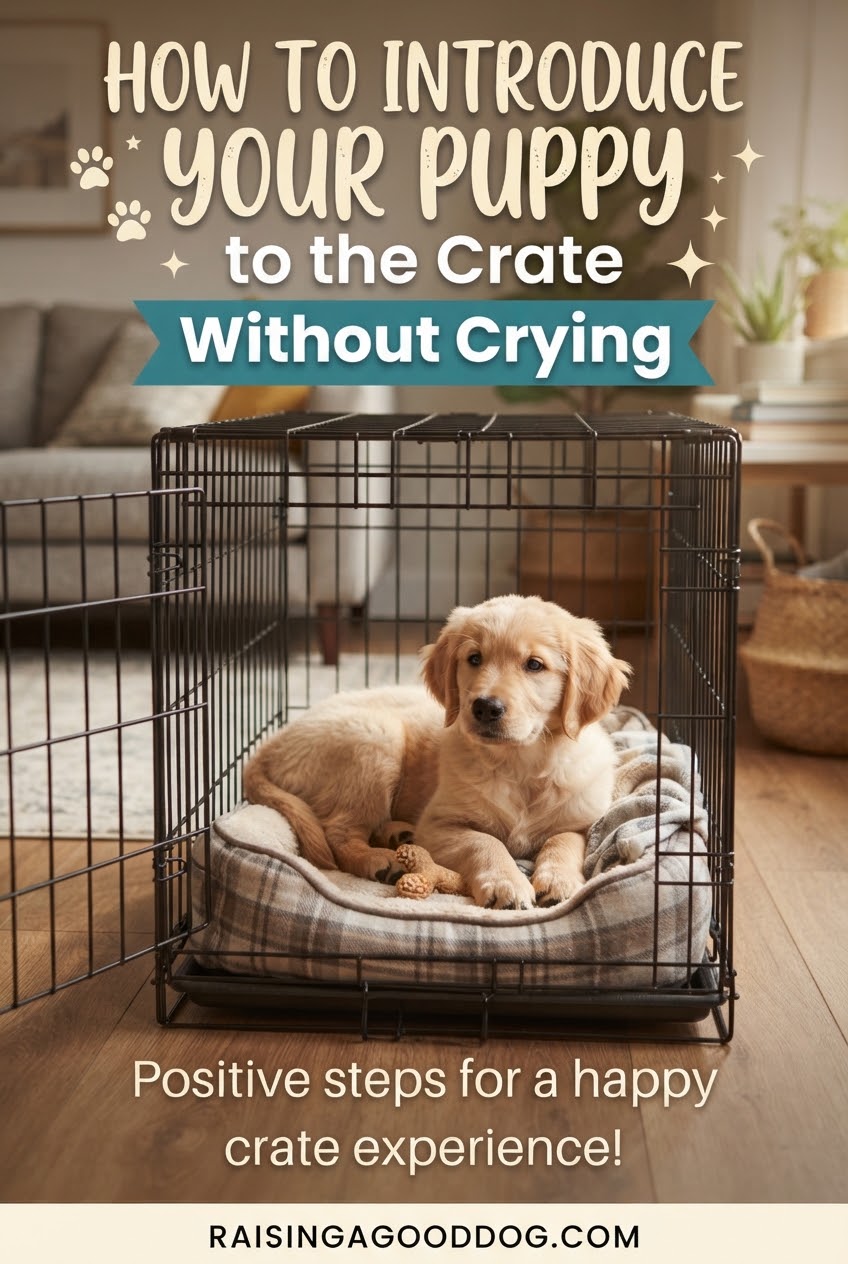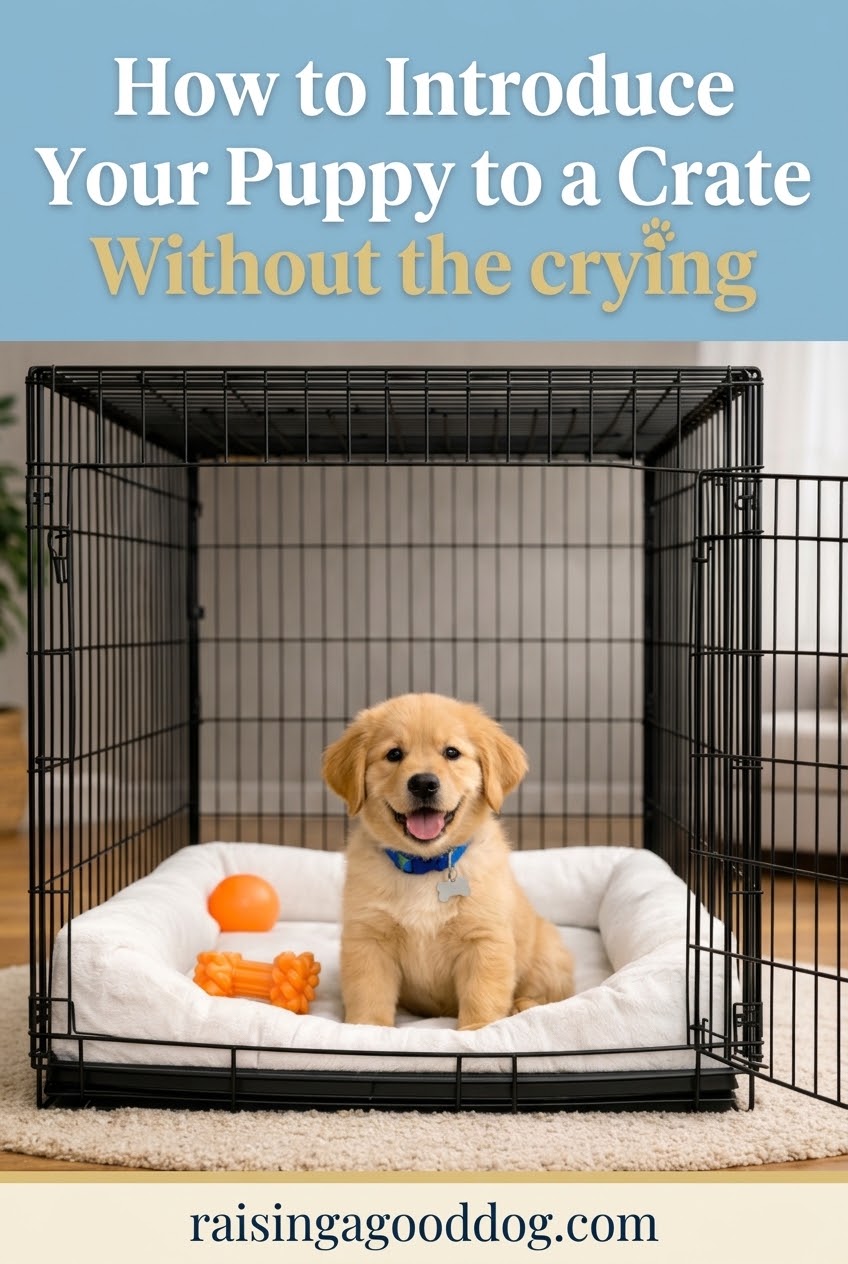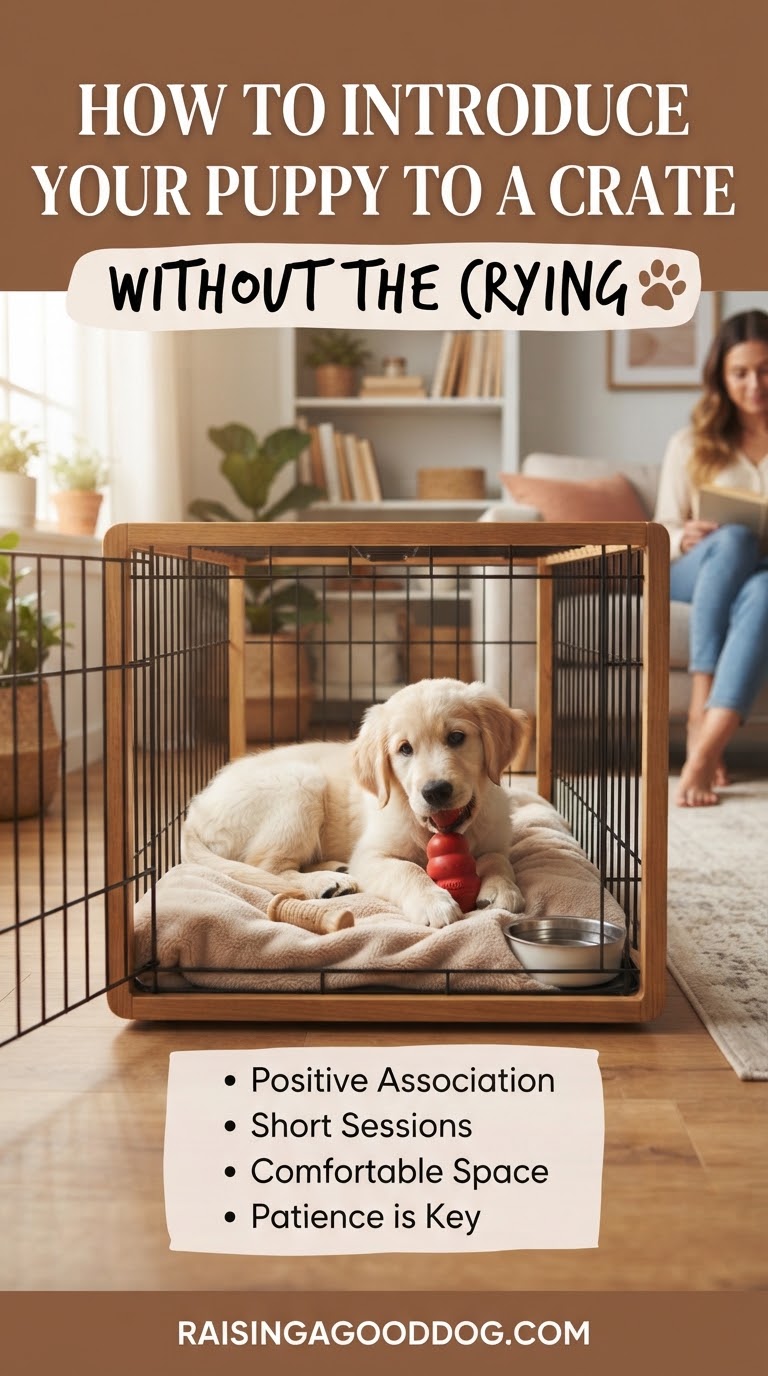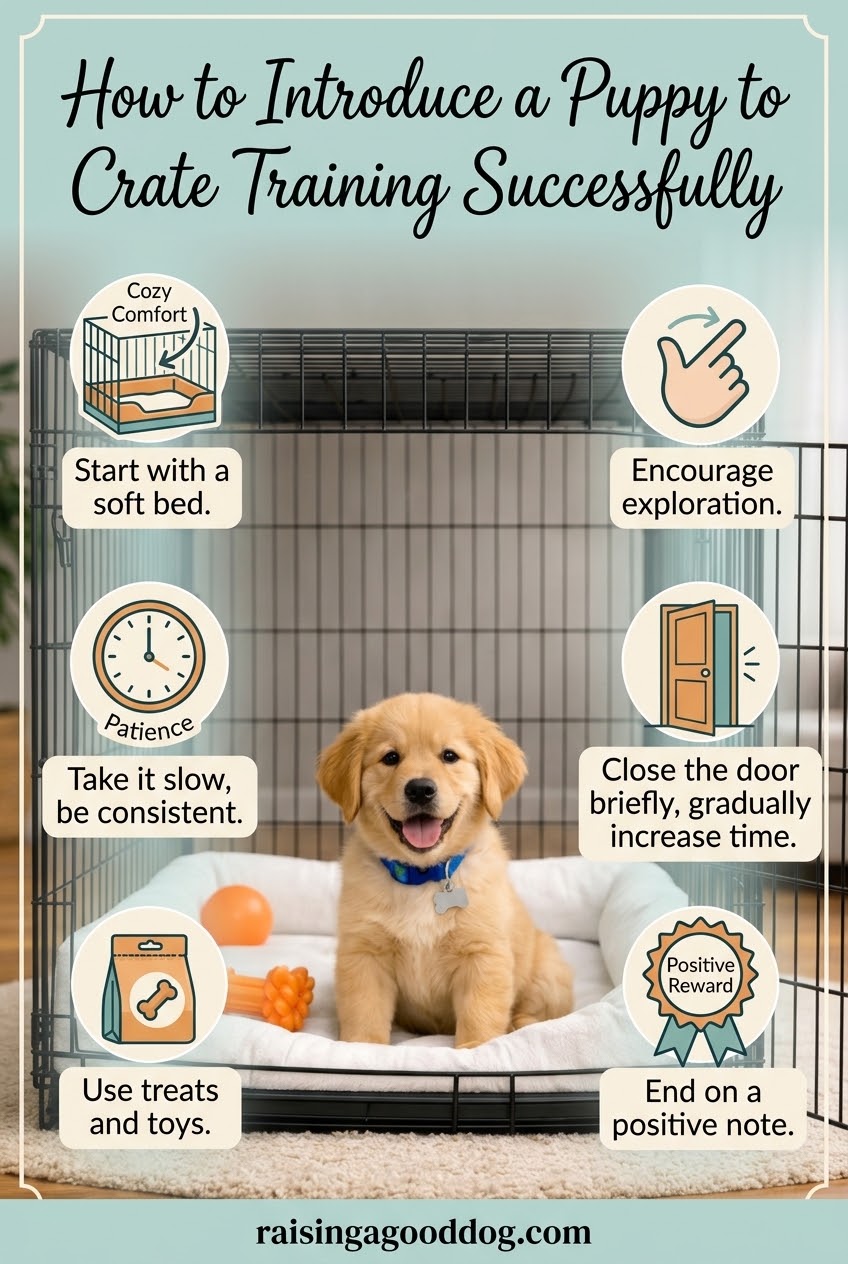
The first time you close a crate door, it is very easy to wonder if you are doing this wrong. I have sat on the floor beside plenty of worried puppies who needed a little more time, not a little more pressure. A crate should become a place your puppy chooses to rest, not a place they learn to fear.
I introduce crate training slowly because confidence is built in small moments. The goal is not a puppy who tolerates confinement; it is a puppy who understands that their crate is a safe, predictable part of life.
Choose the Right Crate Setup
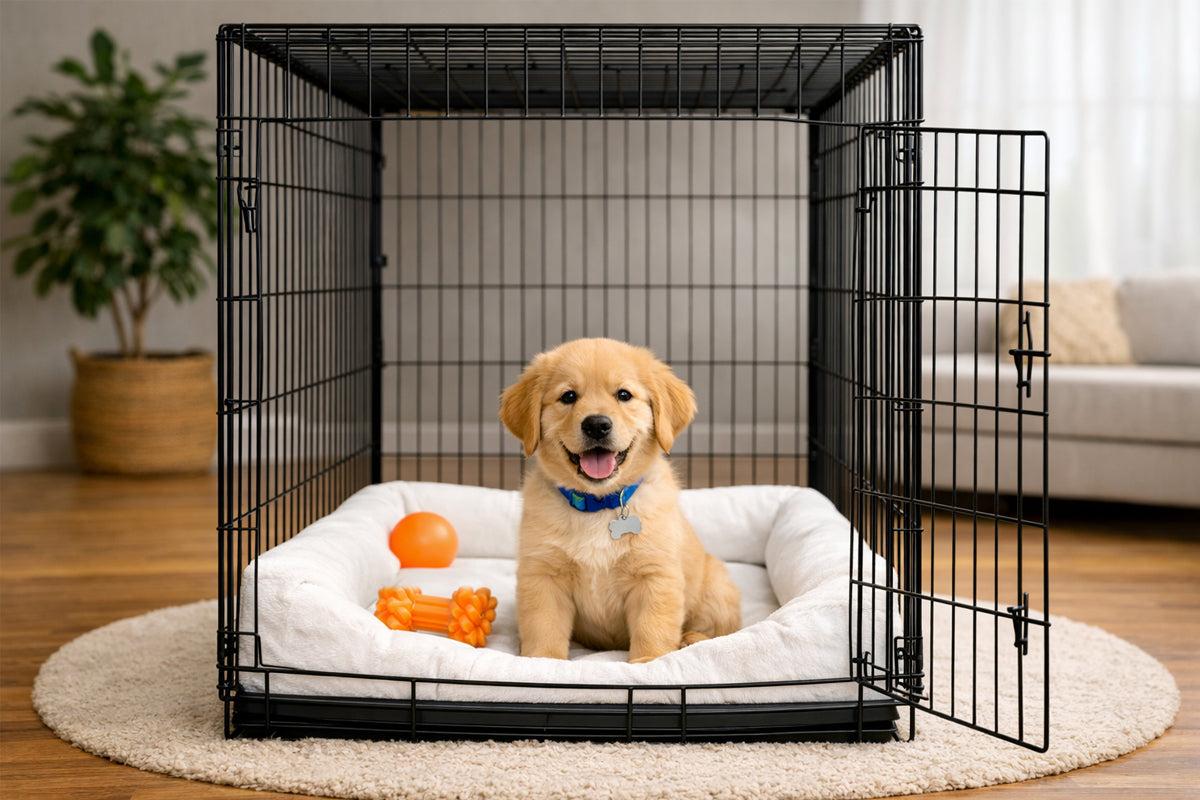
Before I introduce a puppy to a crate, I make the environment easy to succeed in. The crate should be large enough for standing, turning around, and stretching out, but not so oversized that it feels like an empty room.
I like to place the crate somewhere calm but connected to family life. A puppy who is suddenly isolated in a back room often struggles more than one who can hear normal household sounds.
Training tip
Check your puppy's body language before moving ahead. Turning away, freezing, lip licking, or refusing treats can tell you the step is too difficult.
Make the Crate a Positive Place
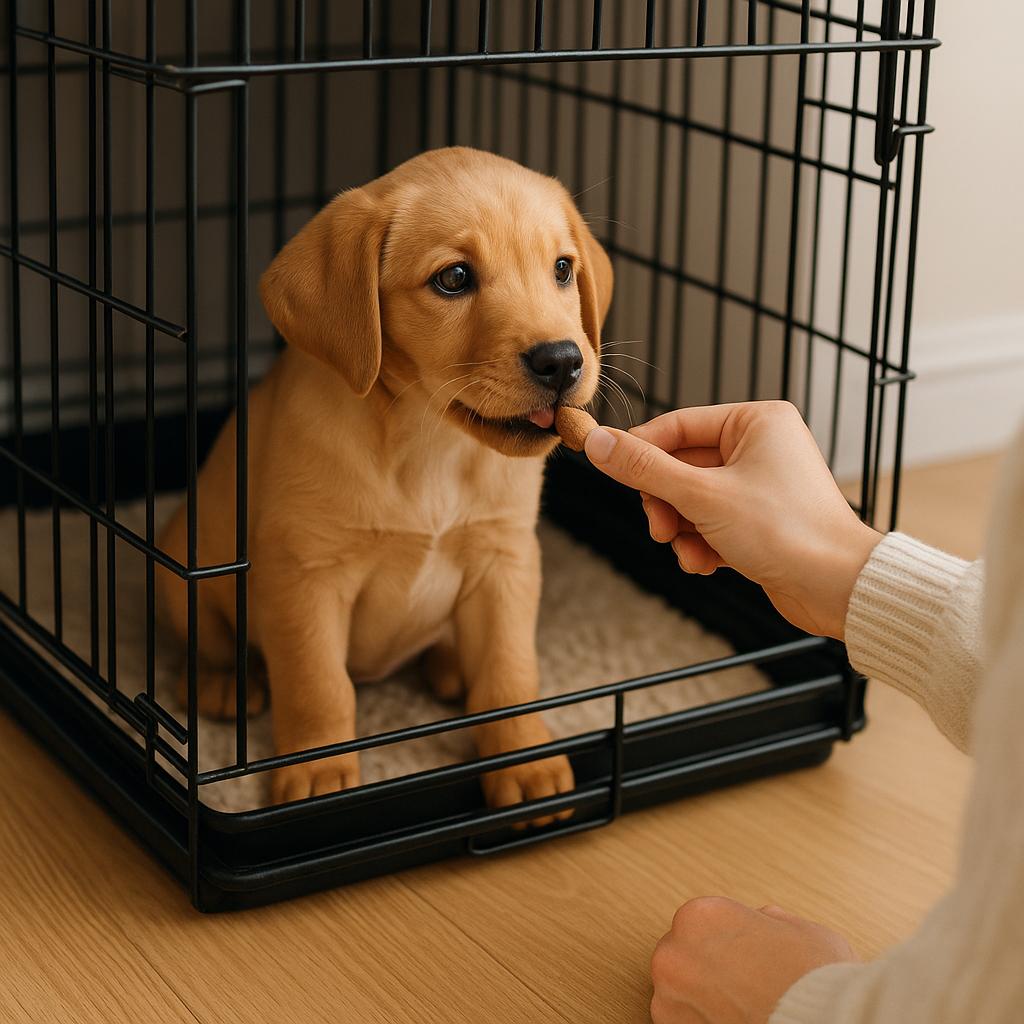
I want my puppies to discover the crate, not be placed inside and expected to understand it. I leave the door open, let curiosity do some of the work, and reward any choice to investigate.
This is one of those places where management matters. If a puppy only sees the crate when someone leaves the house, the crate can quickly become a predictor of isolation. I create good moments there first.
- Leave. Keep the crate open and allow your puppy to explore at their own pace.
- Reward. Notice calm behaviours near the crate with treats, praise, or a favourite toy.
- Repeat. Build many short positive interactions before expecting longer stays.
Common mistake
Do not use the crate as a place for punishment. A puppy who learns the crate predicts trouble will have a much harder time relaxing there.
Introduce Your Puppy to the Crate Slowly
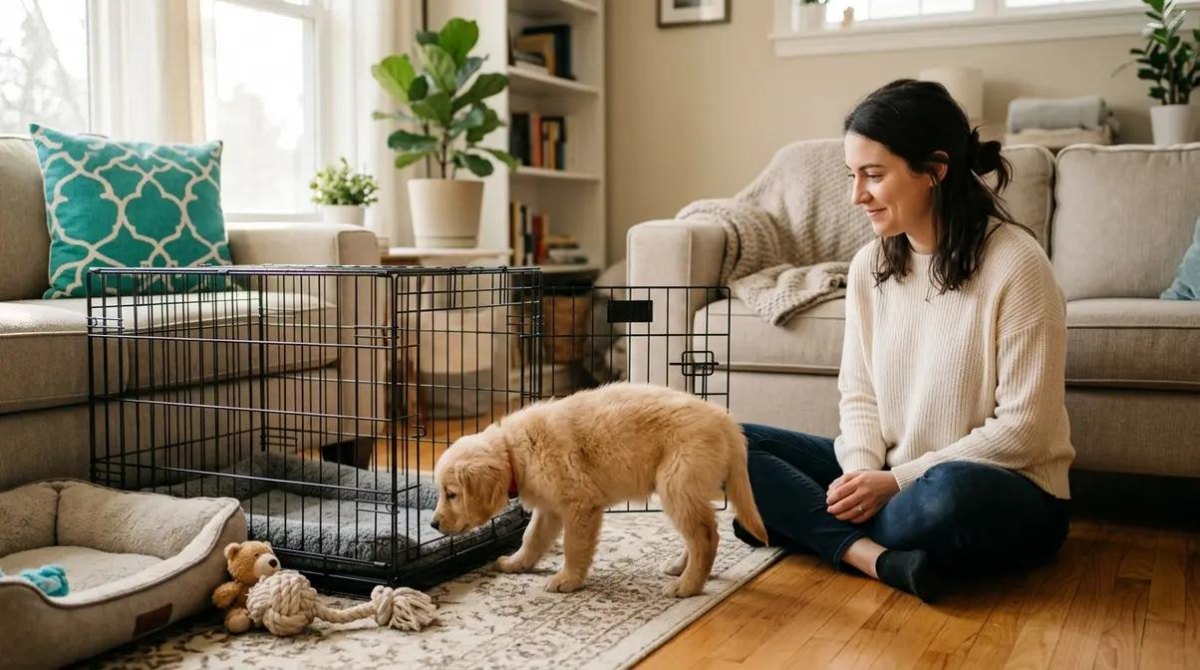
The hardest part of crate training is often our human timeline. We need the puppy to be comfortable tonight, but puppies usually need repeated experiences before a new routine feels normal.
With a new puppy, I start with seconds, not hours. I watch for relaxed breathing, loose body posture, and a puppy who can settle without constantly checking the door.
Before increasing crate time
- Your puppy should enter willingly.
- Your puppy should be able to relax while the door is open.
- Your puppy should recover quickly if something feels unfamiliar.
A setback does not mean crate training failed. It usually means the last step was bigger than your puppy was ready for.
Use Treats and Rewards for Crate Training
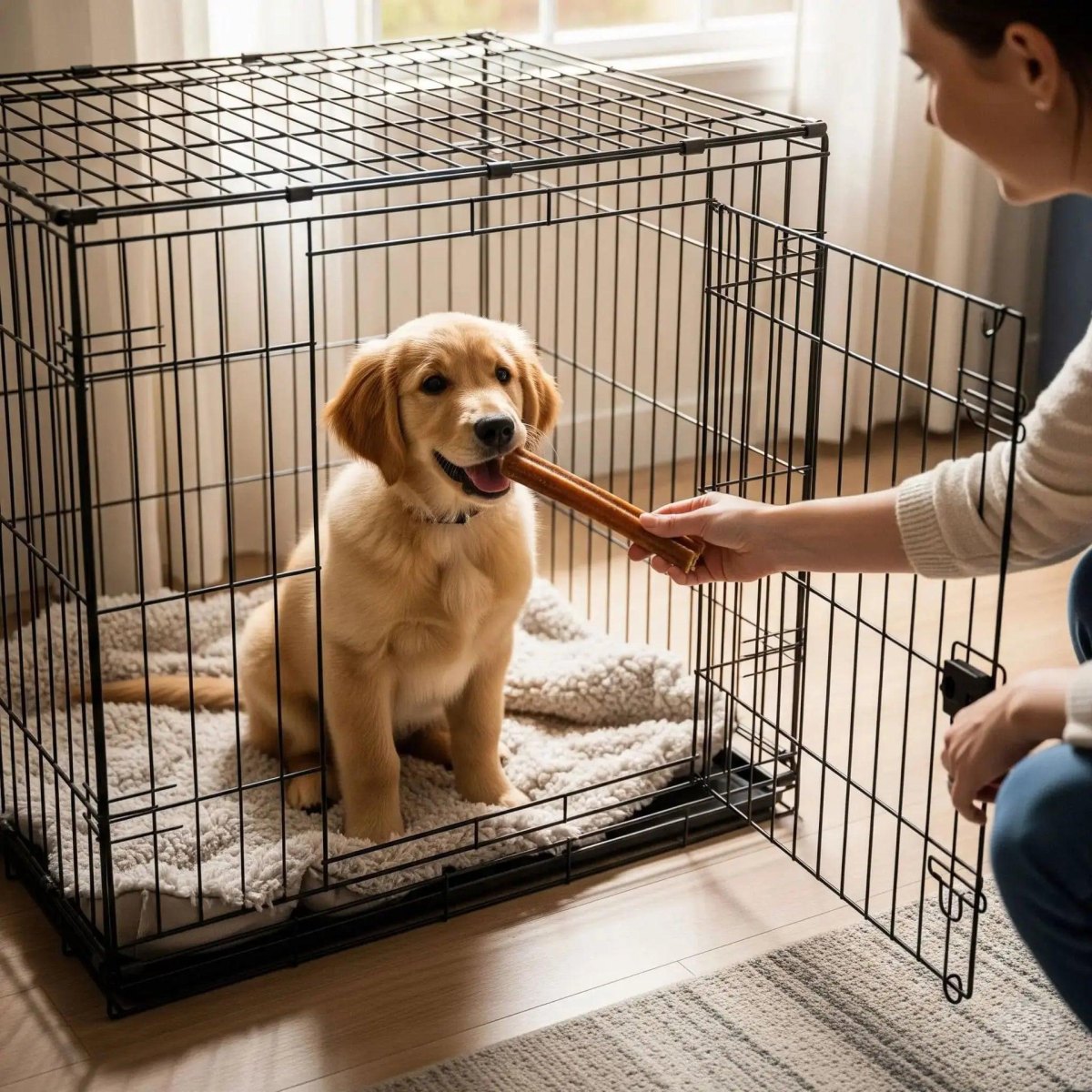
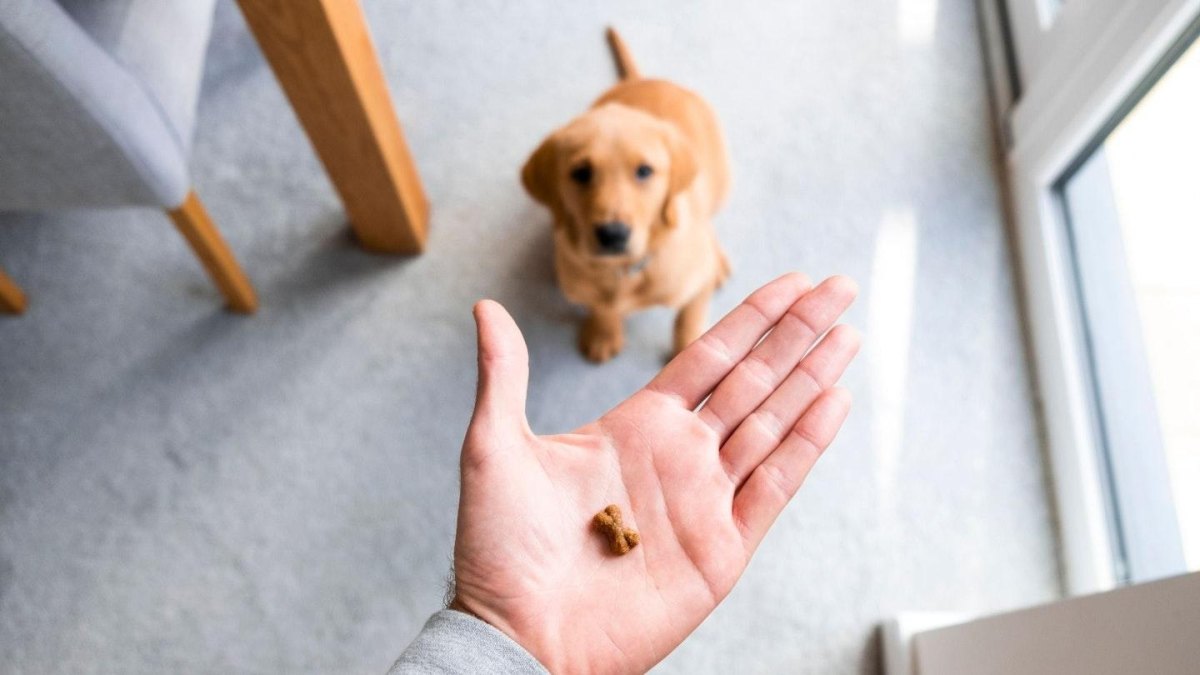
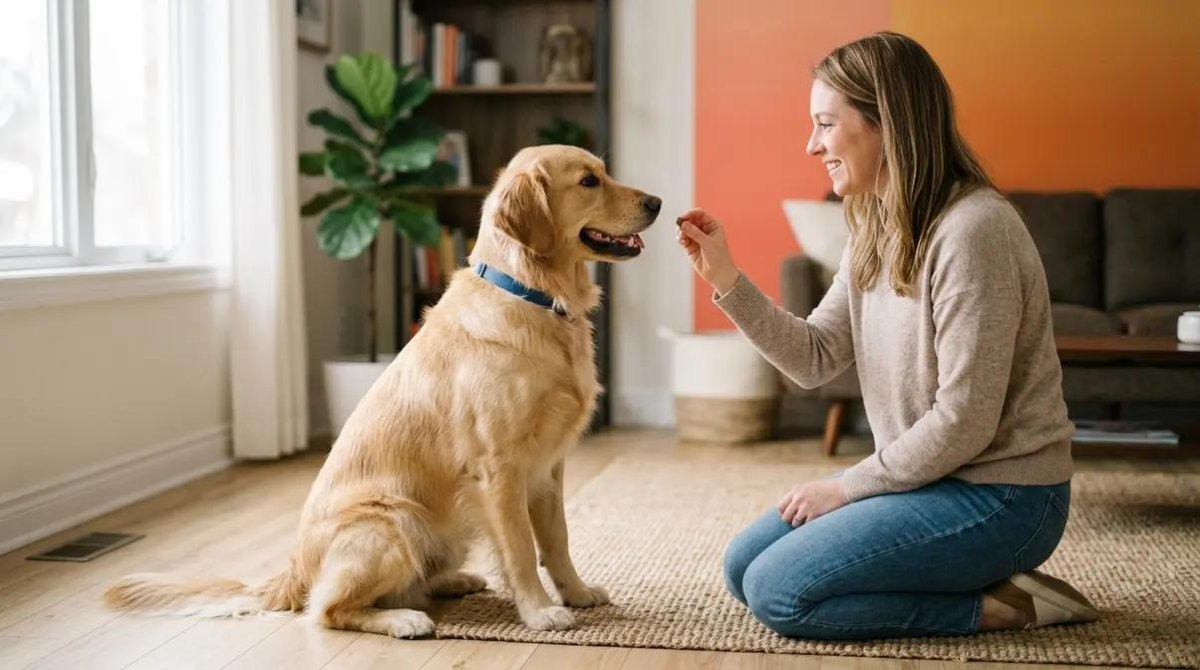
Food is one of my favourite tools for crate training because it gives puppies clear information. A treat says, "That choice worked," without needing pressure or forcing the behaviour.
I often toss a treat inside and let the puppy decide whether to follow. The choice matters. A puppy who walks in because they expect something good is learning a completely different lesson from a puppy who is pushed inside.
- Early stage: Reward looking at, approaching, and entering the crate.
- Middle stage: Reward staying inside briefly with the door open.
- Later stage: Reward calm time with the door closed for short periods.
Practice Short Crate Sessions
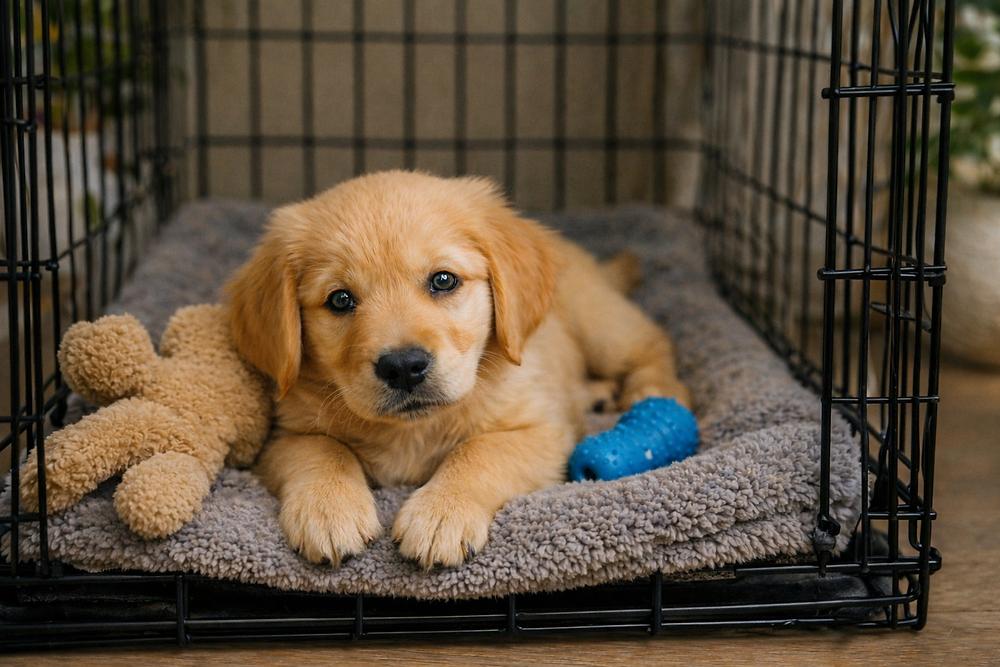
I tell clients that the first week of crate training is often boring on purpose. Boring is good. We are building a habit, not testing how long a puppy can cope.
Start with very short sessions while you are nearby. Read a book, answer emails, or make coffee while your puppy relaxes. Slowly add distance and duration only when your puppy is comfortable.
Watch for distress
Panic looks different from normal protest. If your puppy is frantic, drooling, throwing themselves at the crate, or unable to settle, reduce the difficulty and consider getting professional help if the problem continues.
True separation anxiety is different from ordinary puppy complaints and often requires a structured plan with a qualified professional and, when appropriate, veterinary support.
Build a Consistent Crate Routine
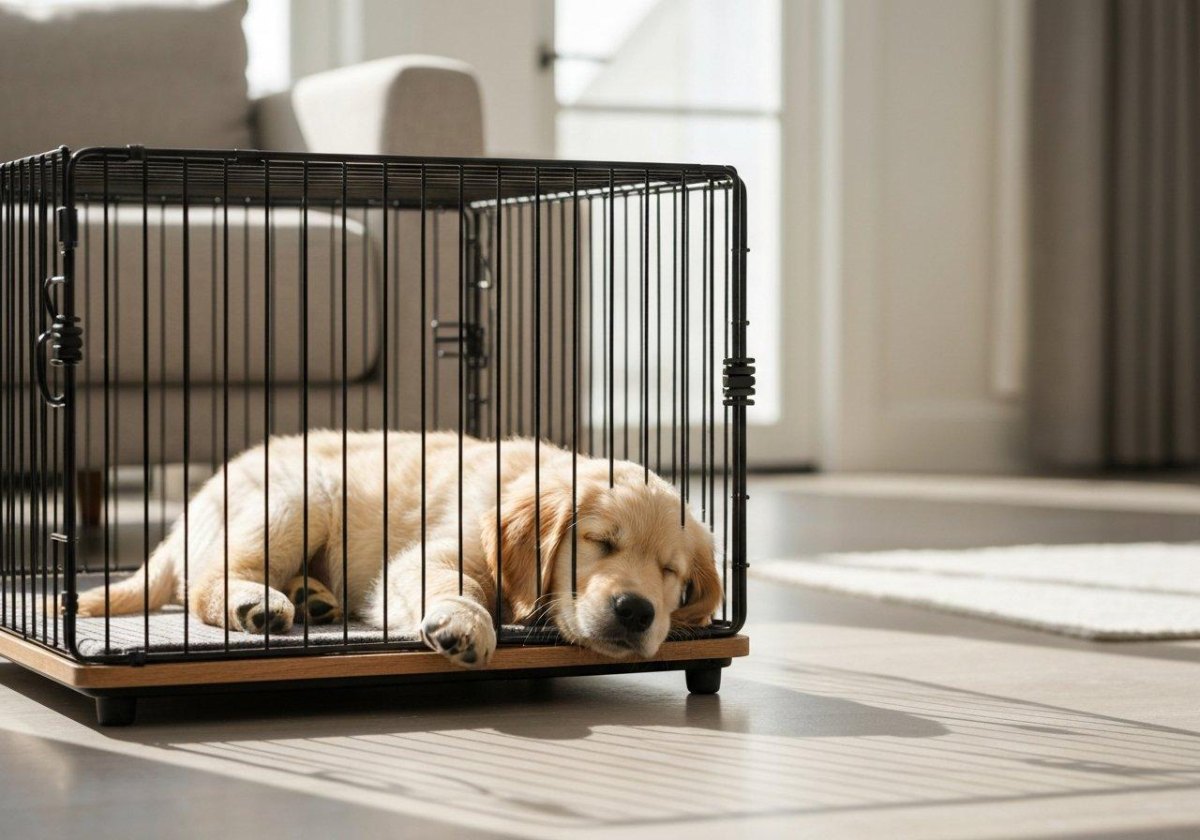
Dogs are brilliant at patterns. A predictable crate routine helps your puppy understand what comes next, whether that is a nap after play, quiet time while you cook, or bedtime.
I do not expect a young puppy to suddenly handle long stretches alone. Age, bladder control, exercise, sleep needs, and the individual puppy all matter. Crate training is a skill that develops over weeks, not a switch you flip overnight.
How long does puppy crate training take?
Many puppies improve over several weeks with consistent practice, but comfort levels vary. A puppy who struggles needs smaller steps, not more pressure.
What if my puppy cries in the crate?
First check basic needs like potty, hunger, discomfort, and whether the session was too difficult. Avoid teaching a frightened puppy that they must panic alone.
Is crate training necessary for every dog?
No. Crates can be useful, but they are a tool, not a requirement. Some dogs do better with other safe resting spaces.
The best crate-trained dogs I know are not the ones who were made to endure the most. They are the ones who learned, one calm repetition at a time, that their crate is a place where good things happen.
More Pinterest Visuals