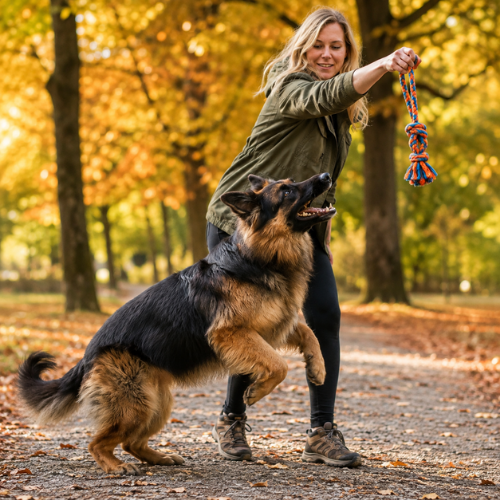
Puppy teeth feel like a hundred tiny needles and everyone warns you about that part. What nobody warns you about is the actual sequence that turns a mouthy ten-week-old into a dog with a genuinely soft mouth. These nine approaches are the ones I actually use with clients, in the order I usually teach them, starting with the mistake that undoes most of the good work before it even starts.
The Mistake Most Puppy Owners Make
The single biggest mistake I see in private consults isn't a technique problem, it's a framing problem. Owners come in describing a puppy with a “biting problem,” and what I'm usually watching is a completely normal seven- to sixteen-week-old doing exactly what puppies do with their mouths: exploring, playing, and easing the discomfort of teething. Puppy biting is developmental, not aggressive, and it responds to redirection and patience, not correction.
I grew up around dogs who got a swat or a rolled-up newspaper for this, and I understand the impulse completely. A mouthful of needle teeth on your wrist at 7 a.m. is not fun. But punishing a puppy for mouthing teaches two things you don't want: it can suppress the warning signals dogs give before a real bite later in life, and it can make a puppy warier of hands for years.
The puppies who turn into dogs with a genuinely soft mouth are the ones whose owners taught them what to do with their teeth instead of only telling them what not to do.
That shift is what this whole list is built on.
Guiding Play So Puppy Learns What's Okay
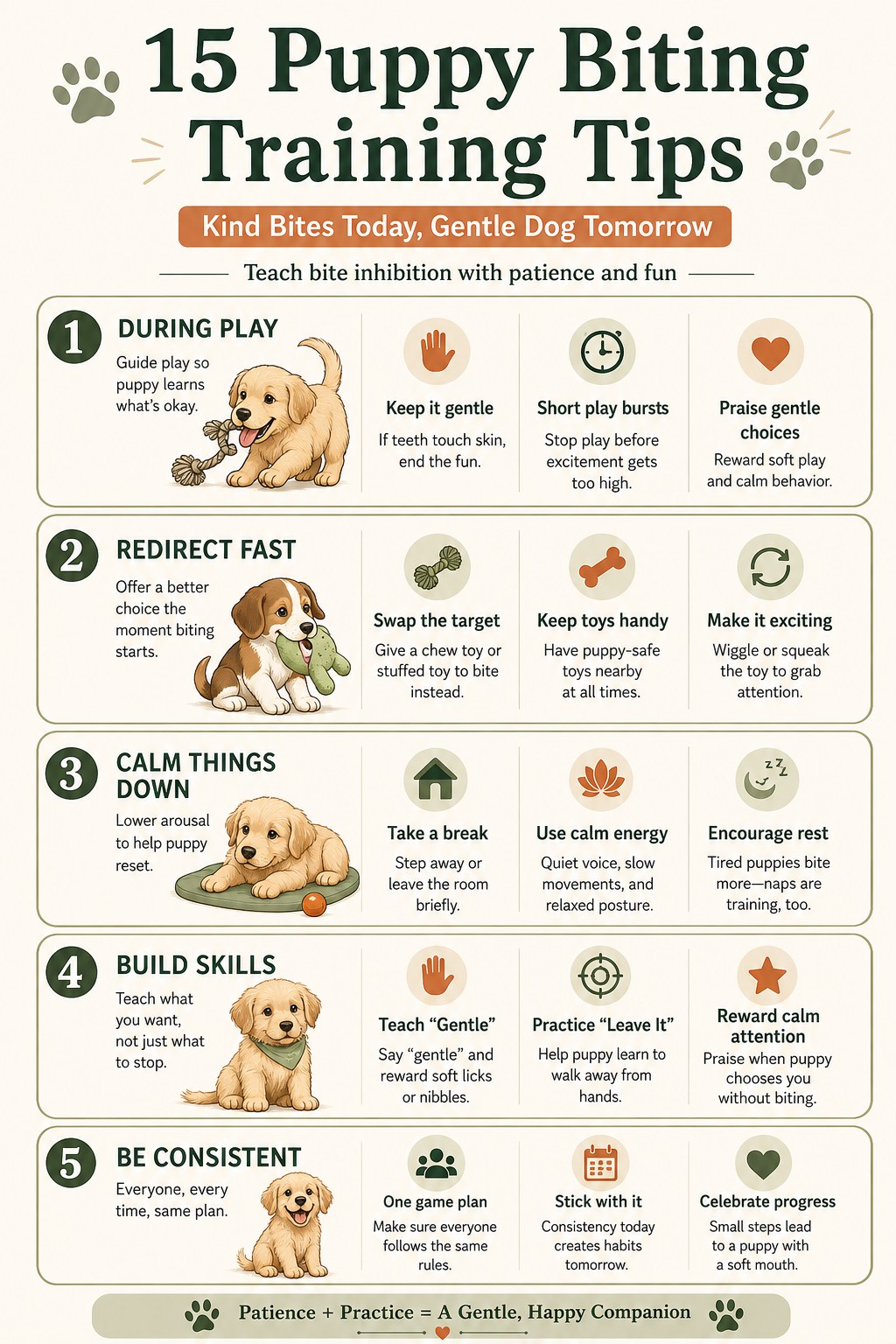
Play is where bite inhibition actually gets built, which means how you play matters more than most owners realise. This is the framework I give every puppy client in week one:
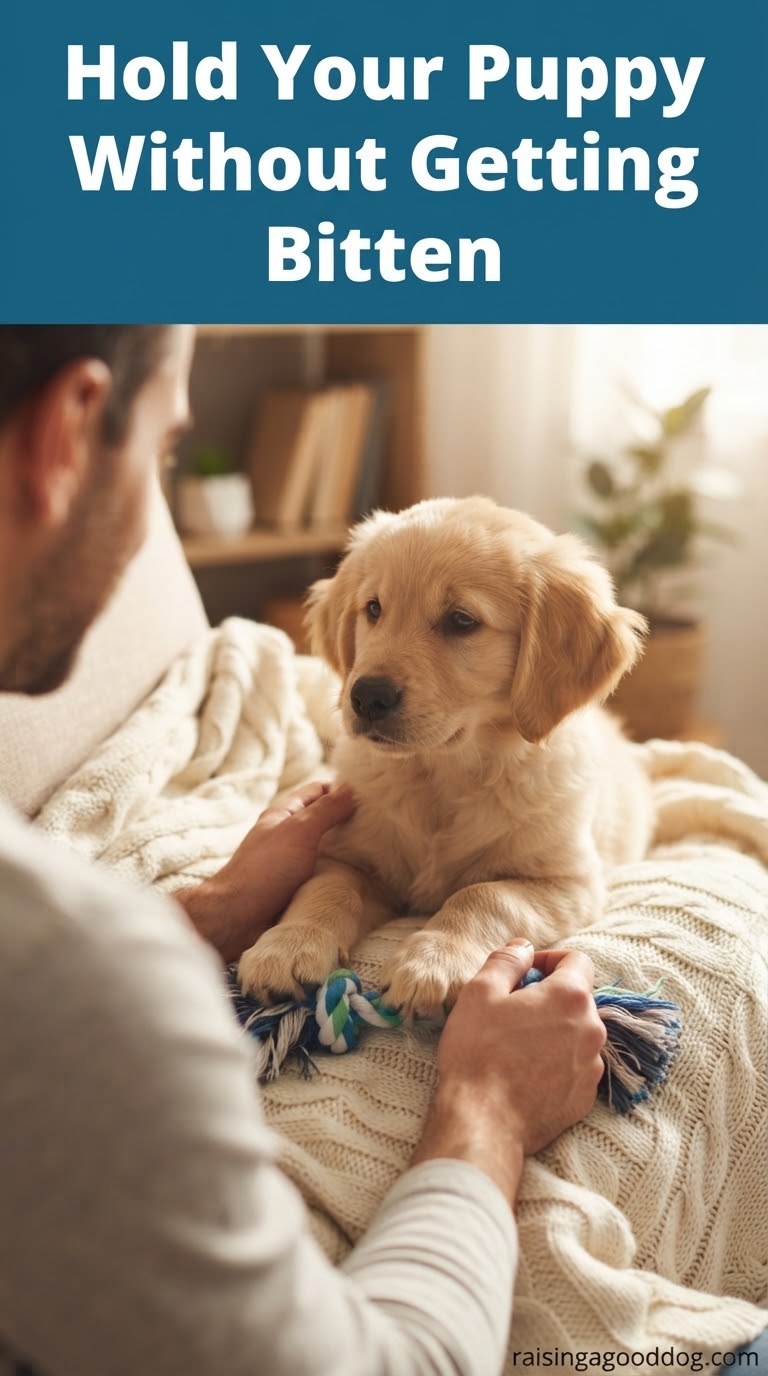
- Keep it gentle from the start. The moment teeth touch skin, however lightly, end the game — puppies learn fastest from immediate feedback.
- Use short bursts. Puppies escalate quickly once excited, so thirty to sixty seconds of play followed by a pause keeps arousal from tipping into a bite-fest.
- Praise the soft choices. When your puppy grabs the toy instead of your sleeve, say so — a calm “good” and a scratch under the chin does more work than any correction ever will.
The pattern you're after is simple: play stays fun exactly as long as the mouth stays soft, and it pauses the instant it doesn't. Most puppies figure this out within days, not weeks, once the rule is consistent.
Five Habits That Build a Gentle Mouth
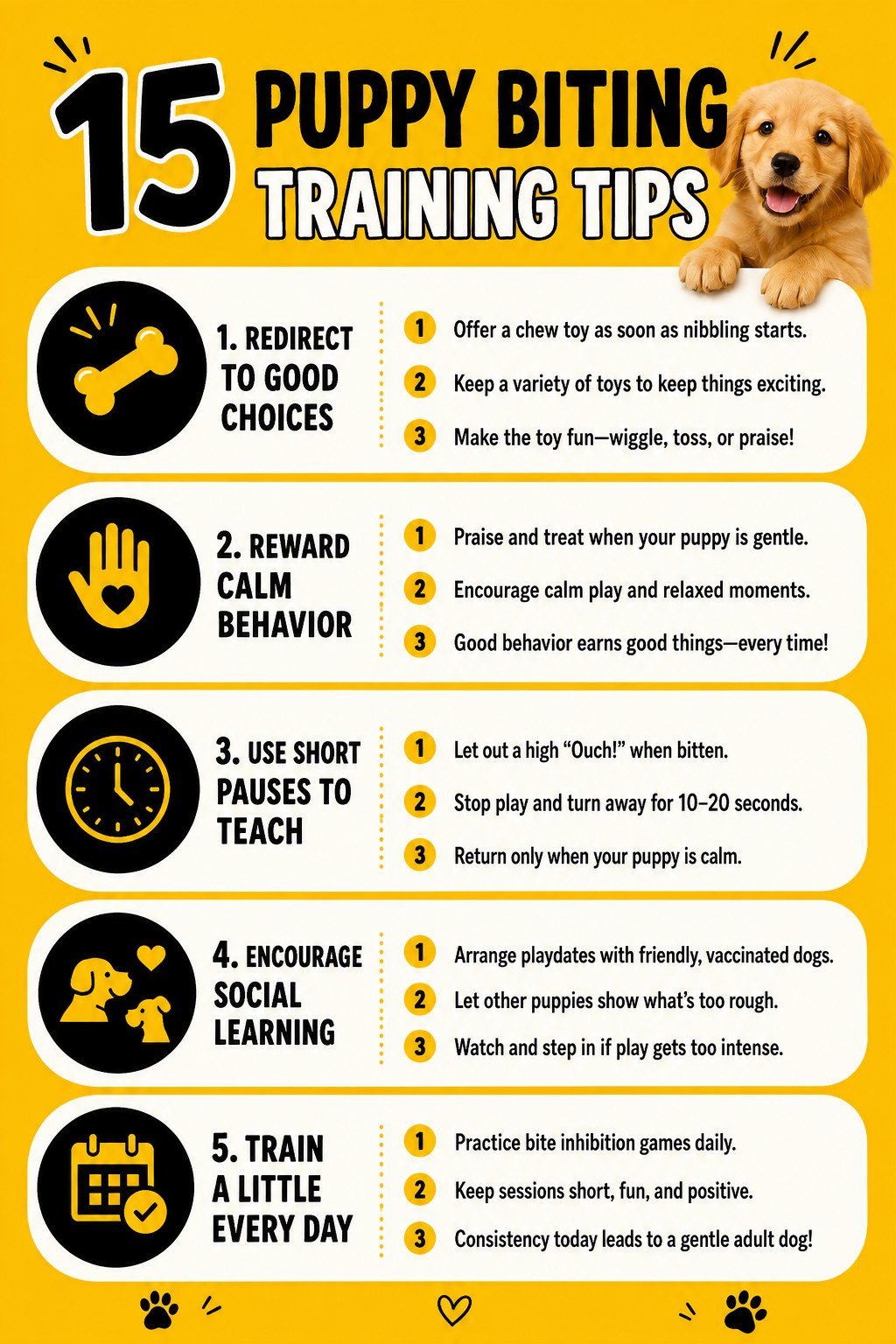
Practice these daily, not occasionally
- Redirect to good choices the moment nibbling starts — keep two or three chew toys within arm's reach at all times, not in a bin across the room.
- Reward calm behaviour generously. A puppy lying quietly at your feet should get at least as much attention as one demanding it with teeth.
- Use short pauses to teach. A high-pitched “ouch” and thirty seconds of turning away gives clear, non-punitive feedback that biting ends the fun.
- Encourage supervised social learning with other healthy, vaccinated puppies — dogs teach bite inhibition to each other far more precisely than we can.
- Train a little every day. Five minutes of structured practice, repeated daily, beats one long session on a Sunday.
Redirect, Reward, Repeat
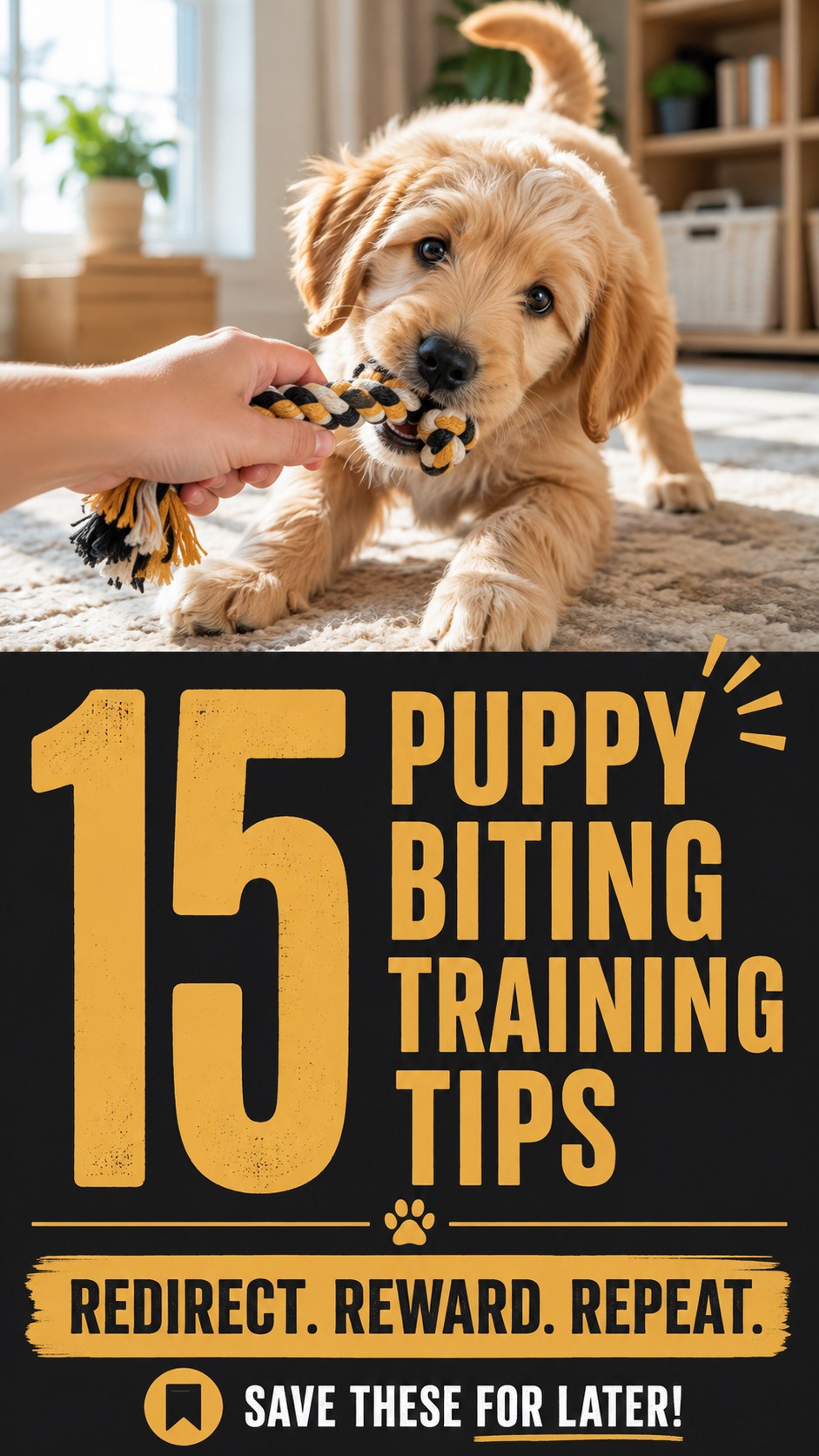
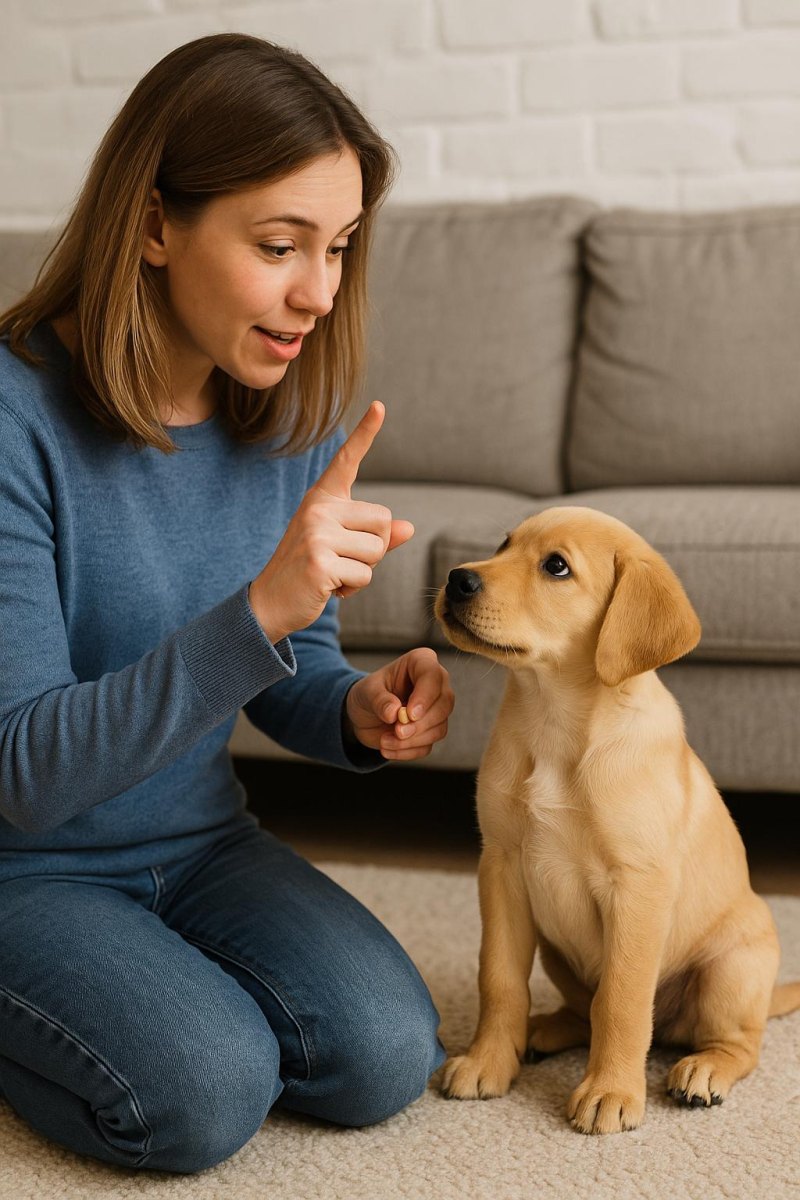
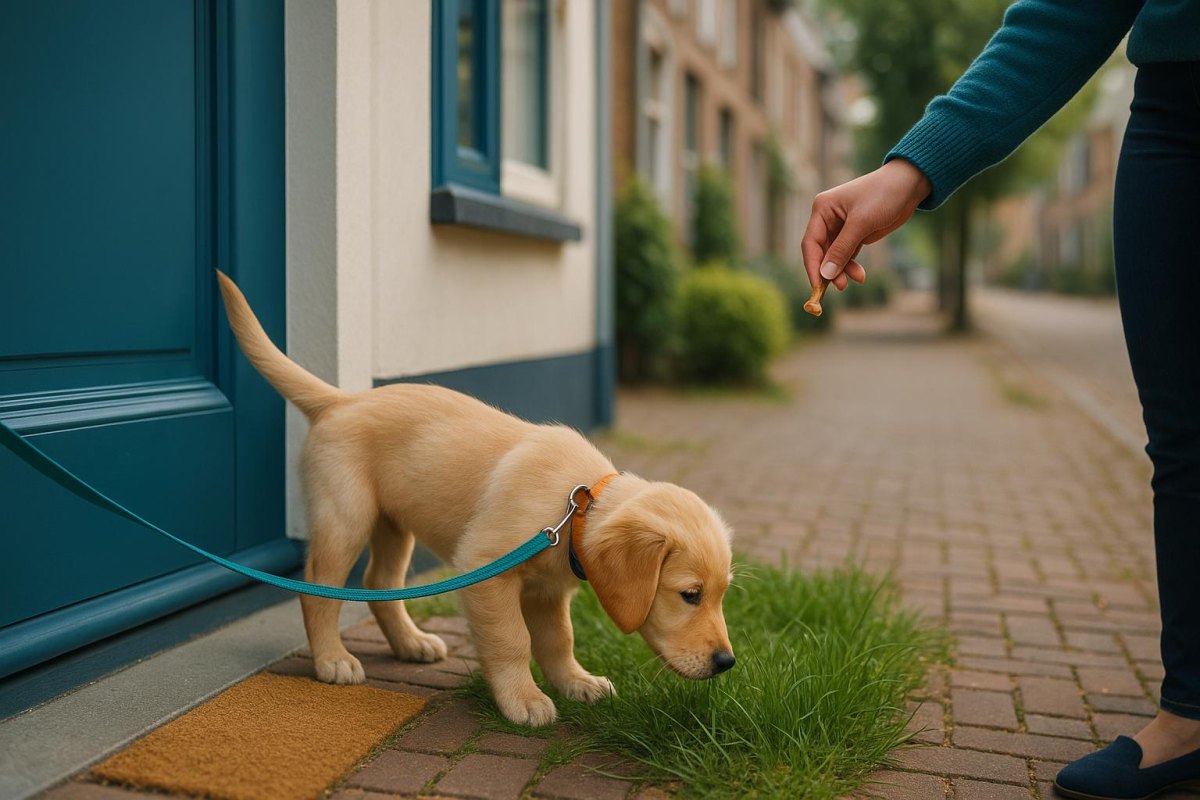
When a puppy's mouth is heading for your hand, cuff, or hair, the fastest fix isn't a verbal correction, it's simply having something better already in your hand. This is the swap-the-target method, and it's the most-used tool in my own bag.
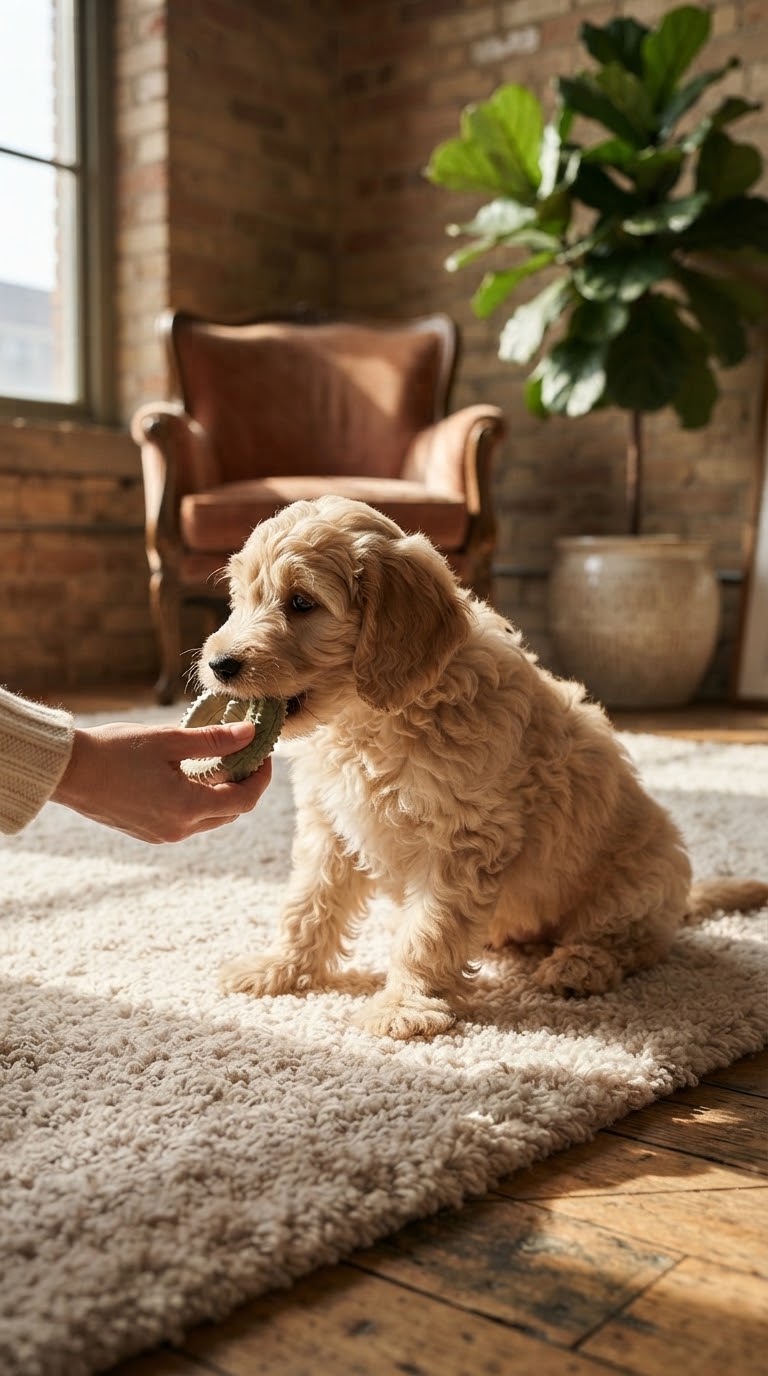
Keep a rope toy or rubber chew in your pocket or on every surface your puppy visits. The moment you feel teeth, don't yank away — a fast retreat can trigger a chase-and-bite reflex. Instead, calmly present the toy an inch from where the biting is happening, let your puppy latch onto that instead, and praise the switch. Tug is fine here, and it's a myth that tug games make puppies aggressive; what matters is that you control the start and stop with a cue, and the toy, never skin, is always the target.
Do this consistently for two or three weeks and most puppies start offering the toy on their own before you even reach for it.
The Yelp-and-Pause Method
Borrowed straight from littermates
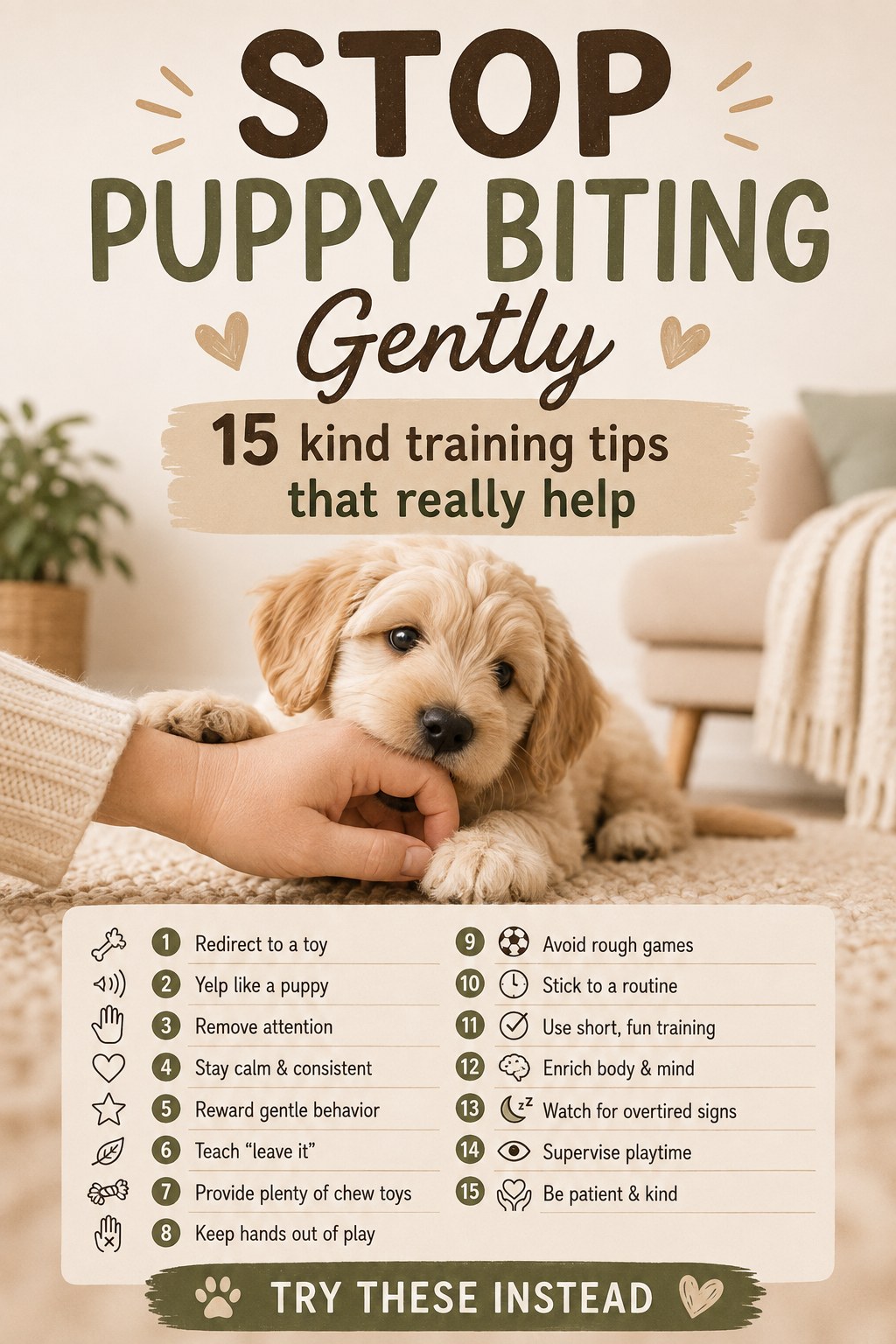
This mimics exactly what a littermate does: a sharp little “ouch,” followed by pulling attention away for ten to twenty seconds. No drama, no raised voice — puppies startle at sudden noise, not anger, so keep the response deliberately small.
- Yelp like a puppy — a short, high sound, not a scolding tone.
- Remove your attention by standing up, turning your back, or stepping behind a gate briefly.
- Return calm, not cold. Once your puppy settles, offer a toy — the goal is teaching consequence, not punishment.
- Keep hands out of play generally; hands that wrestle are hands that get bitten, so make toys the hand's job and petting the palm's job.
Some puppies find the yelp exciting rather than deflating. If that's yours, a silent stand-and-turn works just as well.
Reading Overexcitement Before It Turns Into Biting
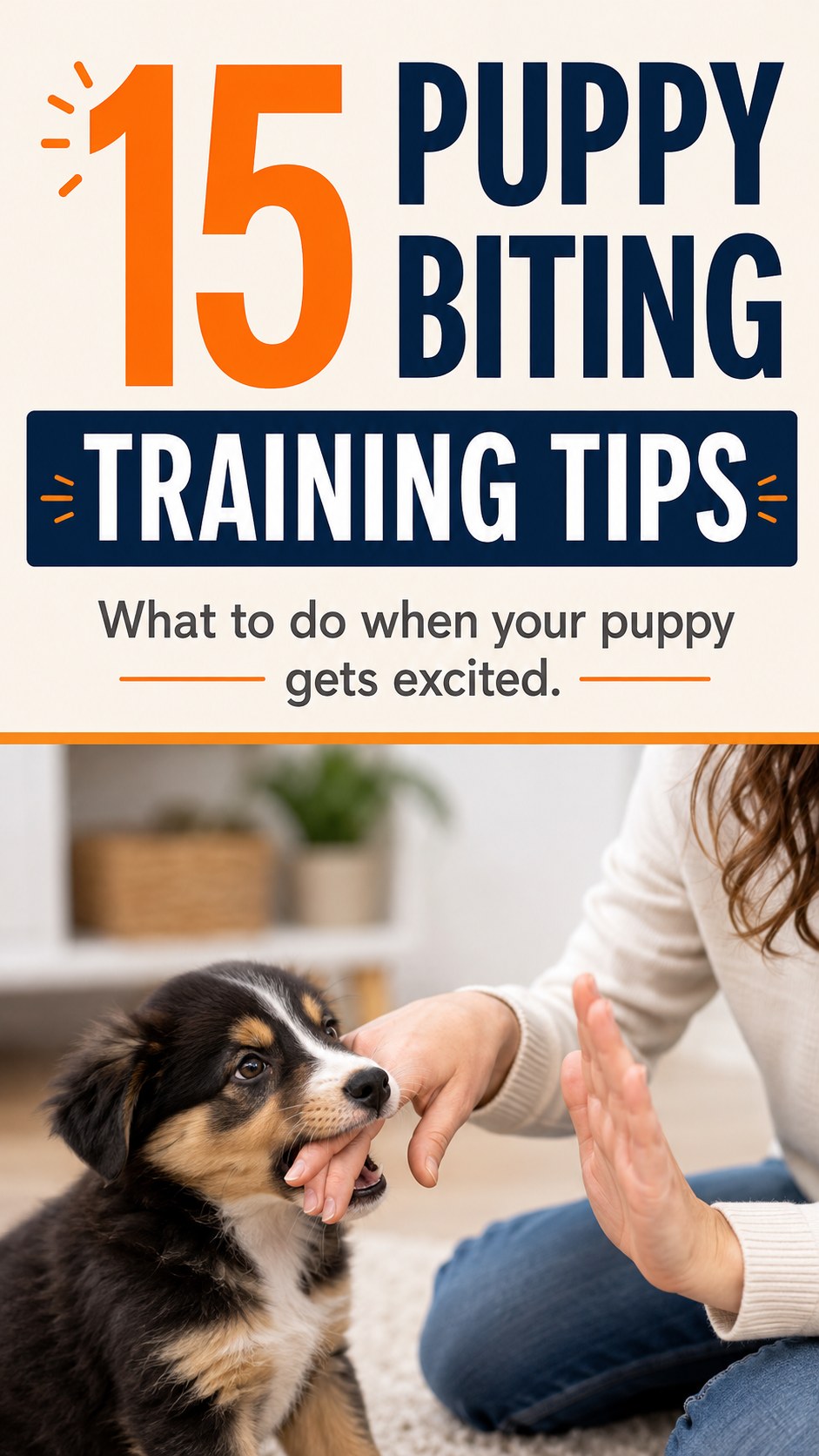
Most biting escalations I get called out for aren't really a training failure, they're a puppy who was already past the point of good decision-making by the time anyone noticed. This is where my years in a vet clinic still shape how I teach: watching for the small stuff before it becomes the big stuff.
Before the bite gets harder, look for: a stiffer body, ears pinned slightly forward, faster breathing, a fixed stare at your hand instead of soft blinking eye contact, or that manic, zoomie energy that looks like fun but is actually a nervous system running too hot.
Once you see two or more of those signs, the answer isn't more play, it's a reset — a hand target for a treat, a short walk to a mat, or simply ending the session. Puppies genuinely cannot self-regulate arousal the way an adult dog can; that skill develops over months, and your job in the meantime is to be the brakes.
Managing the Environment Around Biting
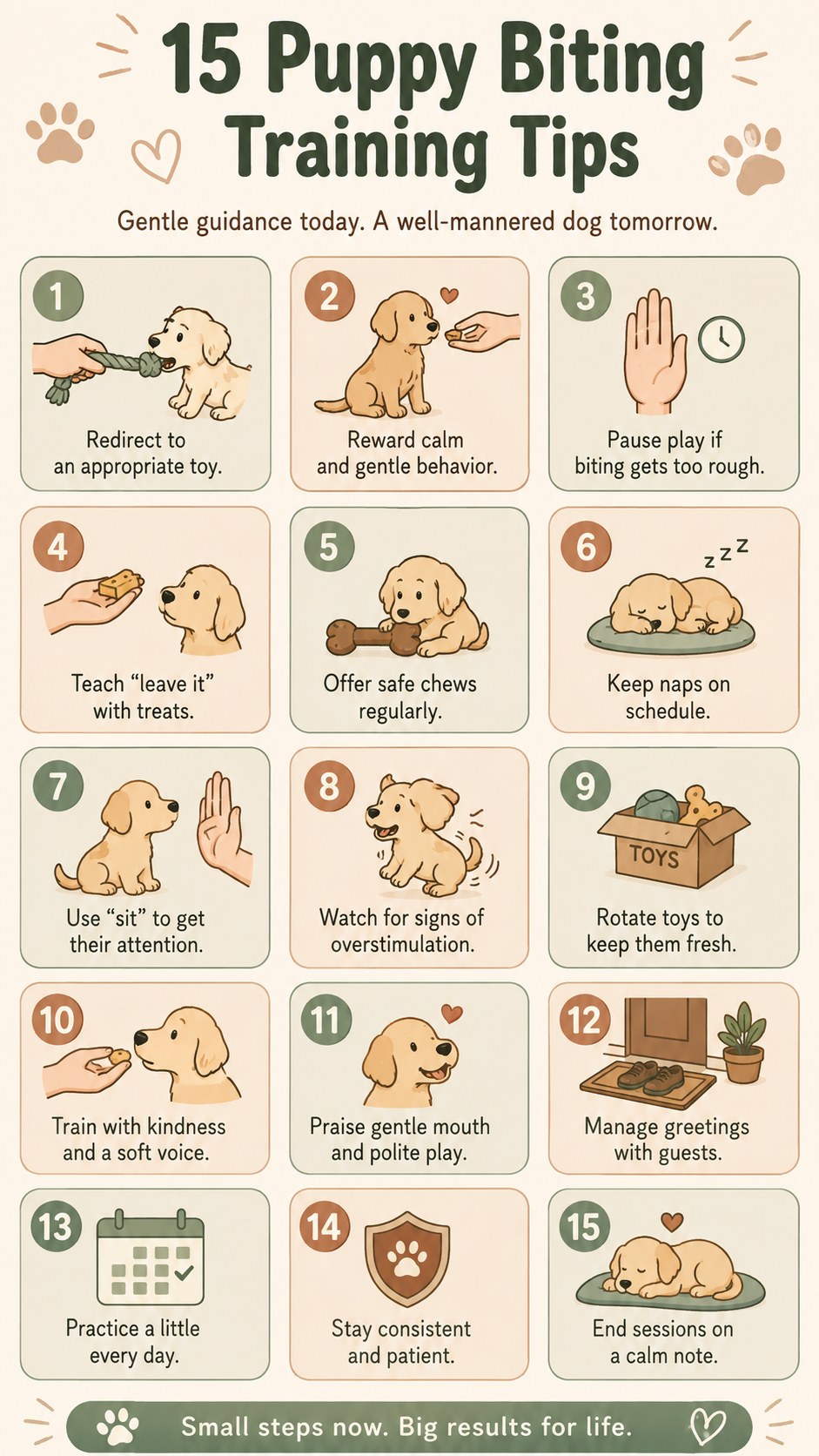
A tired, understimulated, or overwhelmed puppy bites more, full stop, so a lot of “training” is really just good environmental management. A few pieces I build into every puppy's week:
- Protect nap times. A puppy under four months needs sixteen to eighteen hours of sleep a day; an overtired puppy mouths harder and more often, not less.
- Rotate toys weekly so the “new” chew is genuinely novel instead of background furniture.
- Practice “leave it” daily with low-value items, so it's reliable by the time you need it for a shoelace or a guest's hand.
- Manage greetings deliberately — ask visitors to let your puppy settle before touching, and keep a toy by the door for that first excited minute.
None of this is glamorous, but it's the difference between a puppy set up to succeed and one set up to fail by 6 p.m. every day.
Getting Everyone in the House on the Same Page
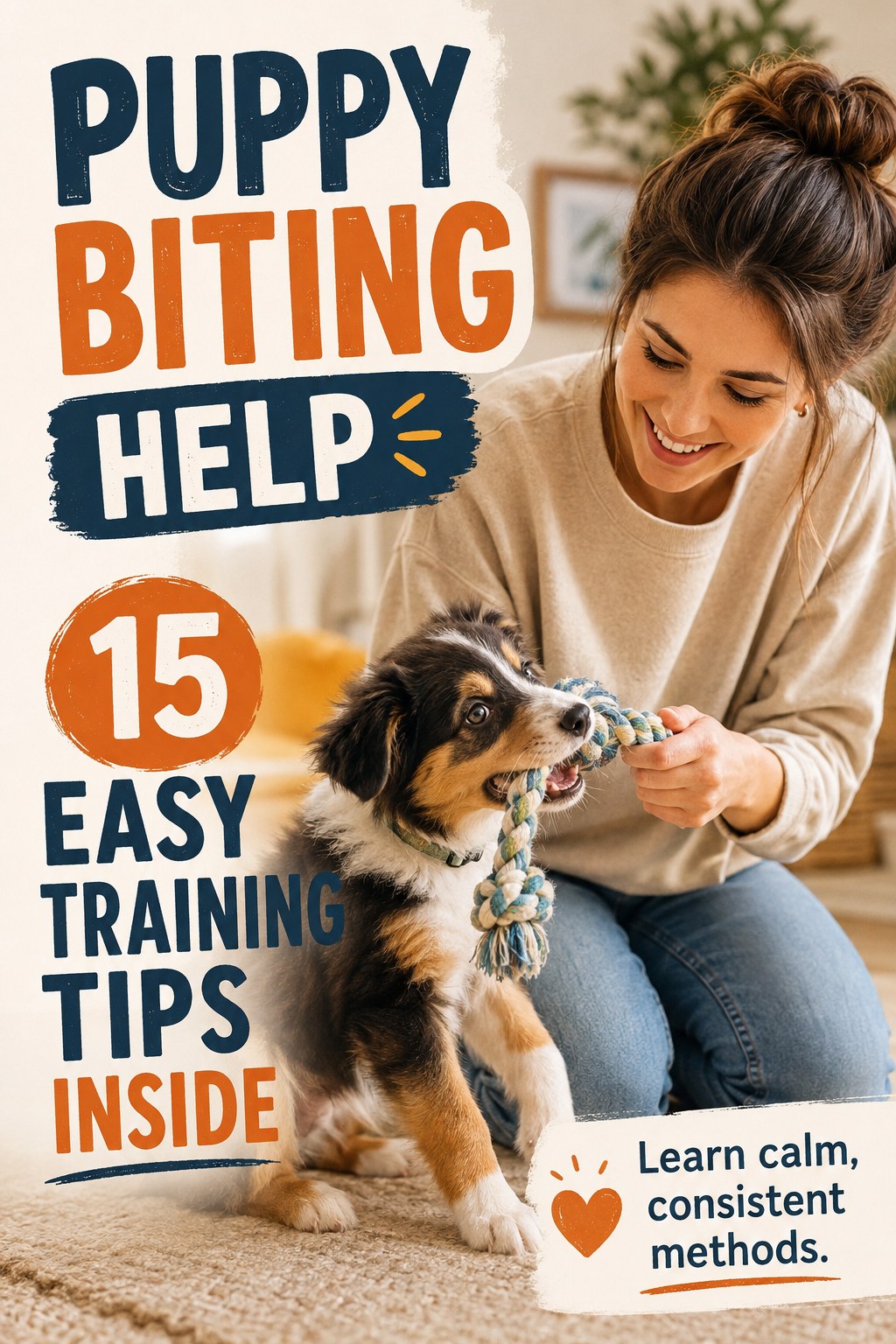
I can usually tell within five minutes of a consult whether a household is running one plan or several, because the puppy tells me — mouthy with one person, soft with another, confused with all of them. Owen and I had this exact argument over Bruno years ago: he thought roughhousing with hands was harmless fun, I was trying to teach a soft mouth, and the puppy in the middle got two contradictory lessons a day.
Everyone in the house needs the same rules, worded the same way, before this training sticks. That means the same redirect toy, the same response to a nip, the same “game over” cue, whether it's you, a partner, or a visiting cousin on the floor. Write it on an index card by the door if you have to — I've done stranger things with a whiteboard.
Consistency won't make progress faster in week one, but its absence will absolutely make it slower in week four.
What to Skip, and What to Do Instead
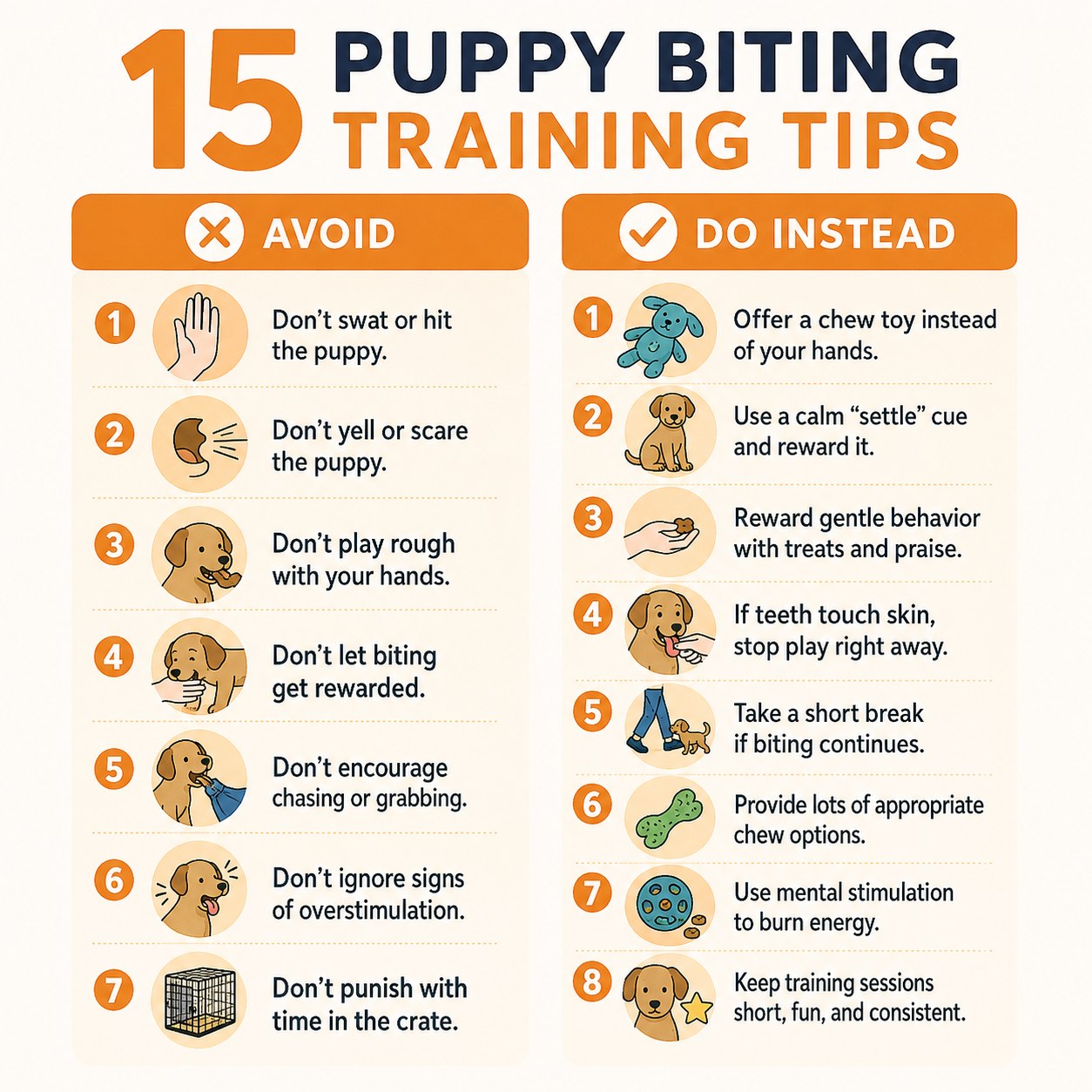
A quick, honest comparison
This is worth spelling out plainly, because a lot of the advice still circulating is left over from methods I don't use and don't recommend:
- Don't swat, hit, or scruff. It can suppress the bite without addressing why it's happening, and teaches a puppy that hands are unpredictable.
- Don't yell or use a scary tone. Startling a puppy doesn't teach bite inhibition, it just adds fear to a dog who was only trying to play.
- Don't crate as punishment. The crate should be the calmest place in the house, not a consequence — using it as one undoes weeks of positive crate work fast.
- Do offer a chew instead of your hand, reward the gentle mouth you want, and take a short break the moment things tip into overexcitement.
None of this needs force to work. I've run this exact framework with several hundred puppies over the years, and the ones who come out the other side with a genuinely soft mouth are the ones whose owners stayed calm and consistent, not the ones who got tougher.
Somewhere around week three of consistent redirection, most owners tell me the same thing: the bites got softer before they got less frequent. That's the order it usually happens in, and it's a good sign, not a sign you're behind.

Common Questions
At what age does puppy biting usually stop?
Most puppies show real improvement in bite inhibition between four and six months as adult teeth come in, though full impulse control often isn't there until closer to a year. If a puppy over eight months is still biting hard and often, it's worth having a trainer take a closer look at what's maintaining it.
Is it normal for puppy biting to get worse before it gets better?
Often, yes. Many puppies go through a rougher patch around three to four months when teething discomfort peaks. That's a plateau, not a failure of training, and it usually eases once molars finish coming in.
Should I ever be worried a puppy's biting is aggression?
True aggression in a young puppy is rare, but if biting is paired with stiff body language, growling that doesn't stop with redirection, or seems targeted at specific people rather than general excitement, that's worth a session with a certified trainer in person rather than troubleshooting it from a blog post.
Do I need a vet involved for puppy biting?
Not usually for typical mouthing, but if biting is a sudden change in a puppy who was previously gentle, or is paired with sensitivity to touch or other signs of pain, rule out a medical cause with your vet before starting behaviour work.