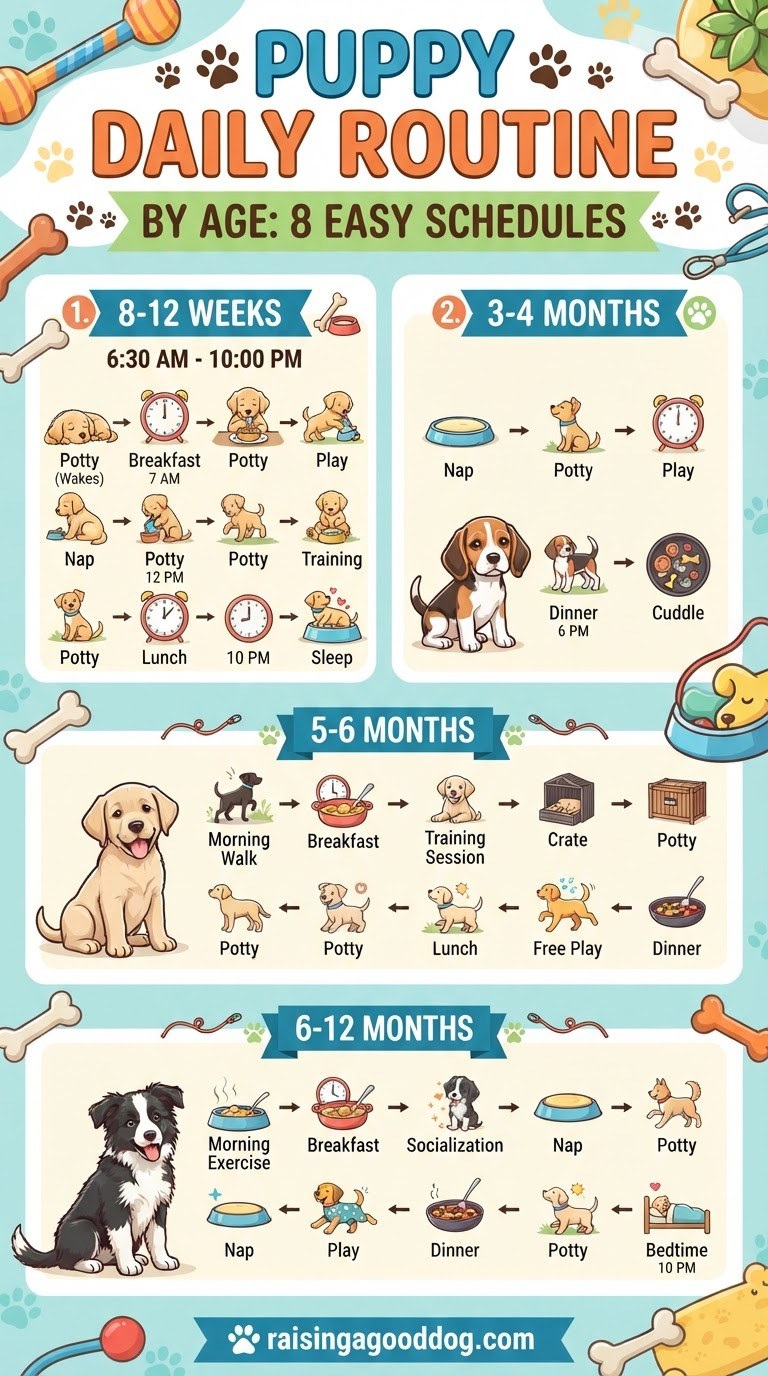
Every puppy owner I meet arrives with a version of the same question, dressed up in different words: what am I actually supposed to be doing with this dog all day? These eight routine charts are the answer I wish someone had handed me in one sitting instead of piecing together over dozens of sessions, from the checklist before pickup day to the habits that keep a grown dog calm years later. None of them is more correct than the others. They're different pieces of the same puzzle, and most families end up borrowing from three or four.
The Ten Cues I Actually Teach First
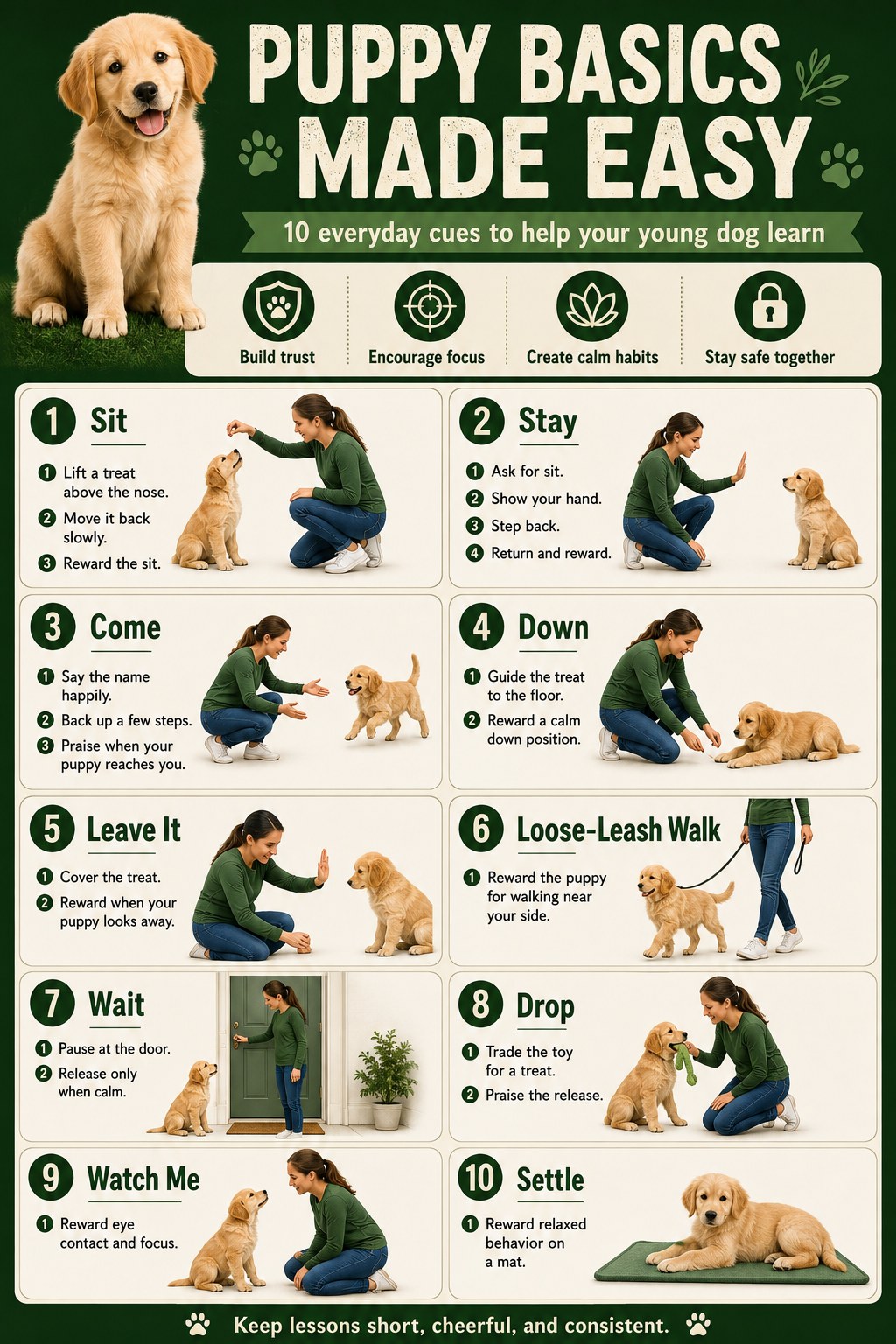
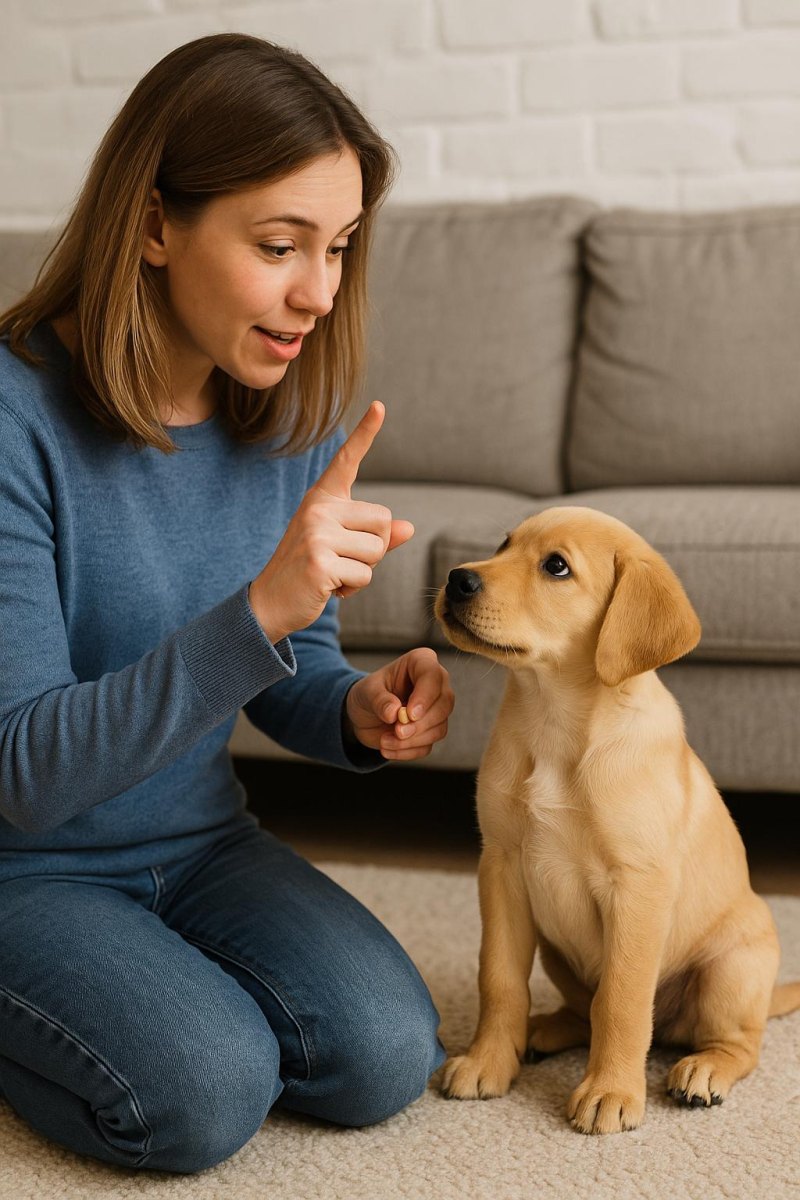
When people ask me where to start with a new puppy, they usually expect something complicated. It's not. The ten cues on a chart like this cover almost everything a young dog needs to move through the world politely — and the order you teach them in matters more than most owners realize.
I start with watch me and sit before anything else, because attention is the skill every other cue depends on. A puppy who will look at you on cue is a puppy you can redirect out of trouble later. Come and wait get built next, in the kitchen and the hallway, long before they mean anything on a real walk.
- Keep sessions to three or four minutes. An eight-week-old puppy's attention span is measured in seconds, not minutes, and pushing past that just teaches frustration.
- Reward the attempt, not the perfect version. A crooked sit still earns a treat at this age.
- Settle is the one owners skip and shouldn't. A dog who can lie on a mat and do nothing is worth more, day to day, than one who knows five tricks.
None of this is obedience for its own sake. It's the vocabulary you'll need in six months, when the real world gets more interesting than you are.
Six Daily Pillars I Check With Every Client
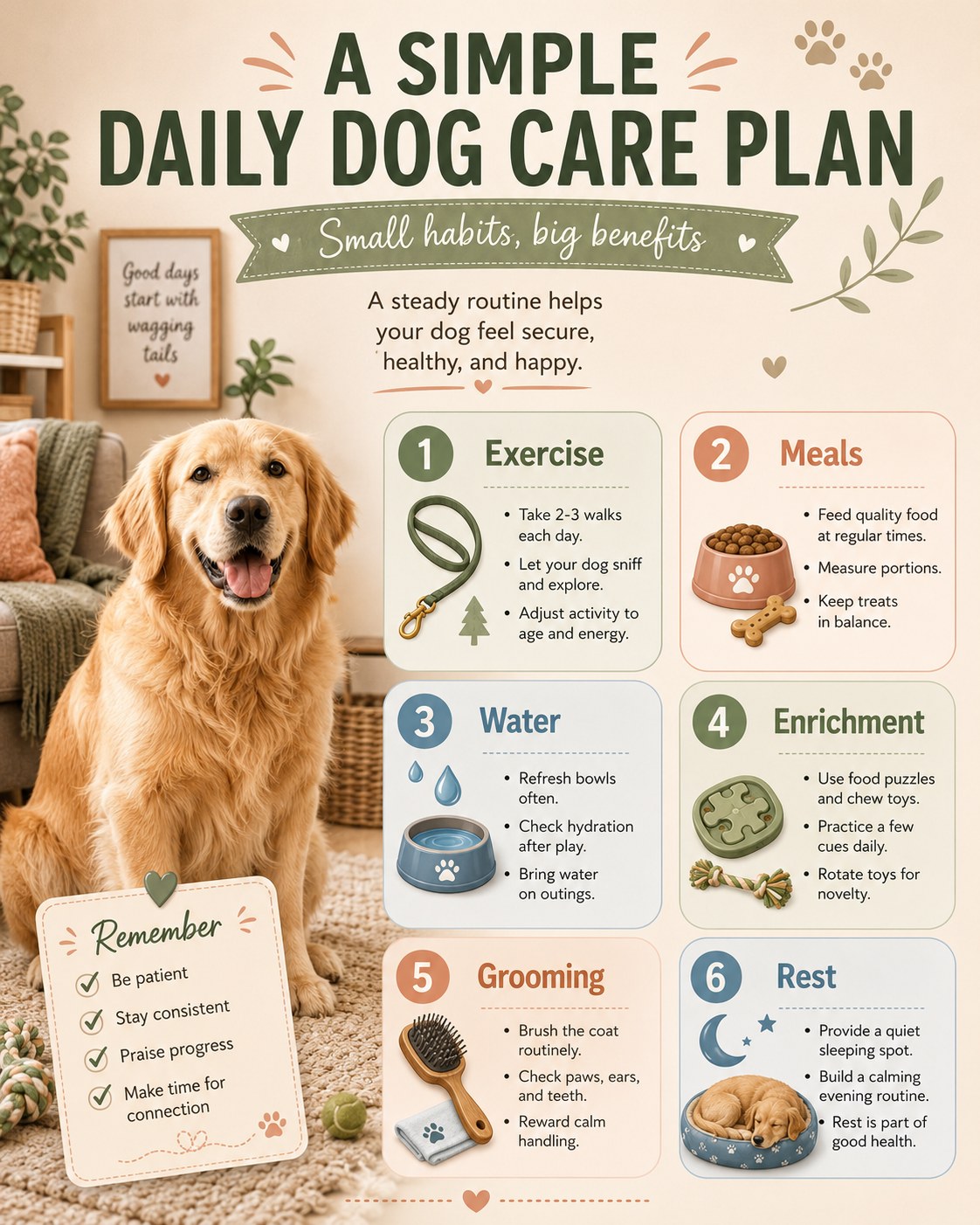
Strip away the branding and a daily care plan like this is really just six questions I ask about every dog I see, puppy or otherwise: has he moved, eaten well, had water, used his brain, been handled kindly, and rested.
Exercise should match the dog in front of you, not a number off the internet. The old rule of five minutes per month of age, twice a day, is a reasonable starting point for a growing puppy — more than that and you risk joint stress in a dog whose growth plates haven't closed yet.
Meals and water are the boring parts nobody asks me about, and they're the first things to slip when a routine falls apart — measured portions, not eyeballed ones, and a water bowl checked after every walk, especially in Asheville's sticky summer humidity.
The dogs I see with the fewest behavior problems aren't the most trained ones. They're the ones whose day has a predictable shape.
Enrichment and grooming both do double duty: a food puzzle tires a brain the legs didn't reach, and a grooming session where you handle paws and ears calmly is the same skill you'll need at the vet's office later. Rest closes the loop — a tired puppy who never gets a quiet spot to actually settle stays wired all evening.
Why I Hand Clients a Blank Planner Like This
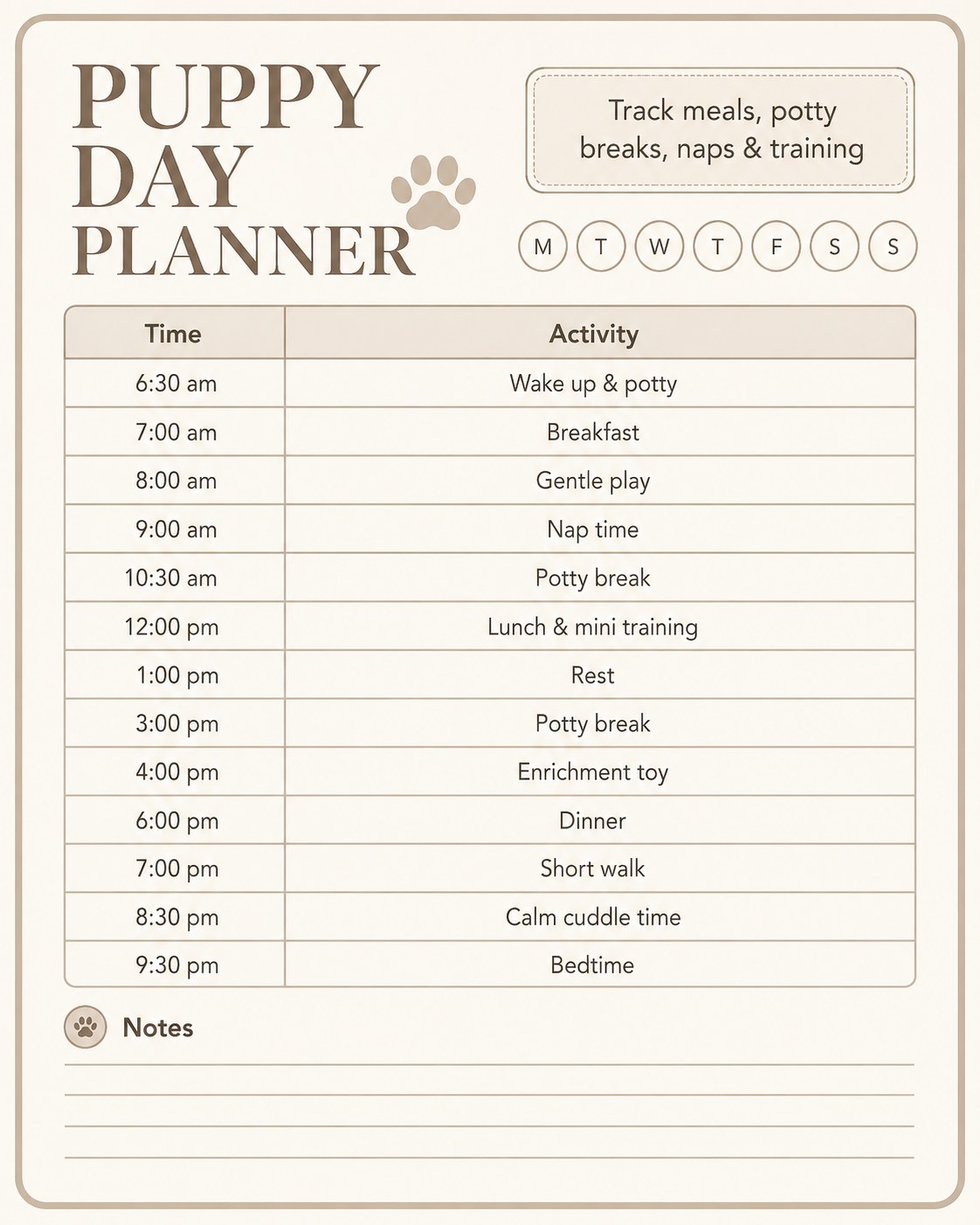
I give almost every new puppy client some version of this weekly tracking sheet, and I'll be honest — half of them think it's overkill until day four.
Writing down meals, potty breaks, naps, and training sessions does something memory can't: it shows you the pattern you're living inside without noticing it. The client who swears their puppy 'just has accidents sometimes' almost always finds, once they track it, that every accident happens around 2 p.m., forty-five minutes after lunch, because nobody's taking him out then.
- Track the time, not just the event. A potty break logged at 10:15 tells you more than one written simply 'morning.'
- Use it for a week, not forever. Once the pattern is visible, most people don't need the sheet anymore — they've internalized it.
- Bladder capacity is roughly age in months plus one, in hours, so a three-month-old puppy is realistically good for about four hours, not six.
It's not glamorous work. It's just the difference between guessing and knowing.
What an Actual Hour-by-Hour Day Looks Like
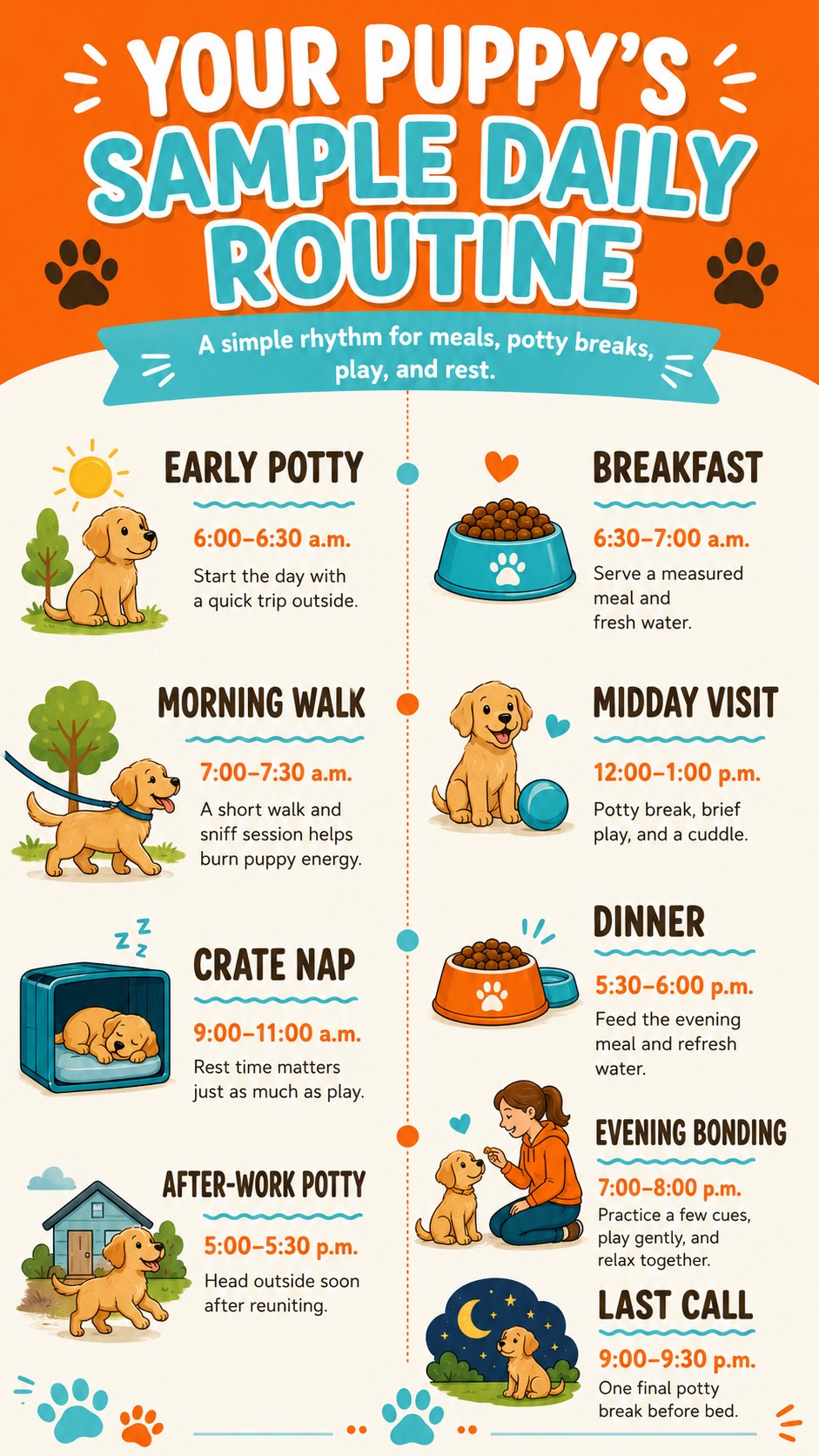
This is close to the schedule I hand a family with a young puppy and a normal workday, and it holds up because every block is short enough for a puppy's actual limits, not an adult dog's.
The early potty break at 6 a.m. isn't optional — a puppy's bladder doesn't care that you'd rather sleep. Breakfast and a short walk follow close behind, then a real gap: a two-hour crate nap that matters as much as any training session on this page, because an overtired puppy is a bitier, more reactive one.
The midday visit is the piece people skip when they work outside the home, and it's the piece I push back on hardest — a young puppy left alone for eight or nine hours straight, with no potty break and no company, is being set up to fail at something that isn't his fault. A dog walker, a neighbor, a midday trip home, anything breaks that stretch up.
The evening bonding block at 7 p.m. is where I tell people to actually practice cues. Puppies are calmer and more food-motivated after dinner than they are first thing in the morning, wound up from a whole day of being a puppy.
The First Day, Before Any Training Starts
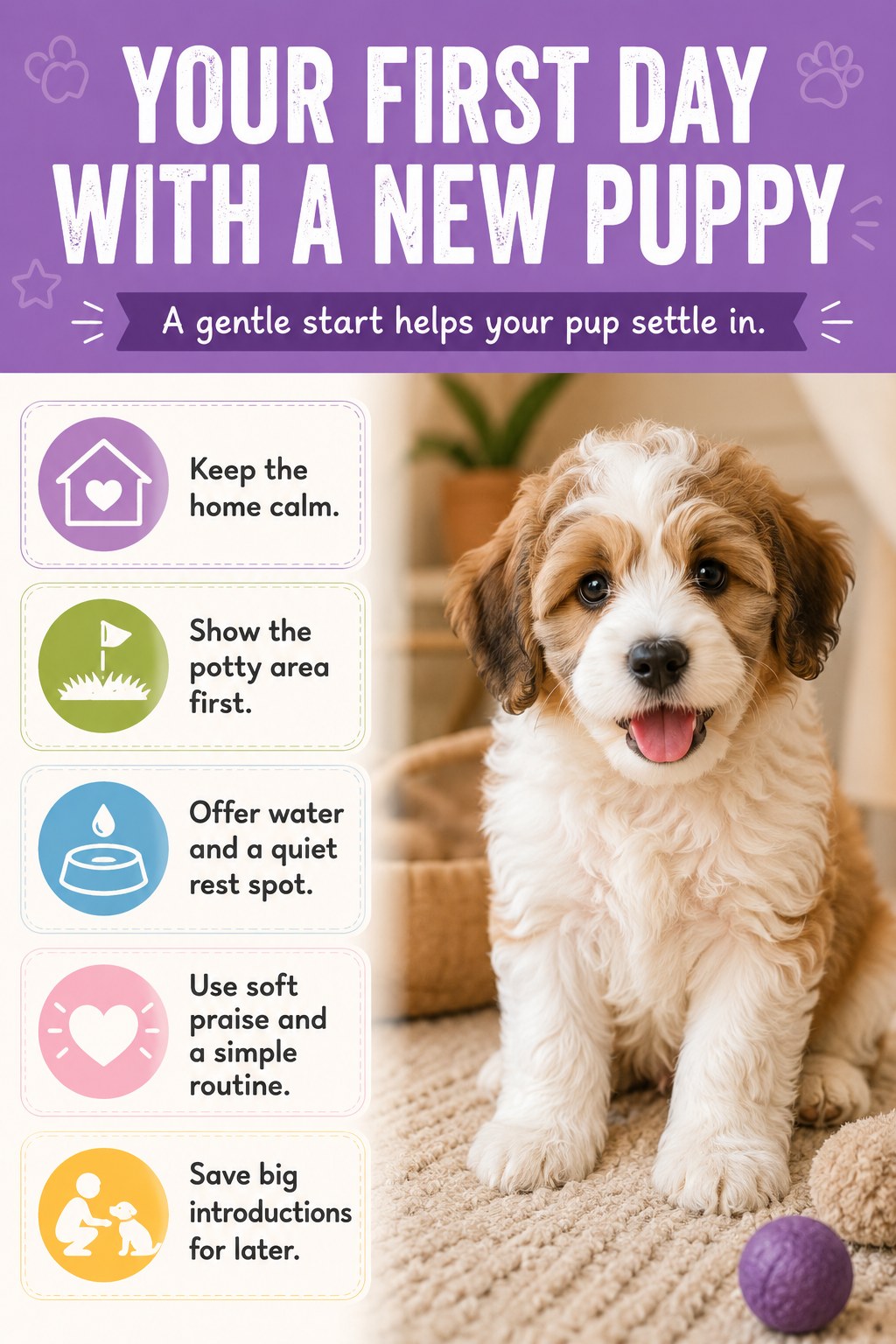
Nothing on this list is a training step, and that's the point. The first day home is entirely about management — keeping the environment calm enough that the puppy has room to figure out where the walls are.
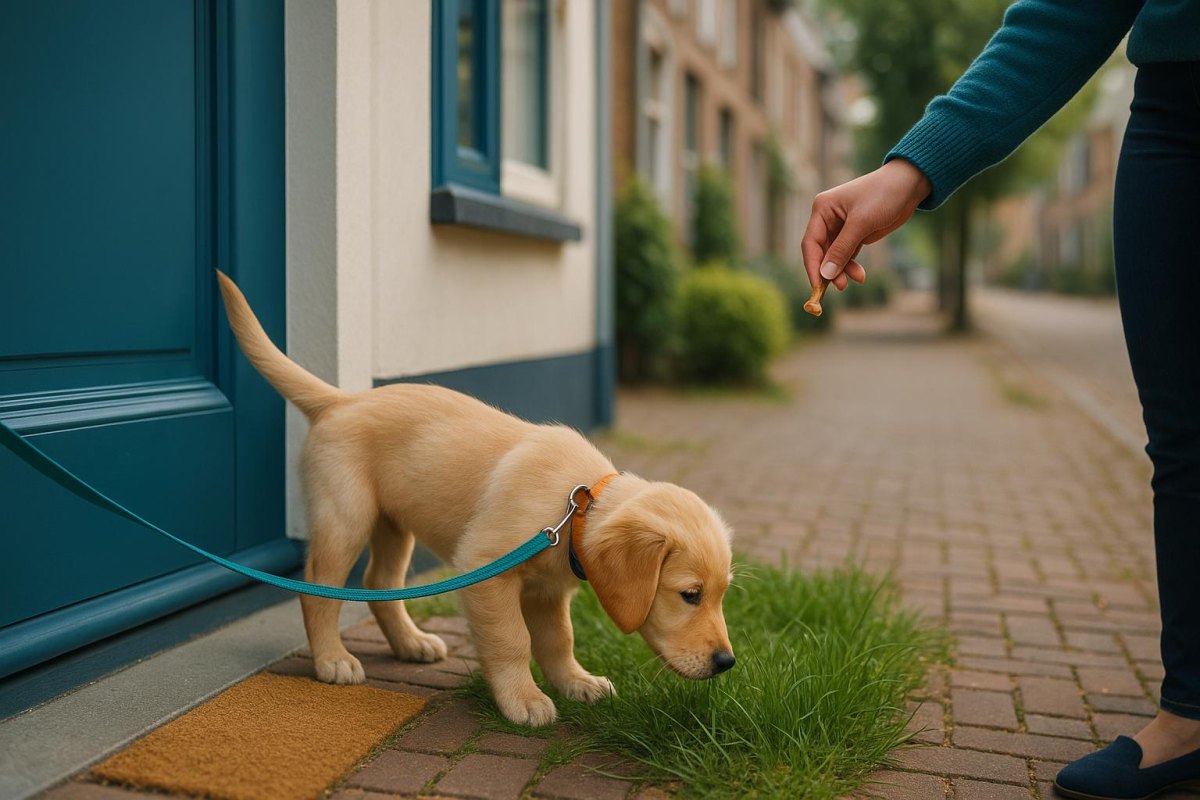
Show the potty area first, before the living room tour, before the kids come running, before anything else. It's the one piece of information you actually need him to have on day one, and it sticks better when it's the very first thing he learns about this new place.
Save the big introductions for later. I know how tempting it is to invite the whole family over the first evening, and I know how often that backfires — an eight-week-old brain doesn't need six new people, a new house, new smells, and a new schedule all in the same four hours. That's not socialization, that's flooding, and it teaches the opposite of what you want.
A quiet rest spot, water within reach, soft praise for anything he does right by accident — that's the whole job on day one. The training starts tomorrow.
What I Tell People to Have Ready Before Pickup Day
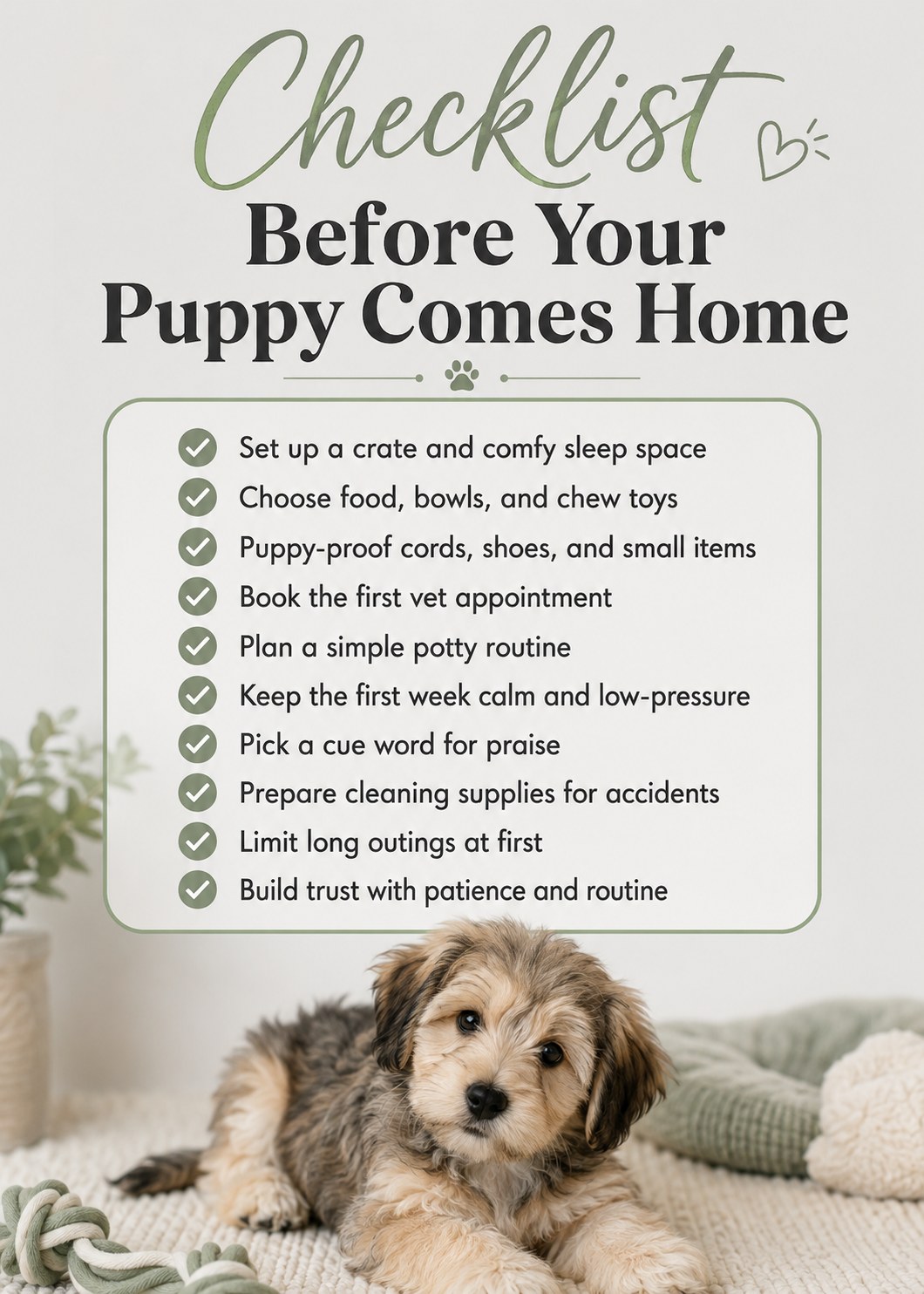
Every item on a checklist like this exists to remove a decision you don't want to be making at 9 p.m. with a crying puppy in your arms. Set the crate up in advance. Buy the food, the bowls, the chew toys before he's home to need them, not after.
- Puppy-proof before he arrives — cords, shoes, anything chewable and low enough to reach, because prevention is cheaper than a vet bill and a lot cheaper than your favorite boots.
- Book the first vet appointment early. This is non-negotiable, and it's also where you'll get real answers on vaccination timing before you start any socialization outings.
- Pick your cue word for praise now, before the chaos starts, and use the same one every time — 'yes,' 'good,' whatever you like, just be consistent from hour one.
- Plan to limit outings for the first week or two. Not because the world is dangerous, but because a brand-new environment is enough input for a brain that size.
None of this is about being perfectly prepared. It's about not having to improvise the basics while you're exhausted and newly in love with a dog.
How the Timeline Actually Unfolds
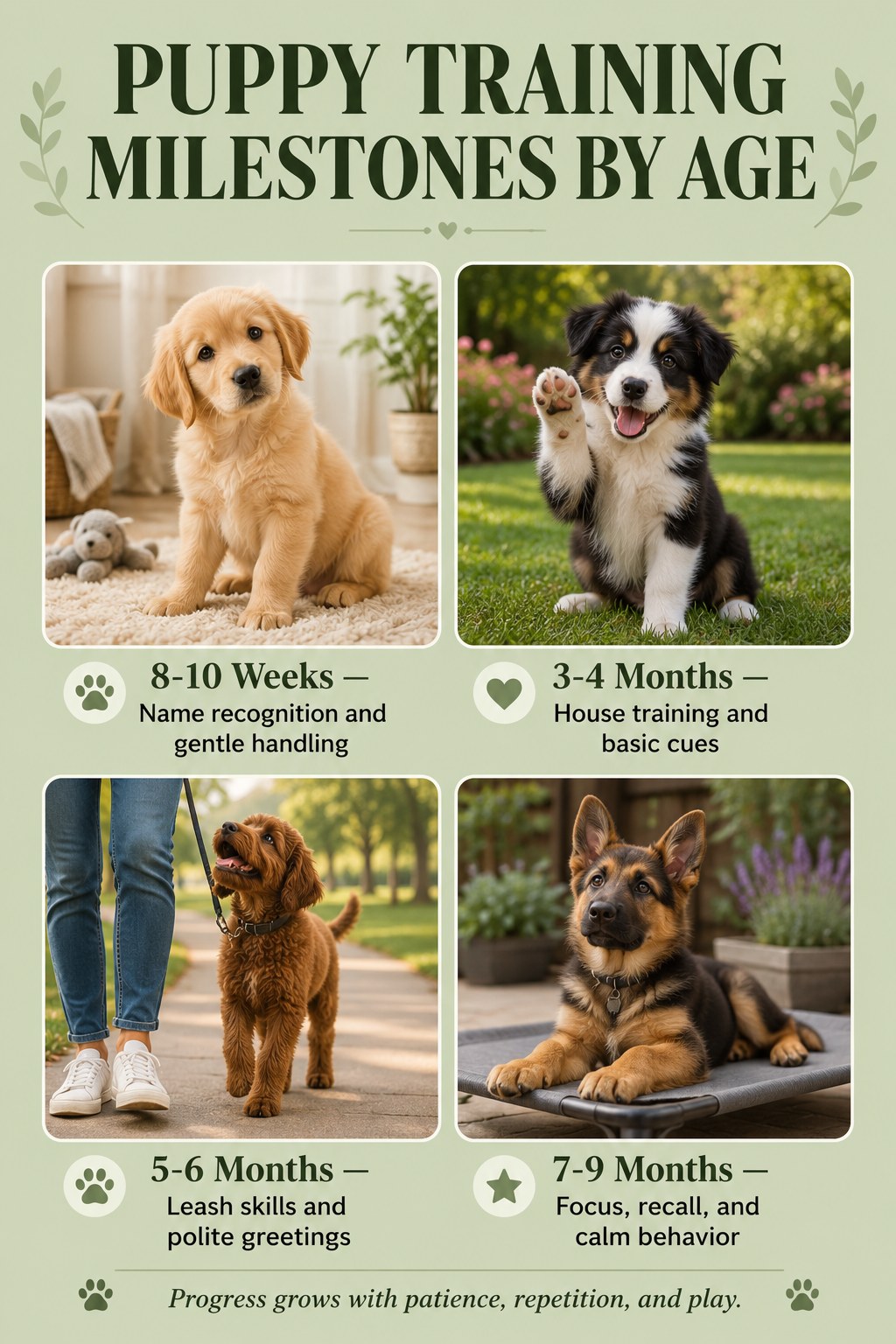
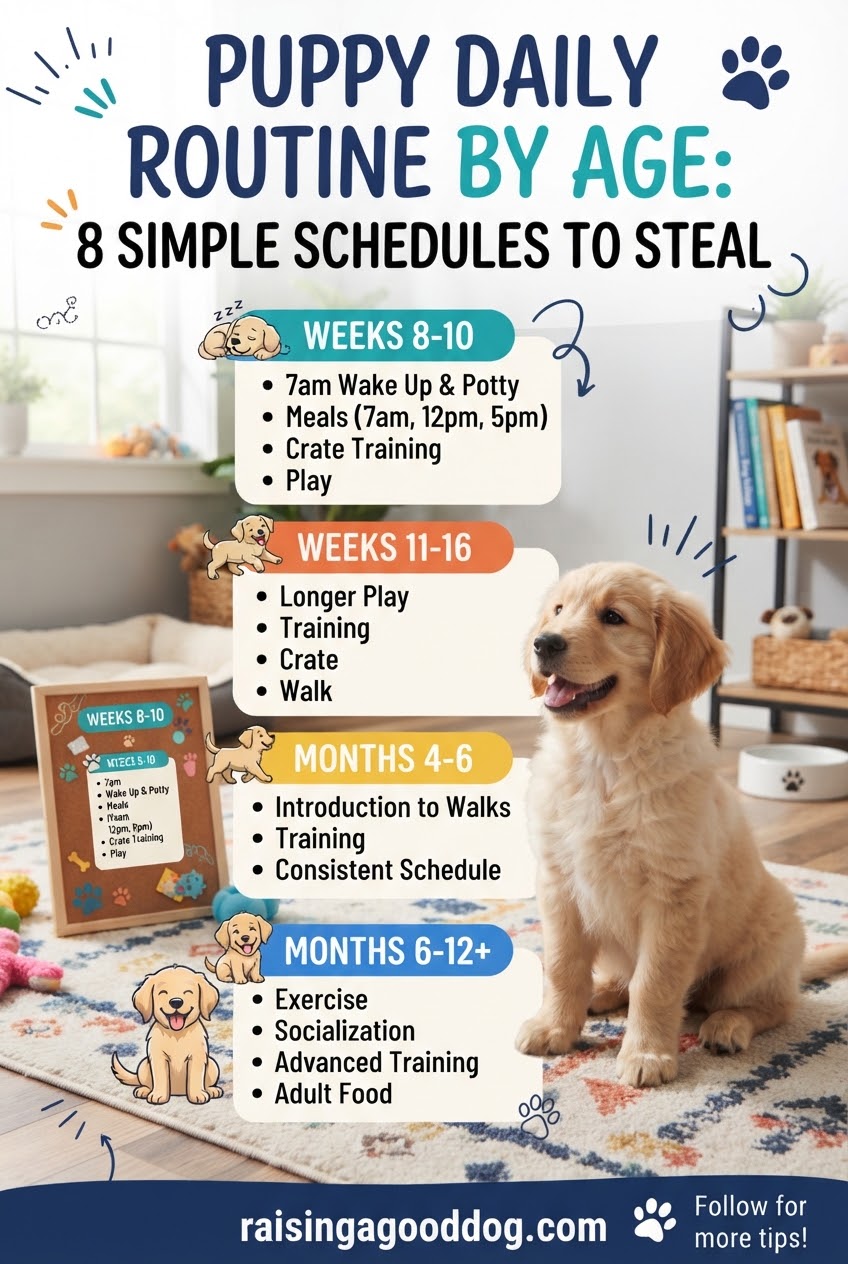
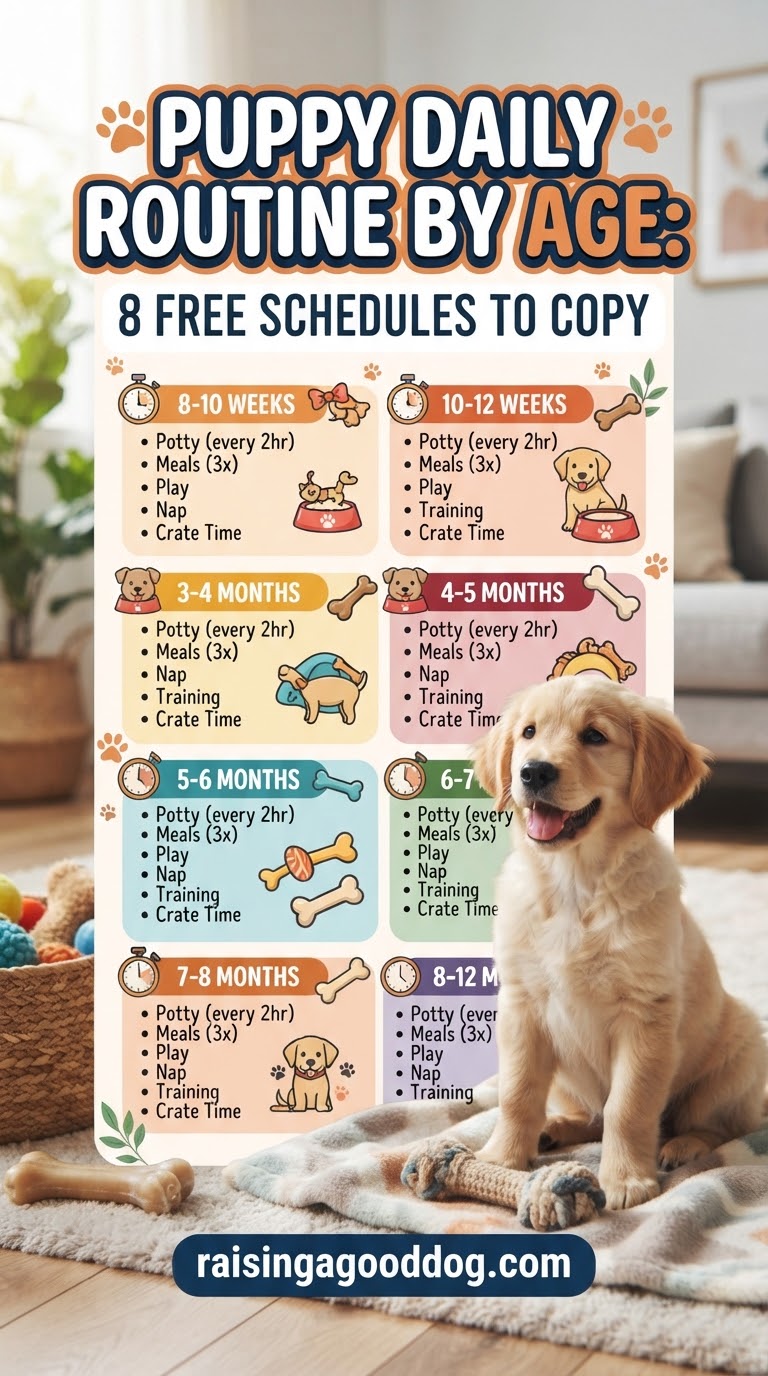
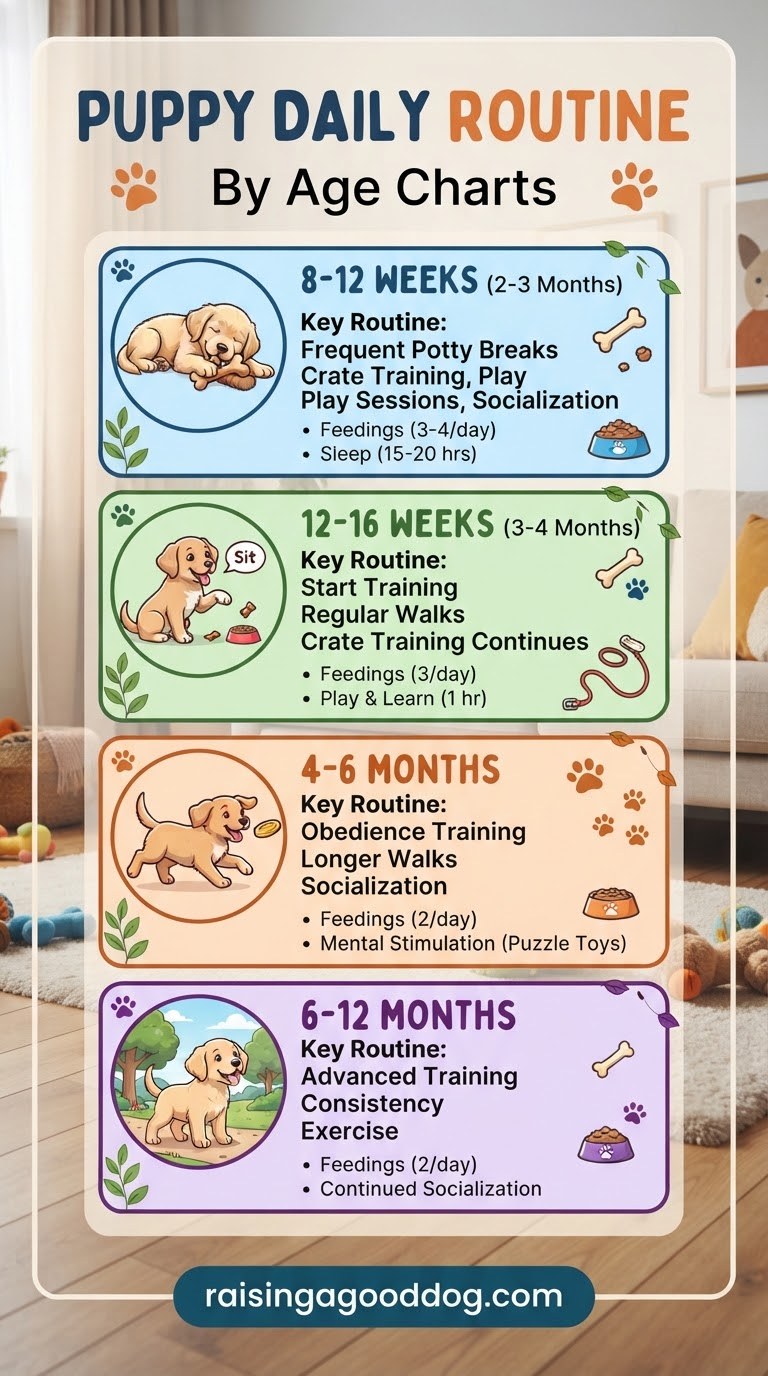
I've had more than a few clients look at a milestone chart like this and panic that their five-month-old still isn't reliably leash trained. Read these age brackets as a range, not a deadline.
At 8–10 weeks, I'm not expecting cues at all yet, really — I'm expecting name recognition and a puppy who tolerates gentle handling, because that's the whole job of this window. By 3–4 months, house training and the basic cues from that first chart should be taking shape, though accidents are still normal and not a sign anything's wrong.
5–6 months is where I see the wheels wobble, and it's exactly on schedule — this is adolescence starting, and a puppy who had loose-leash walking nailed at four months will often forget it entirely at five. That's not regression, that's a brain going through a genuinely different developmental stage.
By 7–9 months, focus, recall, and calm behavior in normal situations should be building, not finished, building. Full impulse control in an adolescent dog is still a year or more out for a lot of breeds, and that's a completely normal timeline, not a slow one.
The Habits That Keep It All From Unraveling
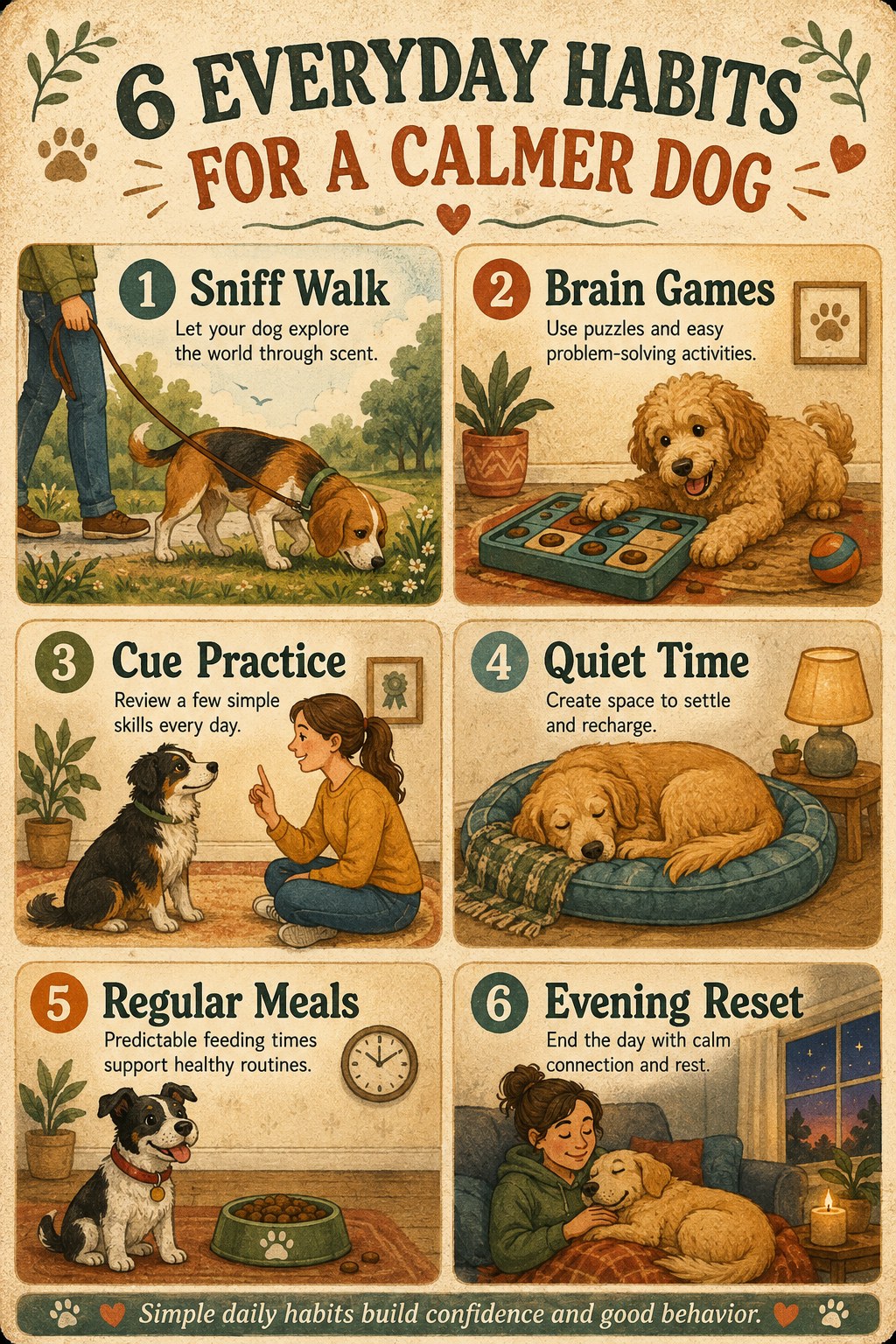
These six habits are what I actually tell long-term clients to keep doing once the puppy stuff is behind them, because the dogs I see fewer behavior cases from as adults are the ones whose owners never stopped doing the boring, structural things.
A sniff walk — no destination, no pace, just letting the dog's nose lead — does more for a dog's mental state some days than a brisk mile ever will. I do a version of this myself most mornings before the trail gets busy, because a dog who's had his nose satisfied is a calmer dog for the rest of the day.
- Brain games and cue practice keep a trained dog trained — skills genuinely fade without occasional use, the same way anyone's would.
- Quiet time isn't optional downtime, it's a scheduled part of a calm dog's day, and dogs who never get it tend to show up wired, reactive, or barky by evening.
- Regular meals and an evening reset bookend the day the same way they did in puppyhood — predictability is doing more behavioral work than people give it credit for.
None of this is exciting. It's also, in my experience, most of what actually works.
None of these eight routines is the 'right' one. They're eight decent starting points, and the version that'll actually work in your house is whichever one you can still be doing in three weeks, on a Tuesday, when nobody's watching.

Your Questions, Answered
How many potty breaks does an 8-week-old puppy actually need?
About every one to two hours while awake, plus immediately after waking, eating, or playing. The general rule I use is roughly one hour of holding per month of age, so an eight-week-old is realistically good for barely an hour or two, not the whole morning.
Is it normal for a puppy to seem to forget training around 5–6 months?
Yes. That's adolescence, not backsliding, and it's genuinely one of the most common reasons clients call me thinking something's gone wrong. Keep reinforcing the basics with the same patience as week one, and it settles back down by seven to nine months.
What if a housetraining routine that was working suddenly falls apart?
A sudden regression after previously reliable habits is worth a vet visit before anything else. Pain, a UTI, or a GI issue can look exactly like a training problem, and I always rule that out before touching the behavior side.
Do I need to socialize my puppy with as many people and dogs as possible right away?
No — quality over quantity, always at the puppy's own pace. Overloading a young puppy with introductions is flooding, not socialization, and it can build the very fear responses you're trying to prevent.