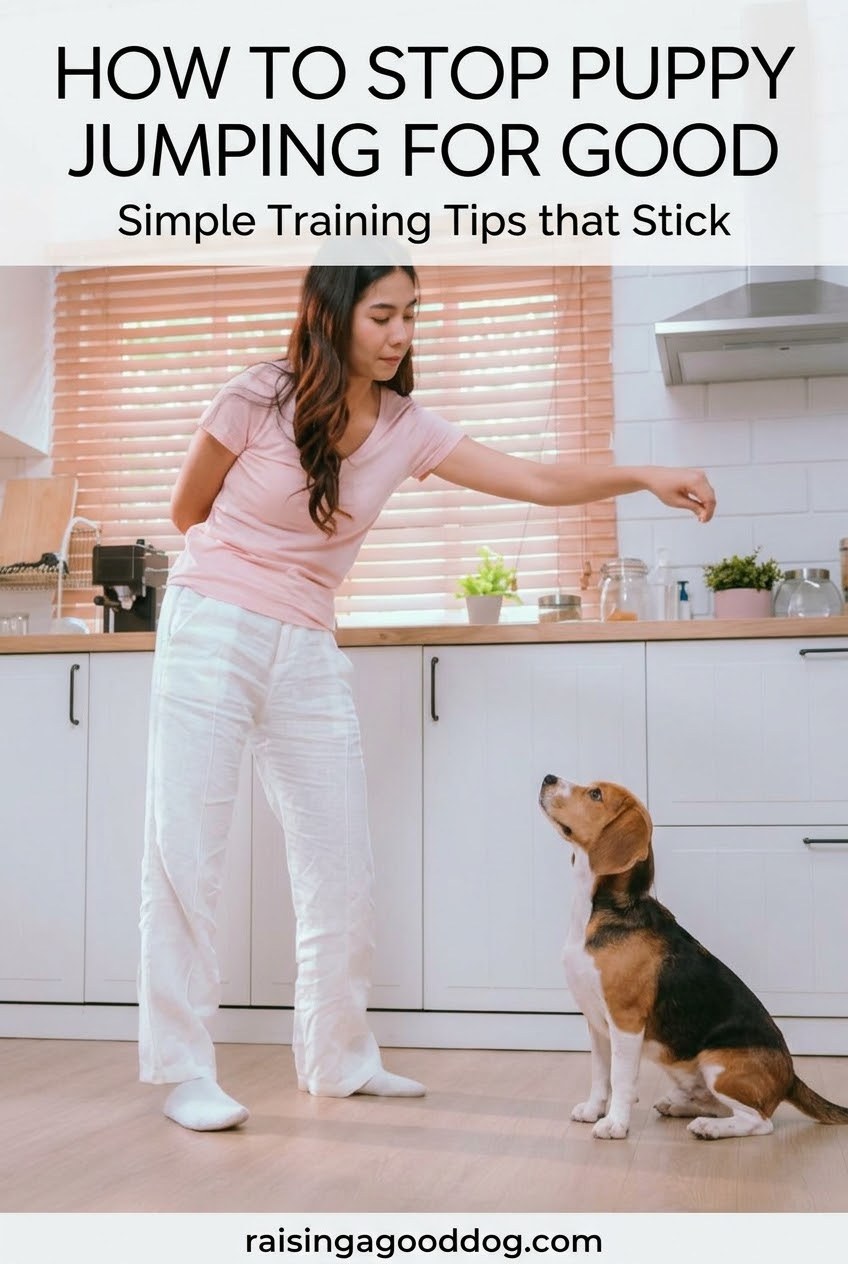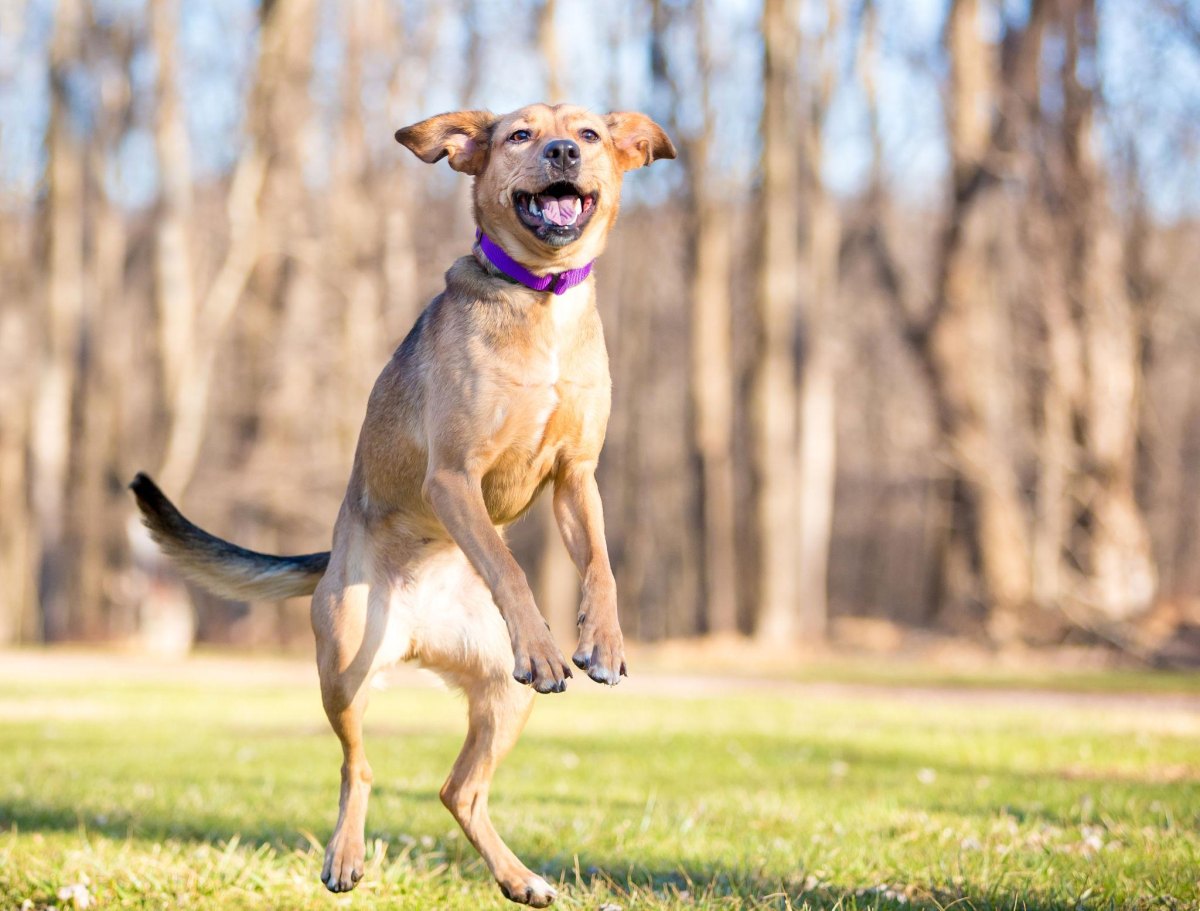
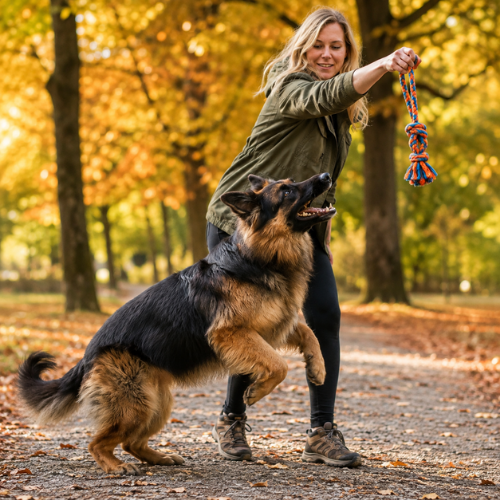
A puppy launching at your knees every time someone walks through the door is adorable for about three seconds. Then the muddy paws, scratched clothes, and worried visitors start adding up. I have worked with plenty of puppies who were not being “bad” — they were simply practicing a behaviour that had paid off before.
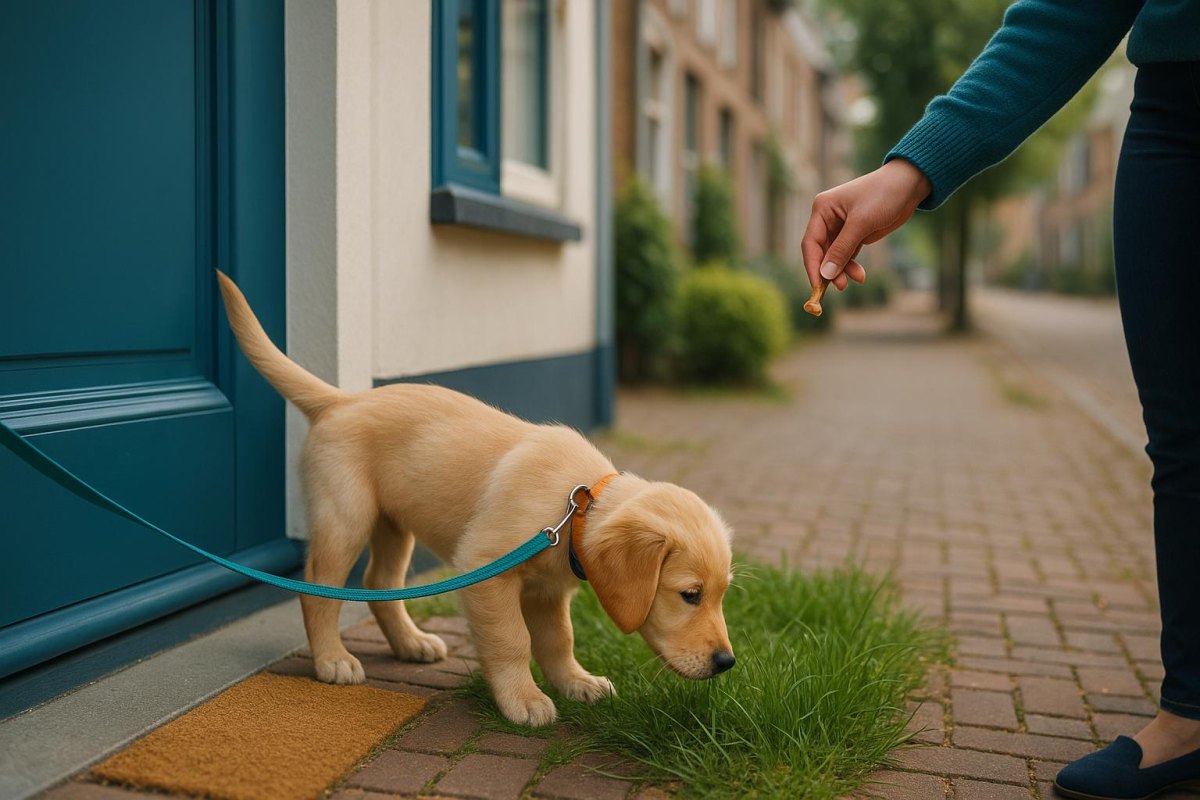
Before training, I always look at management. If your puppy gets to rehearse jumping on every guest, the habit gets stronger. Use a leash, baby gate, or a little distance during greetings while you teach the new skill. This process usually takes weeks, not a single afternoon, and setbacks are normal.
What I focus on when stopping puppy jumping
- Prevent jumping practice while teaching a calmer response.
- Reward the behaviours you want to see more often.
- Build polite greetings gradually in realistic situations.
Teach Your Puppy the “Four Paws on the Floor” Rule
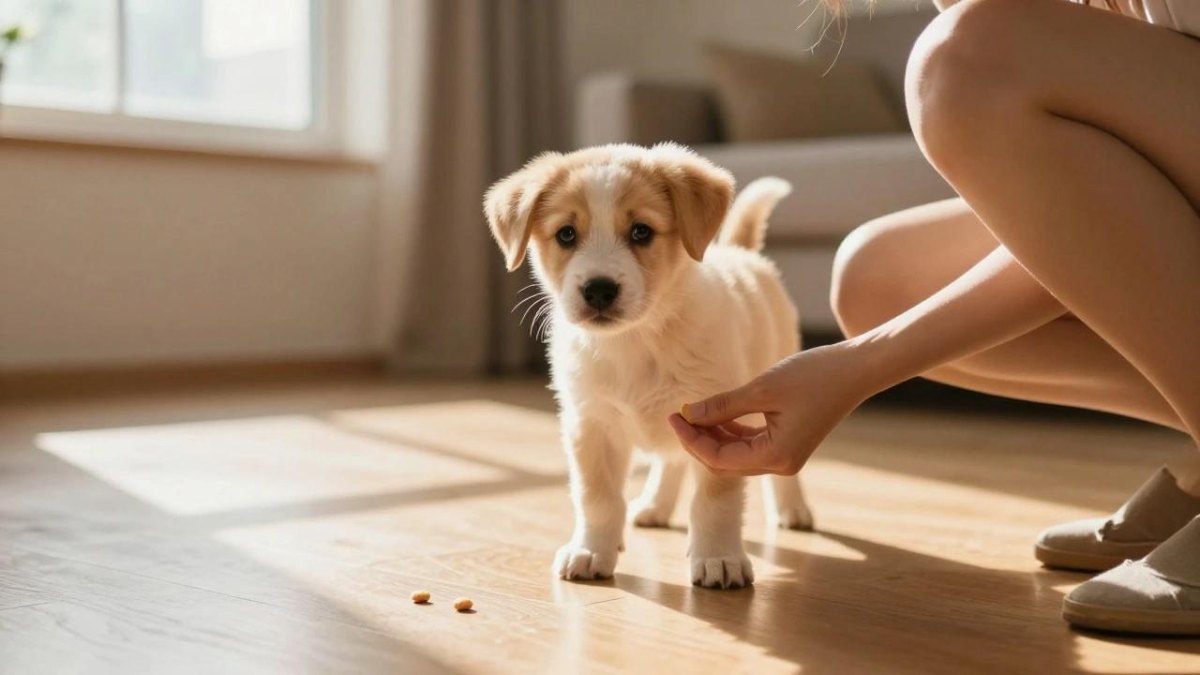
The first lesson I teach is simple: paws on the floor make good things happen. I do not ask a puppy to magically understand that jumping is rude. They need a replacement behaviour that works better.
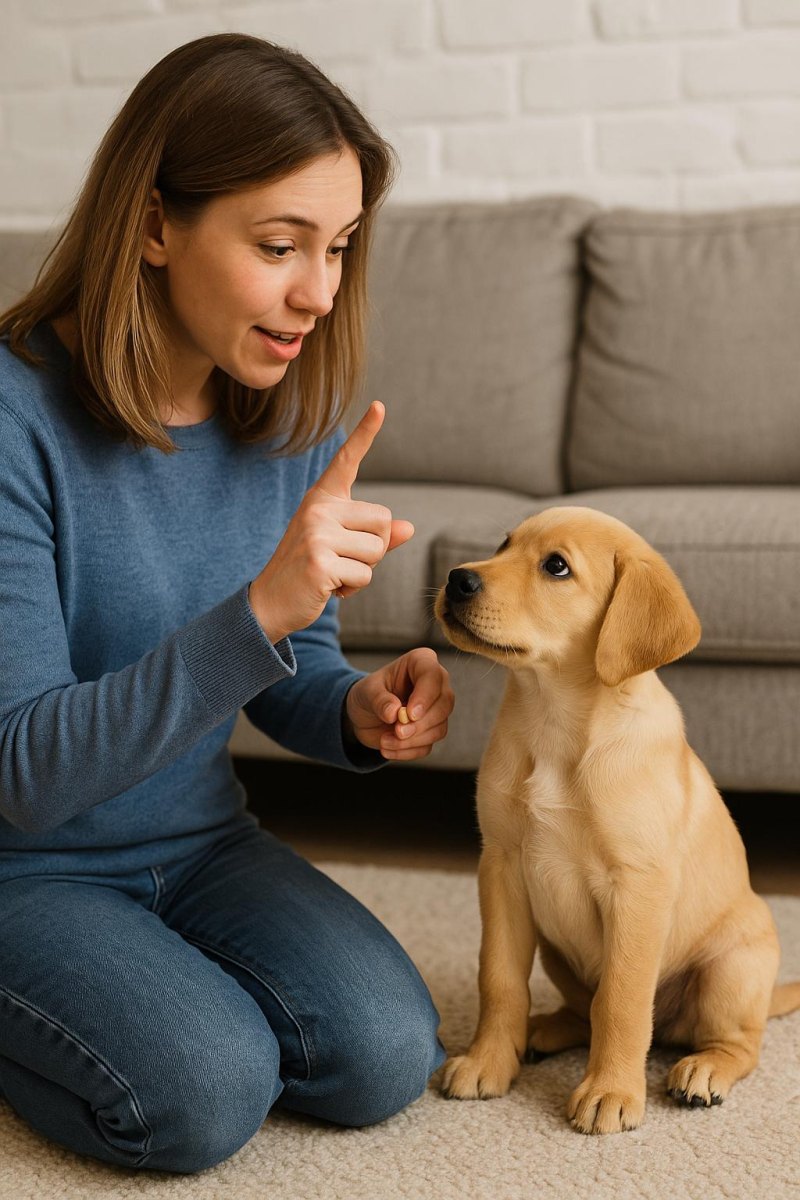
Start in a quiet room when your puppy is not already bouncing off the walls. Reward standing calmly, looking at you, or sitting without asking. Tiny moments count. I have seen owners miss these moments because they are waiting for a perfect sit, but the two seconds of calm before the jump are where the learning starts.
Training tip
Keep greetings boring at first. Excitement makes it harder for puppies to think clearly.
Use Positive Reinforcement to Stop Jumping
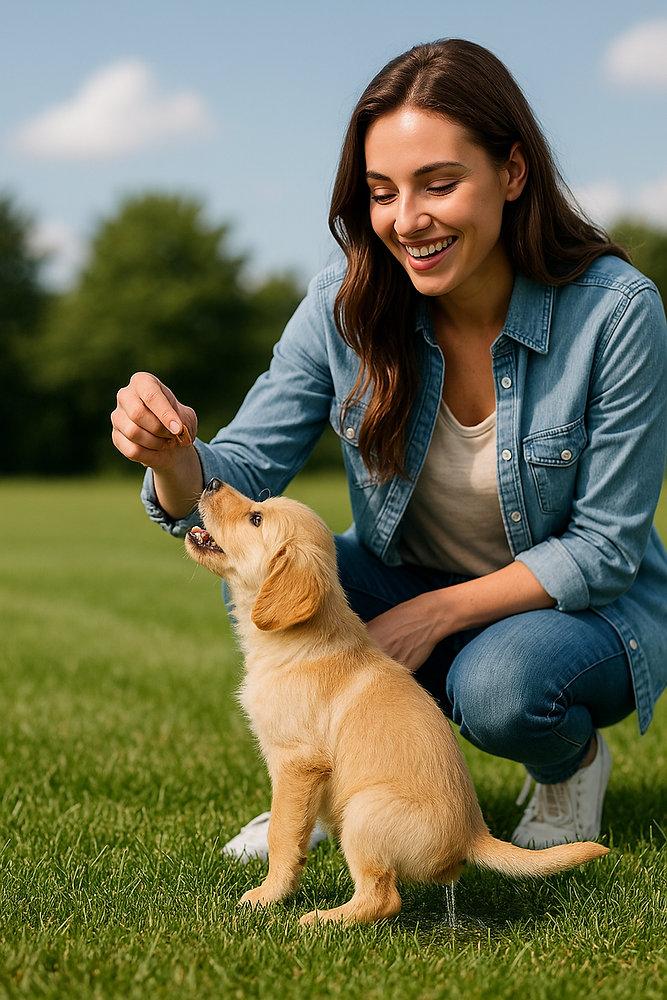
When a puppy jumps, many people instinctively push them away or repeat “off” louder and louder. I understand why — I used to grab for quick fixes too before I learned more about behaviour. The problem is that many puppies still experience that interaction as attention.
Instead, I reward the behaviour I want. Four paws down, a glance toward the person, or a relaxed body gets praise or a treat. Watch your puppy’s body language too: a loose body, soft mouth, normal breathing, and relaxed ears tell you they are ready to learn. A tight mouth, frantic movement, or weight leaning forward means you may need more distance.
Common mistake
Only reacting when the puppy jumps teaches them that jumping is the moment humans become interesting.
Train a Sit Command Before Greetings
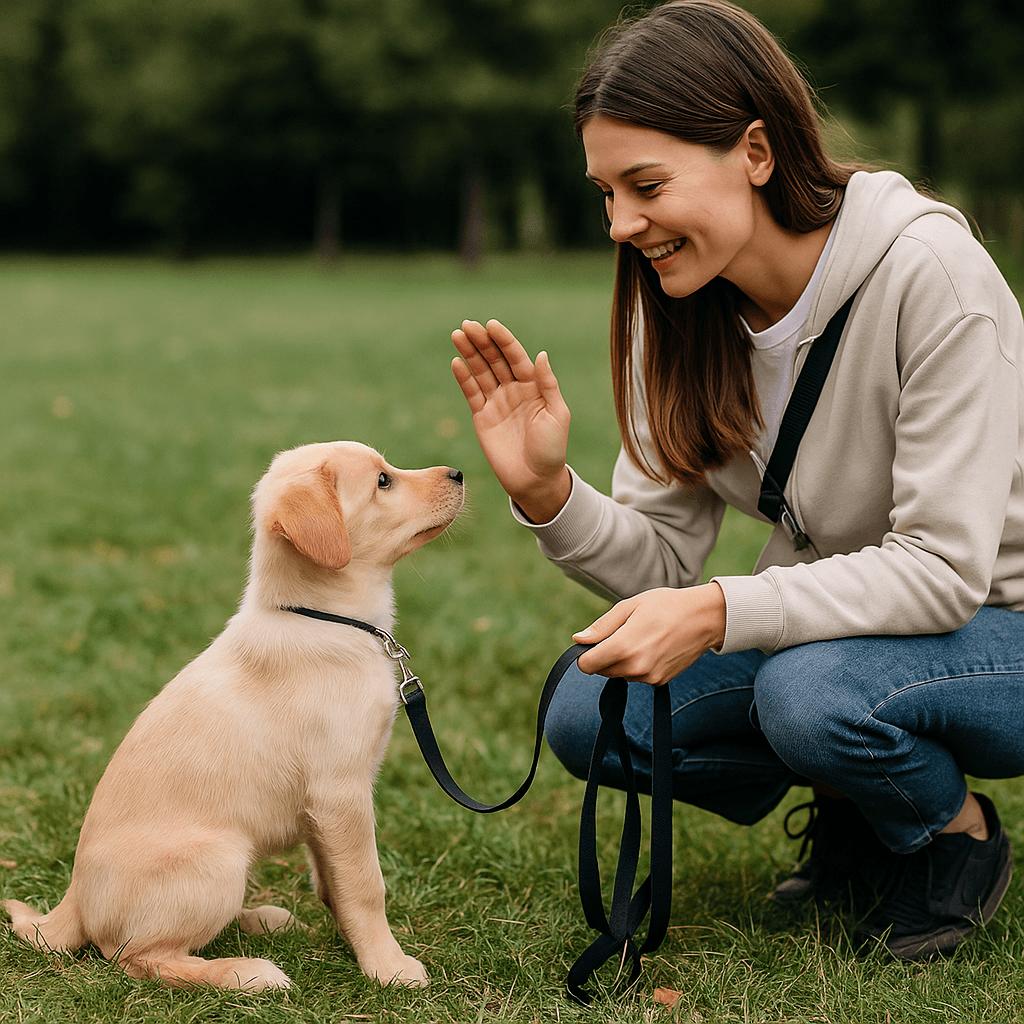
I like teaching sit before greetings because it gives the puppy a job. A dog who knows exactly what earns attention has an easier time making a good choice when excitement arrives.
Practice with familiar people first. Have your helper approach slowly, and reward your puppy before the jumping starts. If your puppy pops up, the person simply steps away. No scolding, no drama — the greeting pauses until those paws return to the ground.
This is a moderate-difficulty training skill because the real challenge is not sitting in your kitchen. It is sitting when your neighbour arrives, your hands are full, and your puppy has decided this is the greatest event of the week.
Redirect Jumping With Toys and Alternative Behaviors
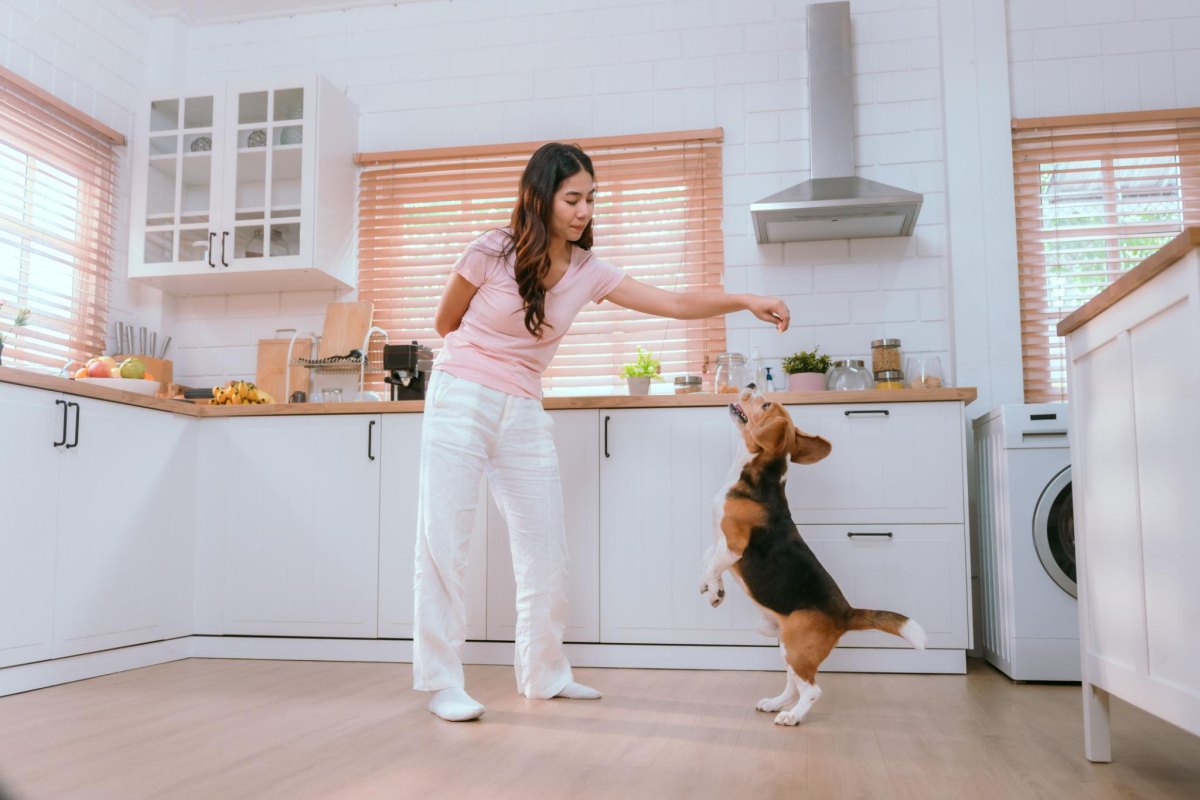
Some puppies jump because they have too much energy and no plan for where that energy should go. A toy, a chew, or a simple “find it” game can redirect that excitement before it turns into a human climbing exercise.
I often tell clients to look at the whole picture. Is the puppy overtired? Has the morning walk been skipped? Are visitors arriving during the puppy’s wildest hour? Training works better when sleep, exercise, and the environment support the puppy’s ability to focus.
A note about sudden changes
If jumping appears alongside other sudden behaviour changes, pain signs, appetite changes, or unusual stress, check with your veterinarian before assuming it is only a training issue.
Practice Calm Greetings With Consistent Training
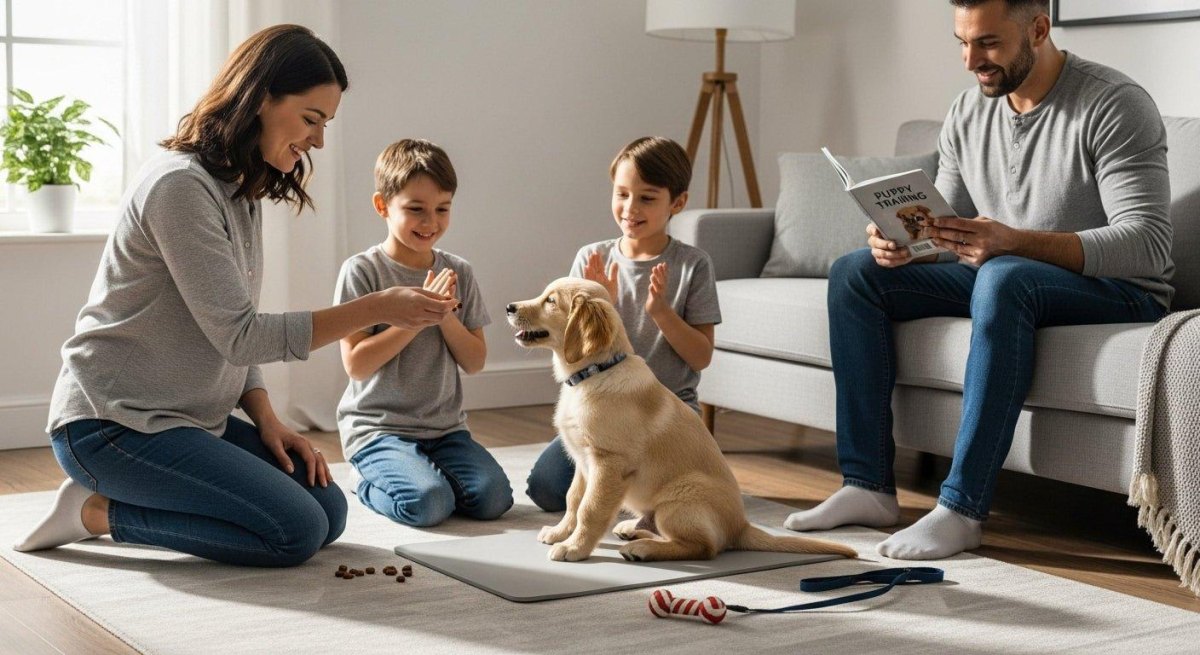
The final piece is repetition. Puppies do not generalise easily, which means a puppy who greets you calmly may still jump on your friend, the delivery driver, or someone wearing a particularly exciting jacket.
Set up short practice sessions. Use different people, locations, and levels of excitement while keeping your puppy successful. Bruno, my own German Shepherd, taught me that “better” does not mean perfect. Good training is about creating a dog who can handle real life, not a robot who never makes a mistake.
Keep rewarding the calm choices. Those small moments add up until your puppy starts offering them without being asked.
How long does it take to stop a puppy from jumping?
Most puppies need several weeks of consistent practice. The timeline depends on age, reinforcement history, and how often they still get rewarded for jumping.
Should I ignore my puppy when they jump?
Ignoring can help, but it usually works best when combined with management and rewarding calm behaviour. Simply waiting out a very excited puppy can be frustrating for everyone.
Can I teach an older dog the same skills?
Yes. Older dogs can learn polite greetings too, although habits that have been practiced for years may take longer to change.
More Pinterest Visuals