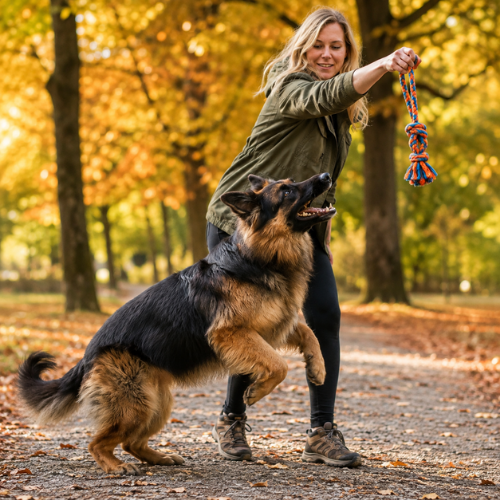
Most puppies are not difficult students. They are just tiny creatures with the attention span of a dropped sandwich, and that is completely normal. The trick is choosing skills that match where your puppy is right now, then making the right choice easy and rewarding.
I teach these beginner tricks in short sessions because a puppy who is tired, overwhelmed, or distracted is not being stubborn. They are simply done learning for the moment. A few minutes of good practice beats twenty minutes of frustration every time.
What your puppy will learn
- Simple reward-based tricks that build communication
- How to practice each skill without pressure
- Small steps that create reliable behaviours over time
Teach Your Puppy to Sit
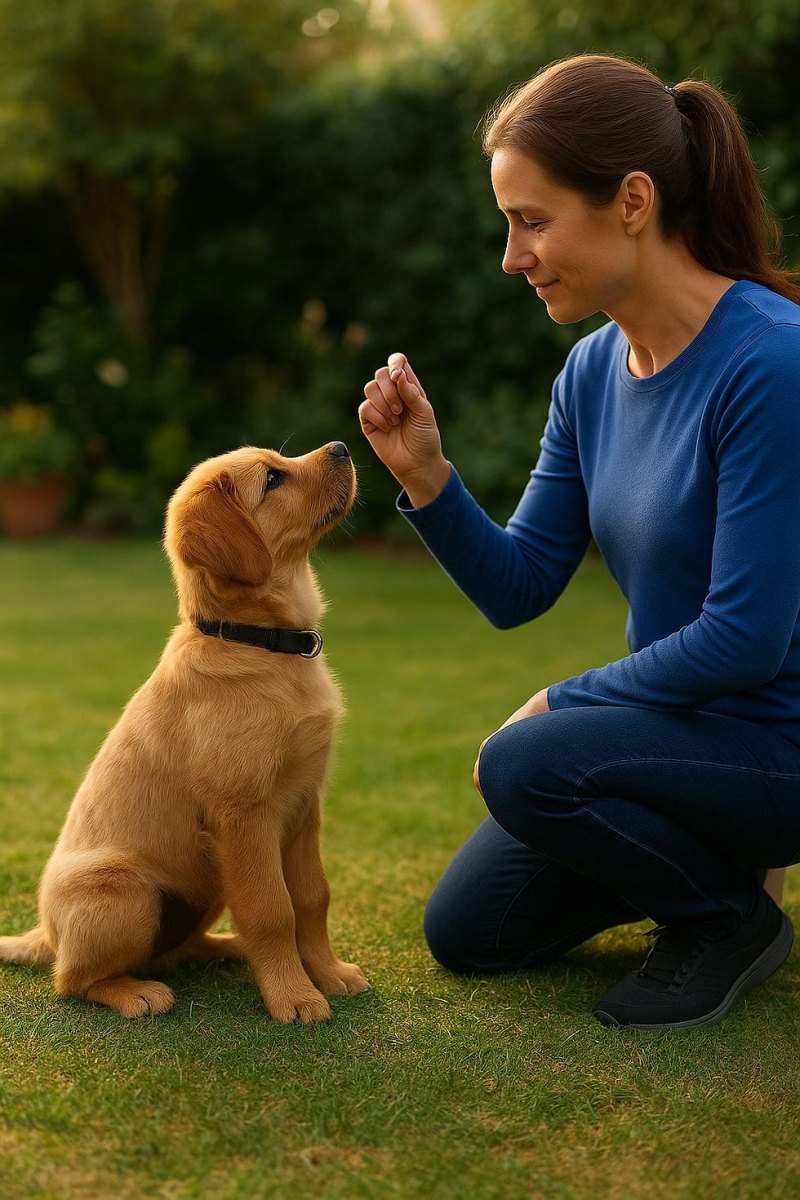
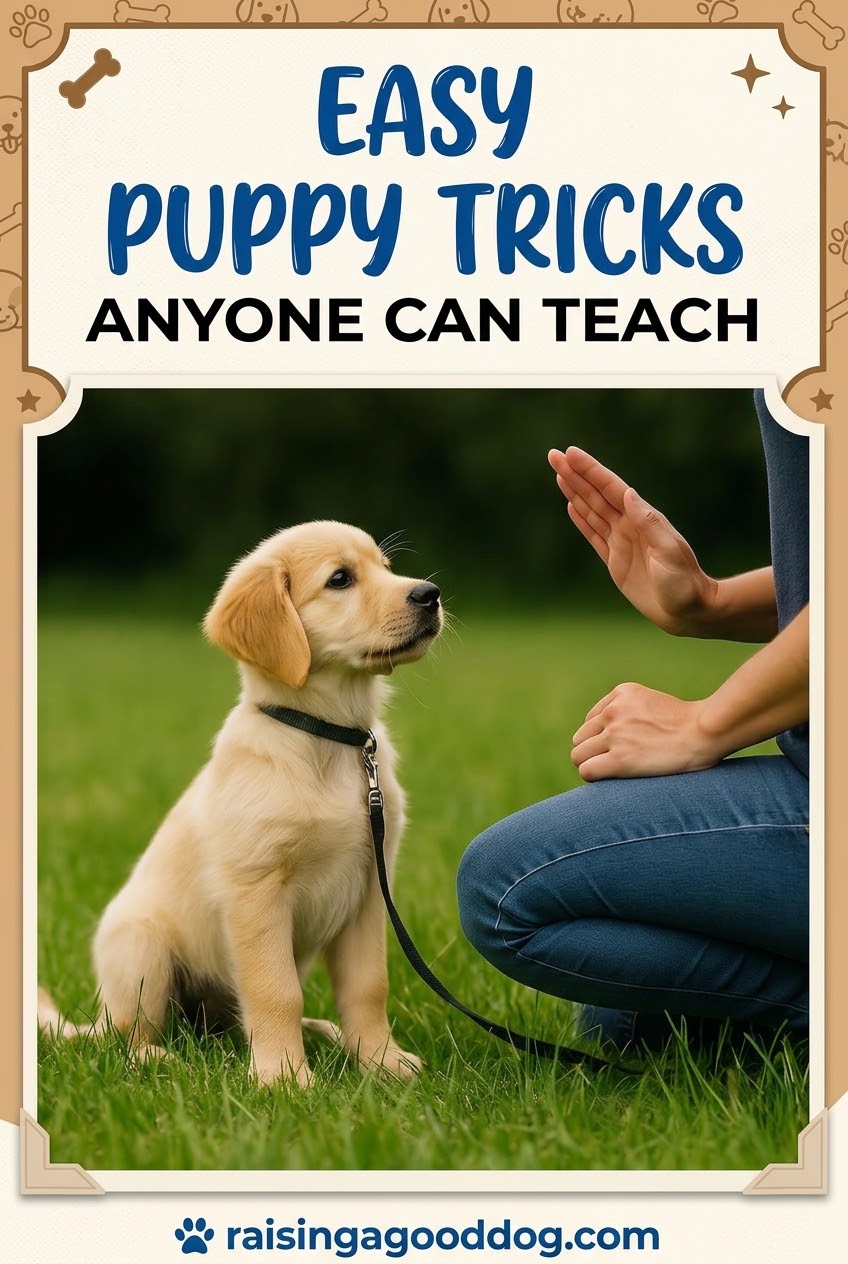
Sit is usually the first trick I teach because it gives puppies a simple way to ask for things without jumping. I like it because it is not just a party trick; it becomes a useful everyday behaviour.
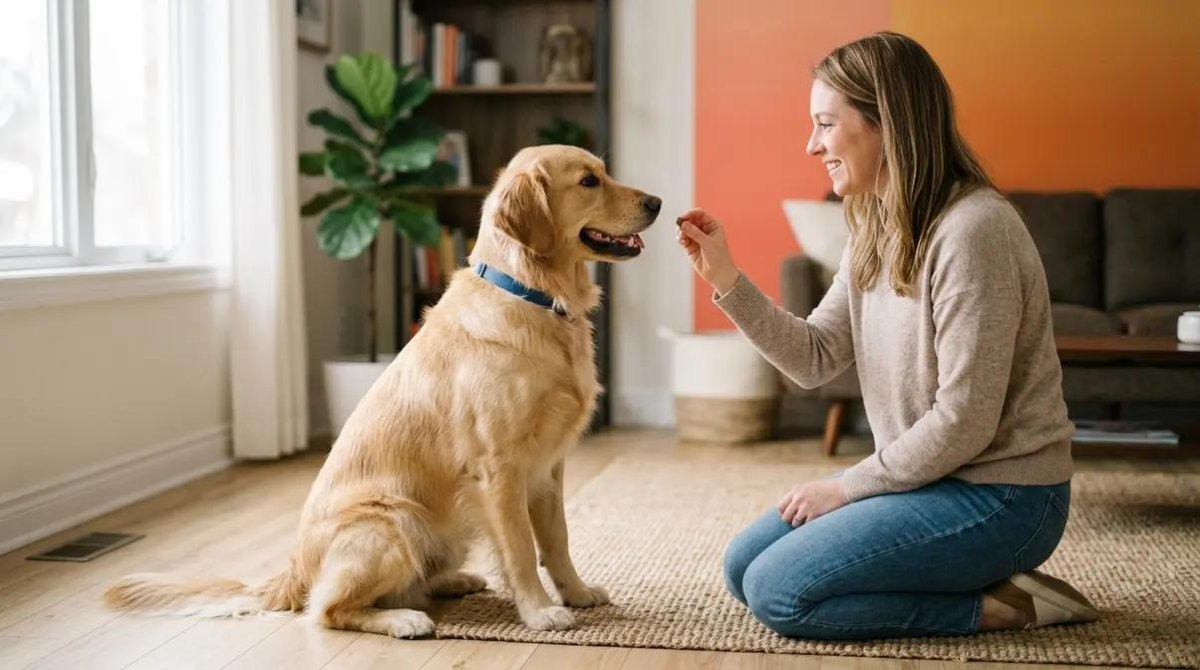
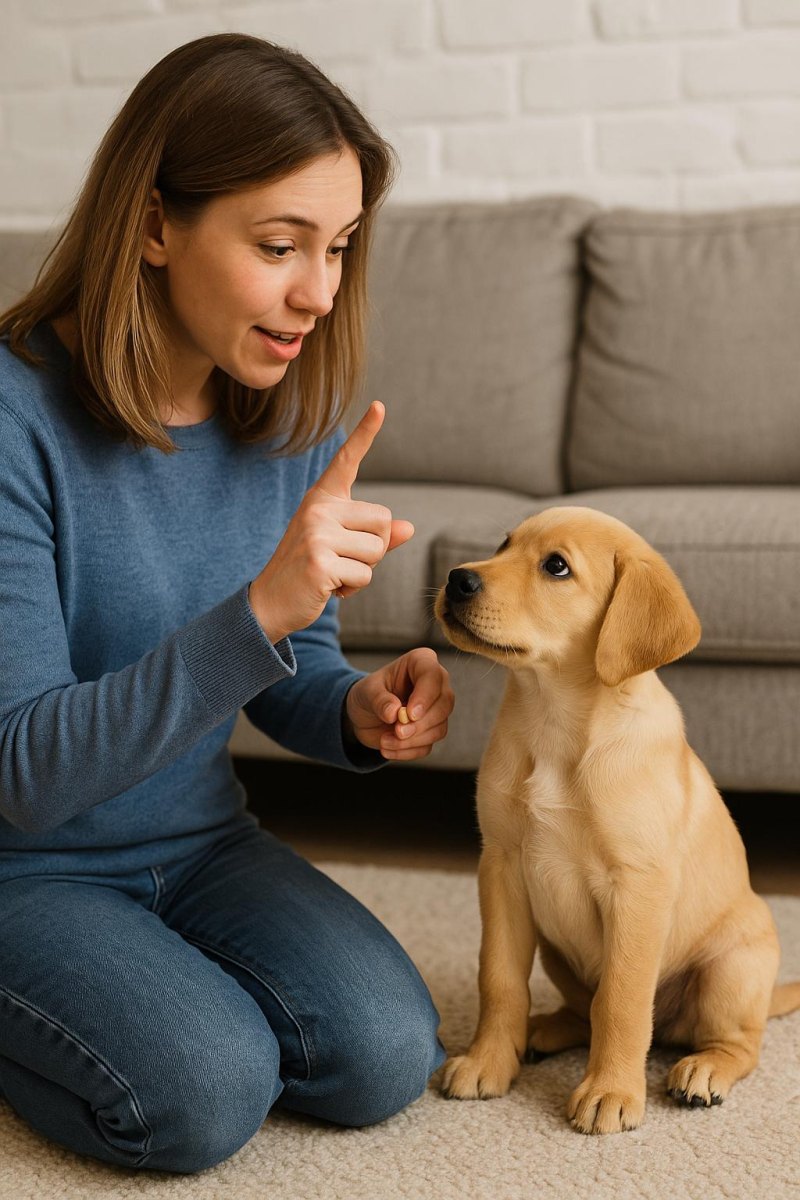
Start in a quiet room where your puppy is not competing with smells, noises, or the neighbour's cat walking by the window. Hold a treat near their nose, move it slowly upward, and reward the moment their bottom touches the floor.
- Lure. Guide your puppy's nose upward with a treat.
- Reward. Mark the instant they sit and give the treat.
- Repeat. Practice a few times, then take a break.
Training tip
Do not push your puppy's hips down. Let them discover the movement so sitting stays their choice.
Train Your Puppy to Shake Hands
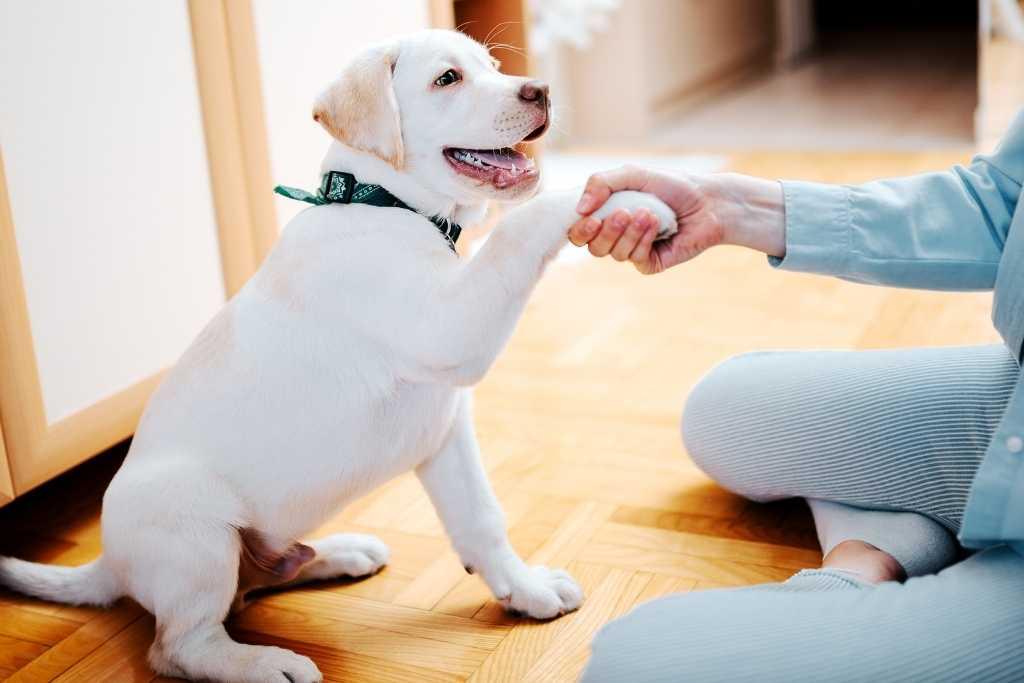
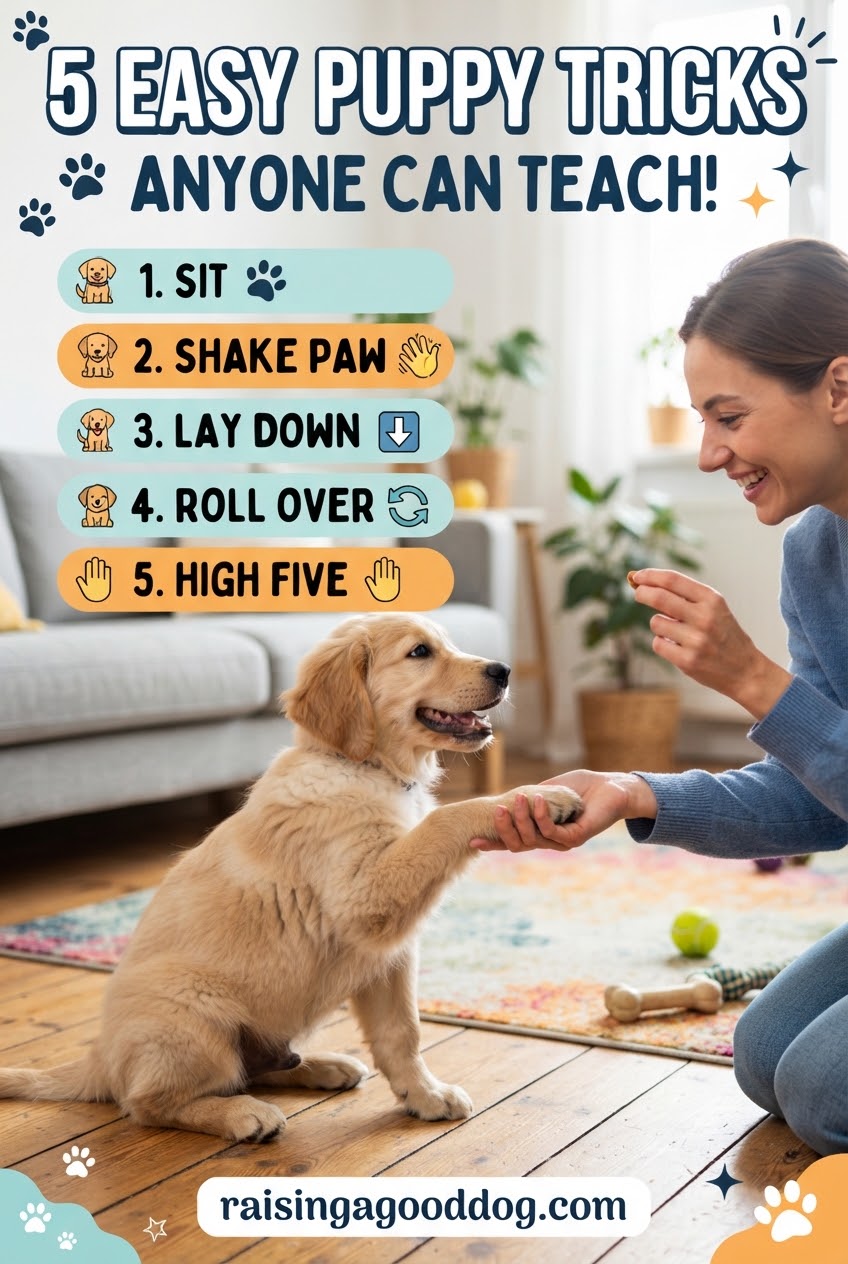
The shake hands trick is adorable, but the real value is teaching your puppy to offer a behaviour and interact calmly. I often use this with puppies who need practice with handling because it builds comfort around gentle touch.
Wait for your puppy to naturally lift a paw, reward that movement, and slowly add the cue later. The mistake I see most is asking for a perfect paw before the puppy understands the game.
Common mistake
Grabbing a puppy's paw to force the trick can make some dogs uncomfortable with handling. Let the paw come to you.
Practice the Lie Down Trick
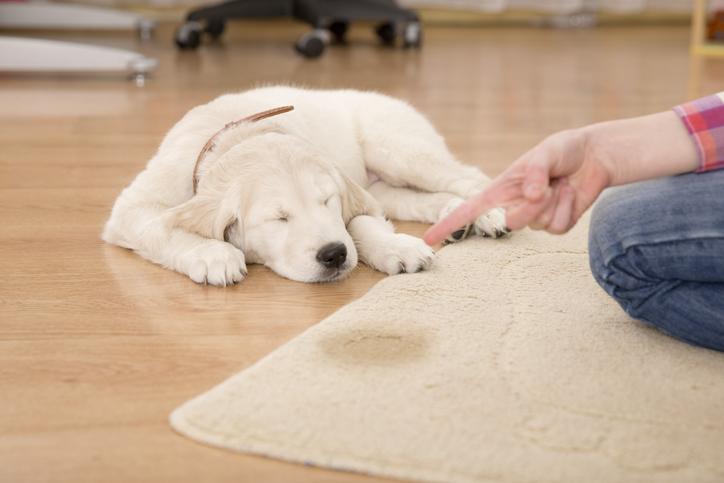
Down is a wonderful trick for teaching puppies how to settle their bodies. I usually practice this after a short walk or play session, when the puppy has some energy out but is still able to think.
Move a treat from your puppy's nose toward the floor and reward when their elbows reach the ground. If they pop back up immediately, that is information, not failure. Your puppy may simply need shorter repetitions.
- Practice on a comfortable surface.
- Reward calm body language.
- Keep sessions short and successful.
Teach Your Puppy to Stay
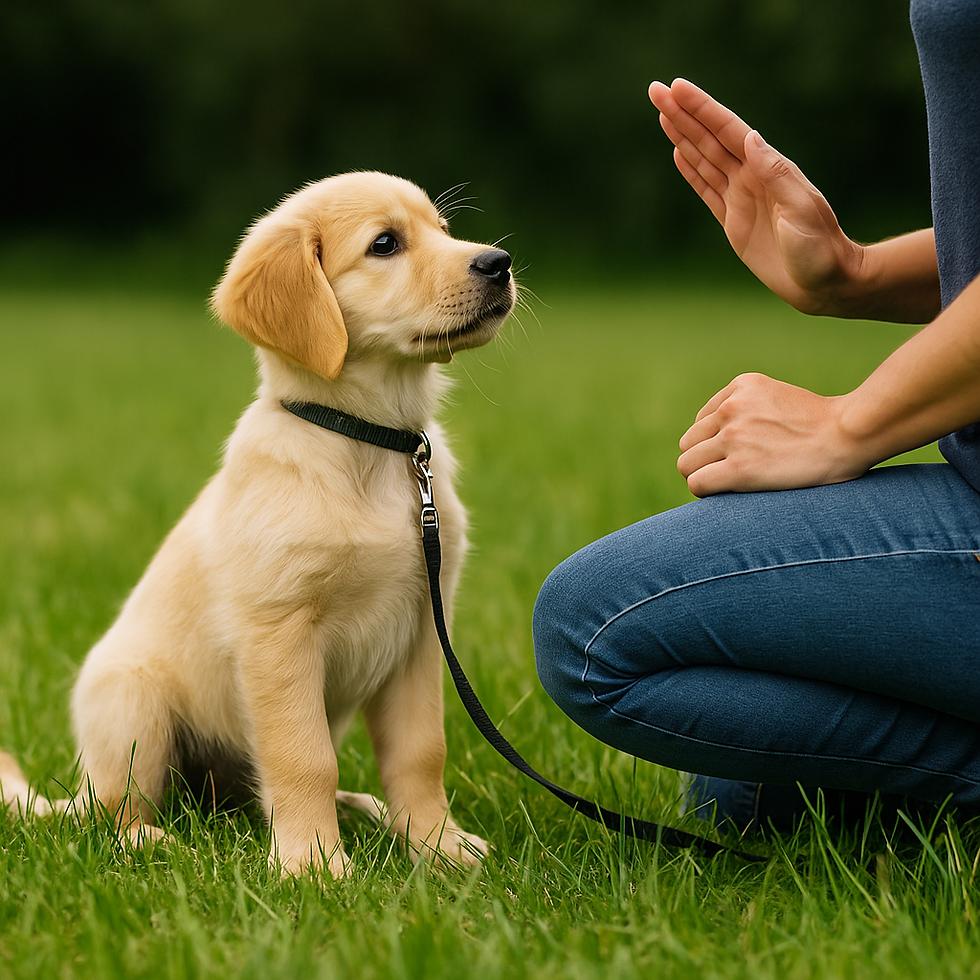
Stay is one of those tricks where people often ask for too much too soon. A puppy staying for two seconds while you stand nearby is a success. A puppy staying while you leave the room, answer the phone, and make coffee is a much bigger ask.
I build this slowly by rewarding tiny moments of stillness. Watch your puppy's body: a weight shift forward, closed mouth, or intense staring can tell you they are about to move.
Remember
A reliable stay usually takes weeks of practice, not one afternoon. Increase distance and time separately.
Train the Come When Called Trick
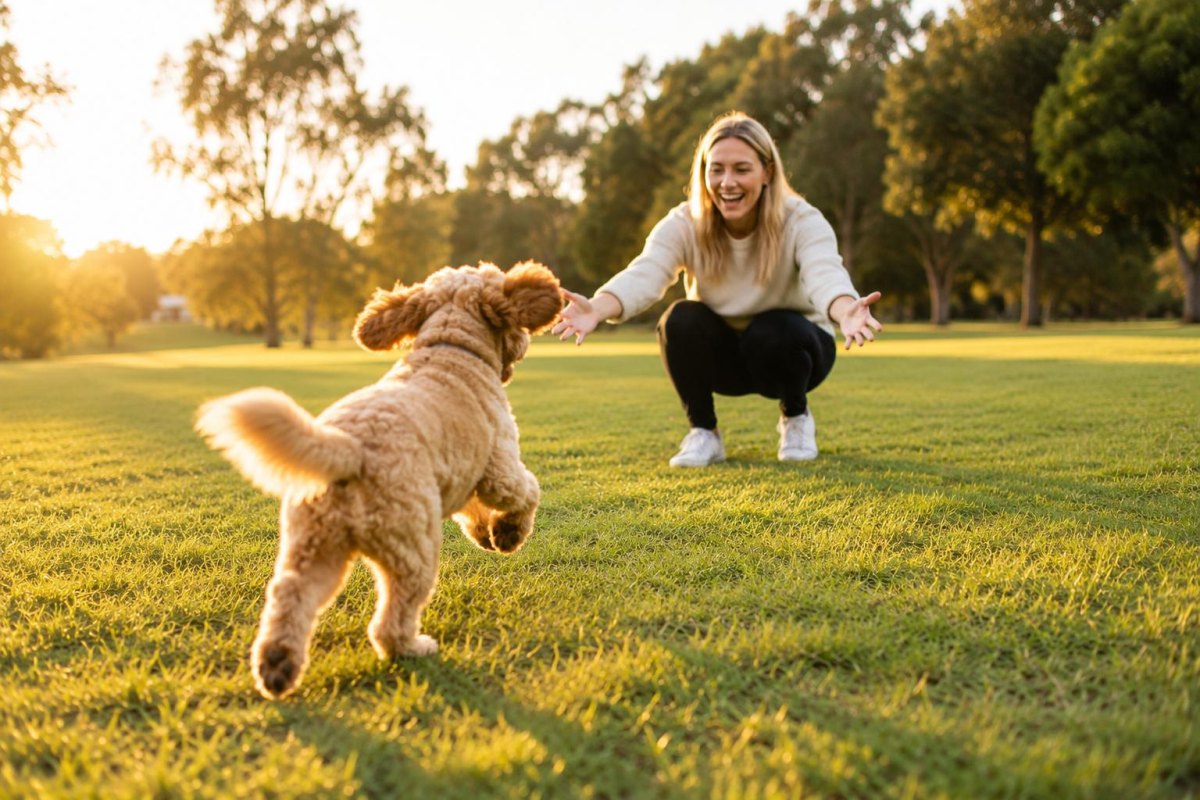
Recall is the trick I care about most because it can keep a puppy safe. I never start this outdoors with distractions. First, I make sure coming to me has a history of being a fantastic decision.
Use a cheerful voice, reward generously, and avoid calling your puppy only when something fun ends. If "come" always means bath time or leaving the park, puppies are excellent at remembering that.
Safety note
Until recall is dependable, use a long line in safe areas instead of testing your puppy near roads or other hazards.
Teach Your Puppy to Spin Around
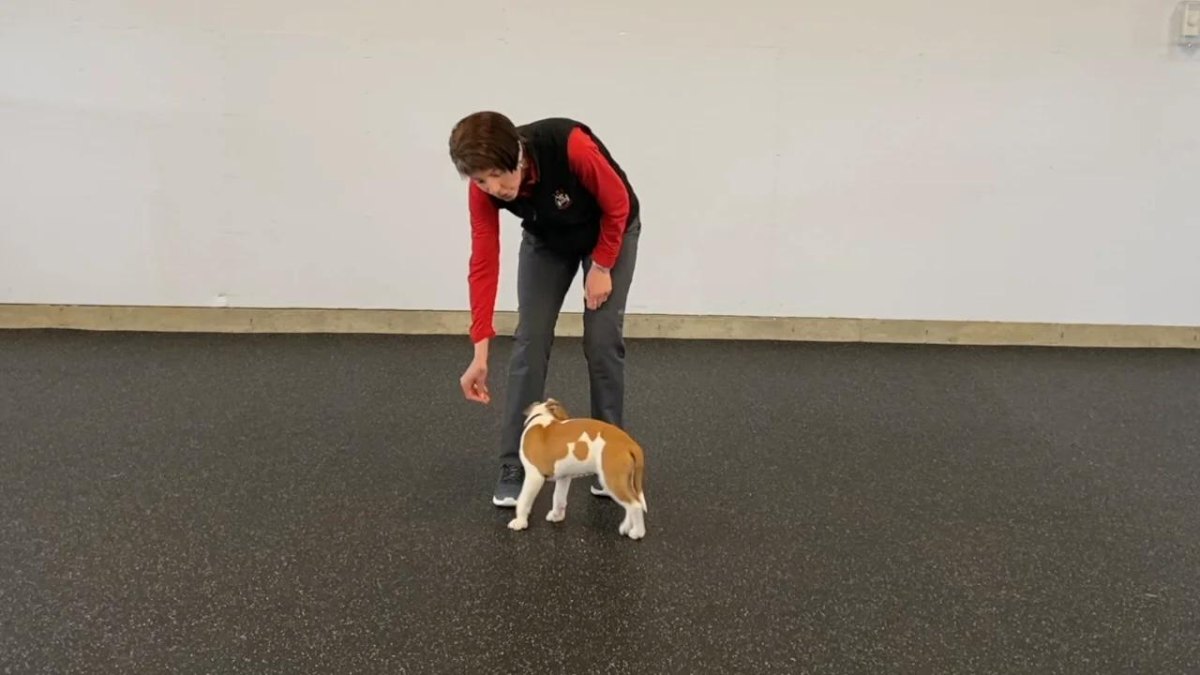
Spin is a playful trick that helps puppies learn to follow your hand signals. It is also a good reminder that training does not always have to be serious. Sometimes we are allowed to teach something simply because it makes everyone smile.
Use a treat to guide a slow circle, then reward the completed movement. Keep the circle wide and comfortable, especially for very young puppies still growing.
Training tip
Stop while your puppy still wants more. Leaving a little enthusiasm in the tank makes the next session easier.
Teach Your Puppy to Touch a Hand
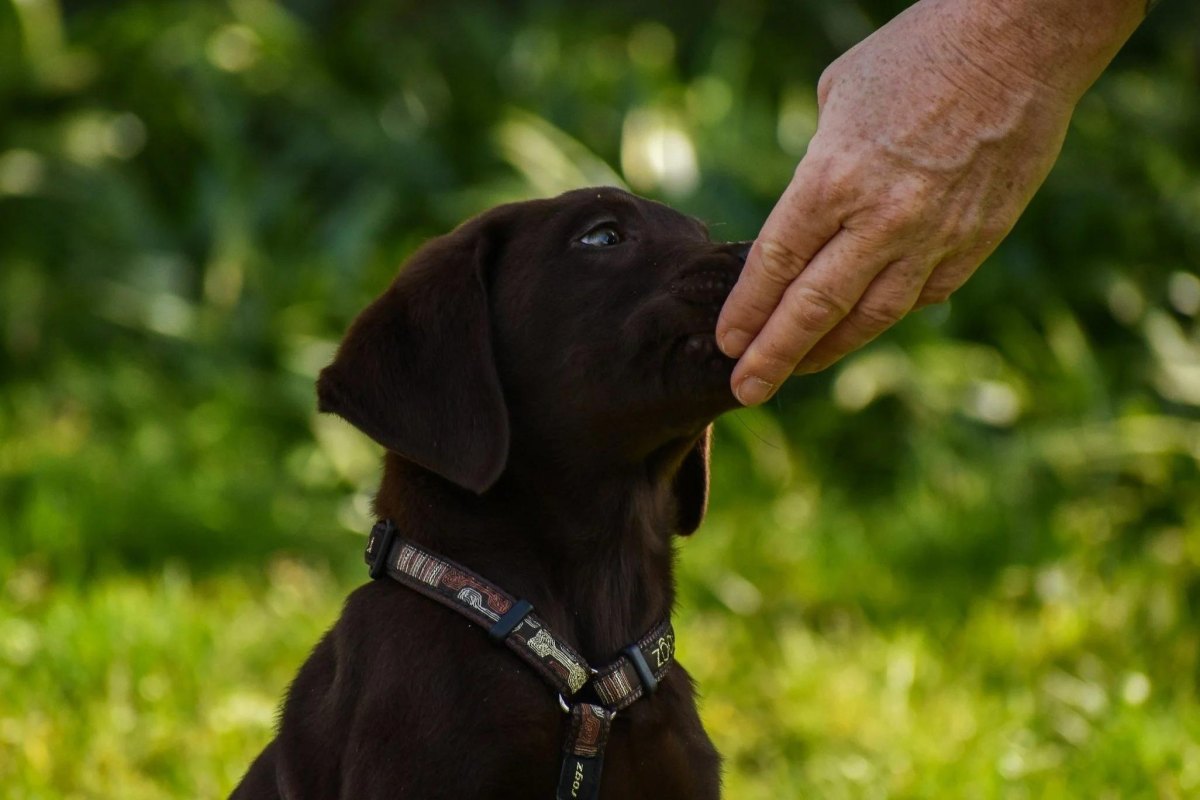
Hand targeting is one of my favourite beginner skills because it becomes a foundation for many other behaviours. Your puppy learns that touching your hand earns a reward, which gives you a gentle way to guide them.
Present your open hand close to your puppy's nose. When they investigate and touch it, reward immediately. Later, this can help with moving away from distractions or positioning your puppy calmly.
Train Your Puppy to Fetch a Toy
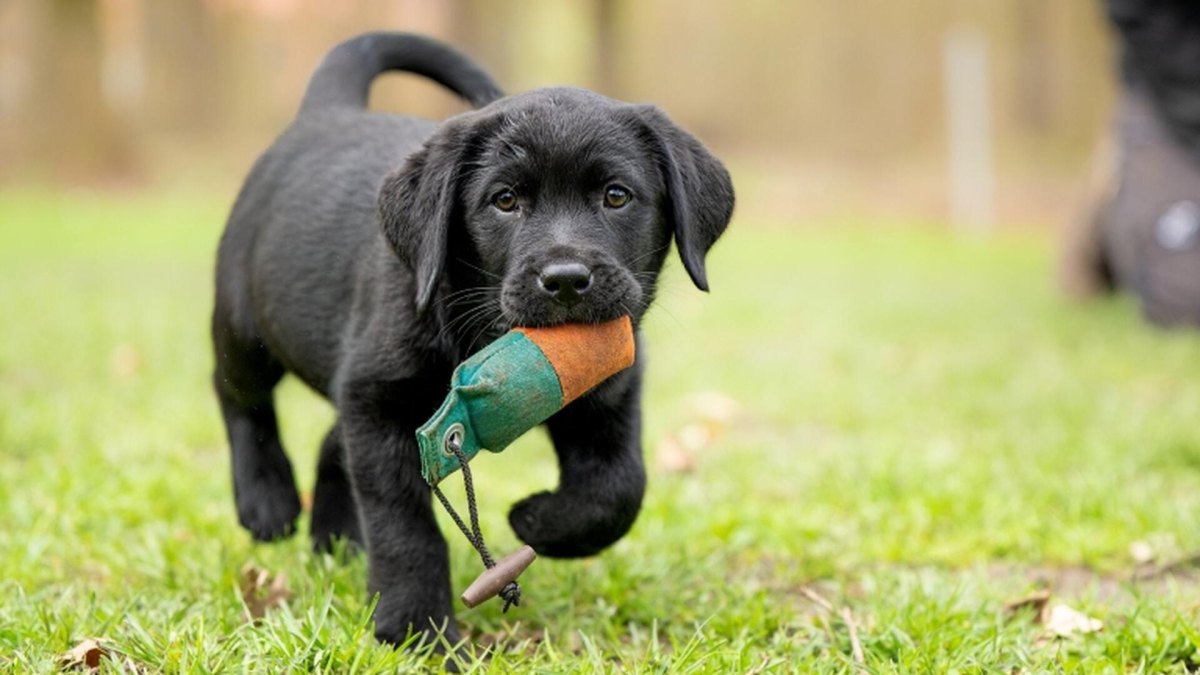
Fetch looks natural when you watch a confident dog do it, but puppies often need help understanding the whole sequence. Chasing the toy is only one piece. Bringing it back is the part we build.
Start with short distances and celebrate any movement toward you with the toy. Do not turn every return into a battle over giving it up. Trade for a treat or another toy so your puppy learns that releasing the toy does not end the fun.
- Start small: Use a toy your puppy already enjoys.
- Reward returns: Make coming back the best part.
Teach Your Puppy to Roll Over
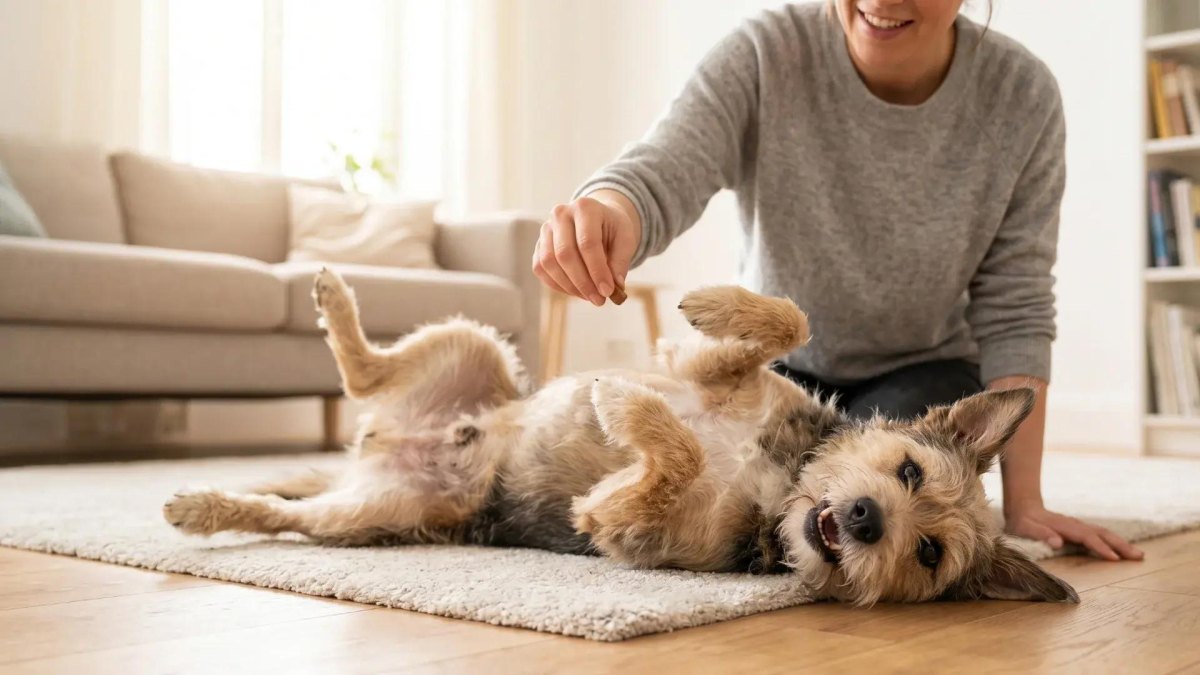
Roll over is a cute trick, but it requires trust and body awareness. Some puppies love it immediately, while others do not enjoy being on their backs. I always respect that difference.
Before teaching this trick, make sure your puppy is comfortable with handling and movement. If they freeze, turn their head away, lick their lips, or tense their body, I change the plan instead of pushing through.
Body language check
A relaxed puppy should look loose and willing. Training works best when your dog feels safe participating.
Teach Your Puppy to Give a High Five
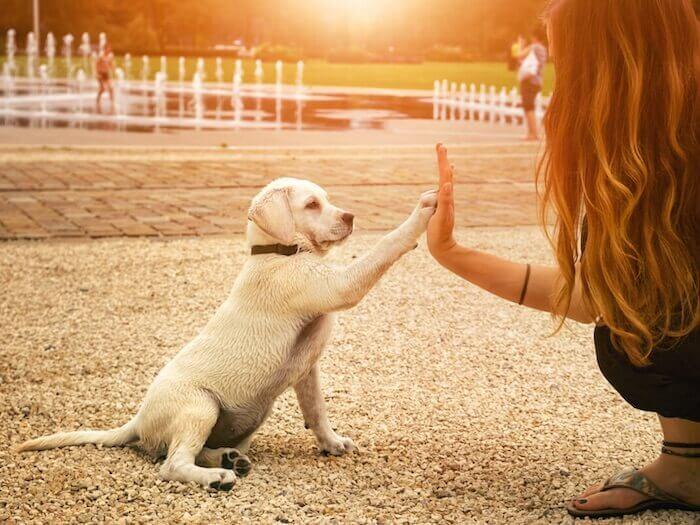
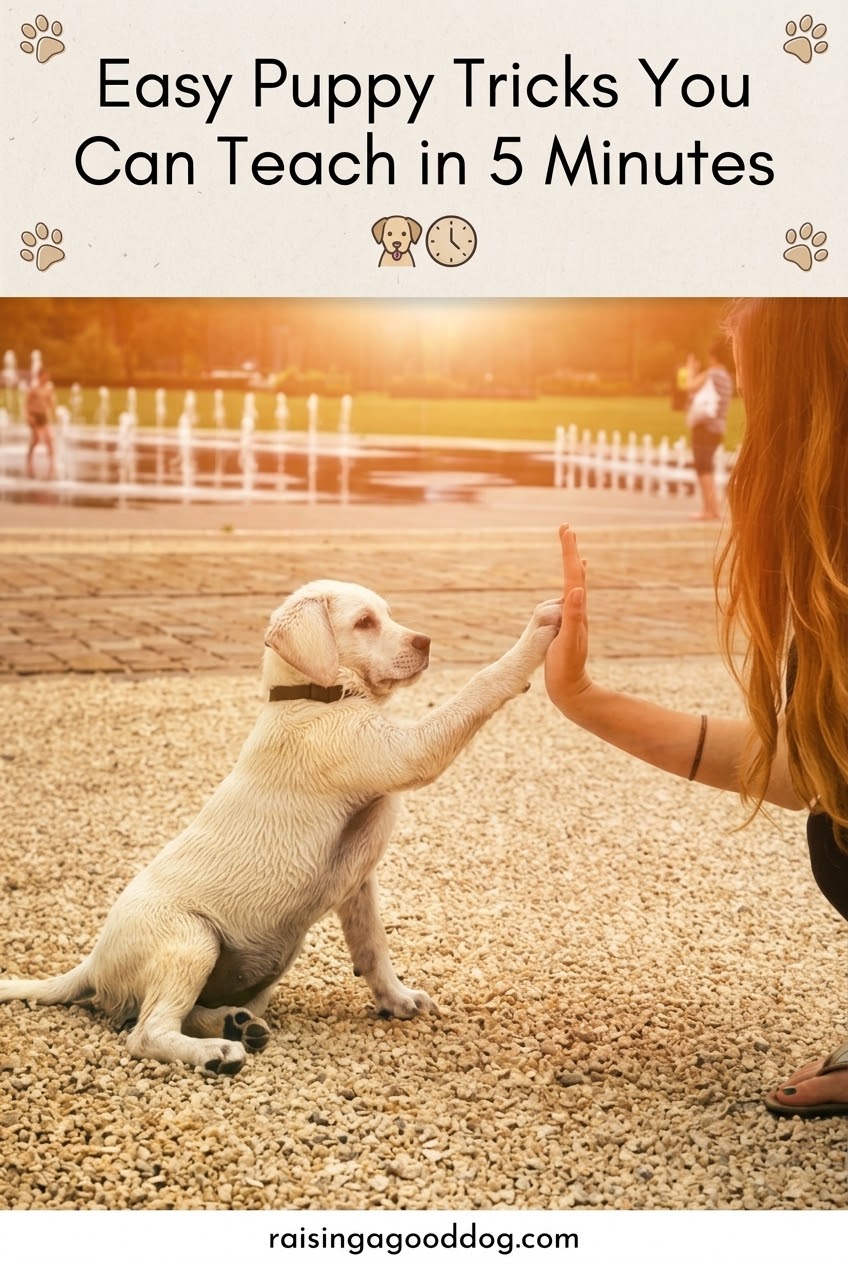
High five is a fun variation of shake, and it is a lovely way to finish a training session on a happy note. I often teach it once a puppy already understands offering a paw.
Raise your hand slightly higher than you would for shake and reward your puppy for lifting their paw toward it. Keep your expectations realistic; a puppy's version may be a tiny paw lift at first, and that counts.
How long should puppy trick training sessions be?
I usually recommend a few minutes at a time, several times throughout the day. Puppies learn better when they are fresh and successful.
What if my puppy loses interest?
That is usually a sign to make the exercise easier, reduce distractions, or take a break.
Should I use punishment if my puppy does not perform a trick?
No. A missed cue is information. I adjust the environment, the timing, or the difficulty instead.
More Pinterest Visuals