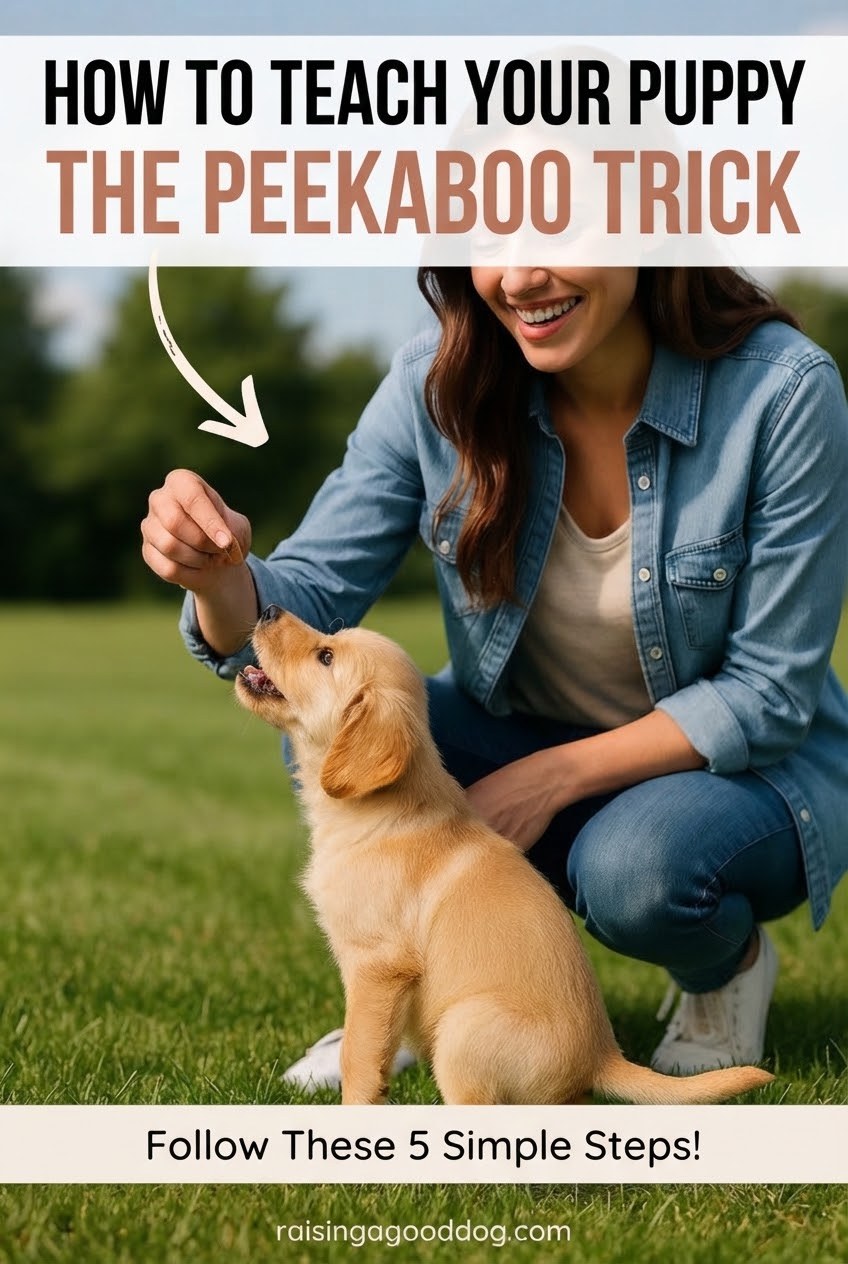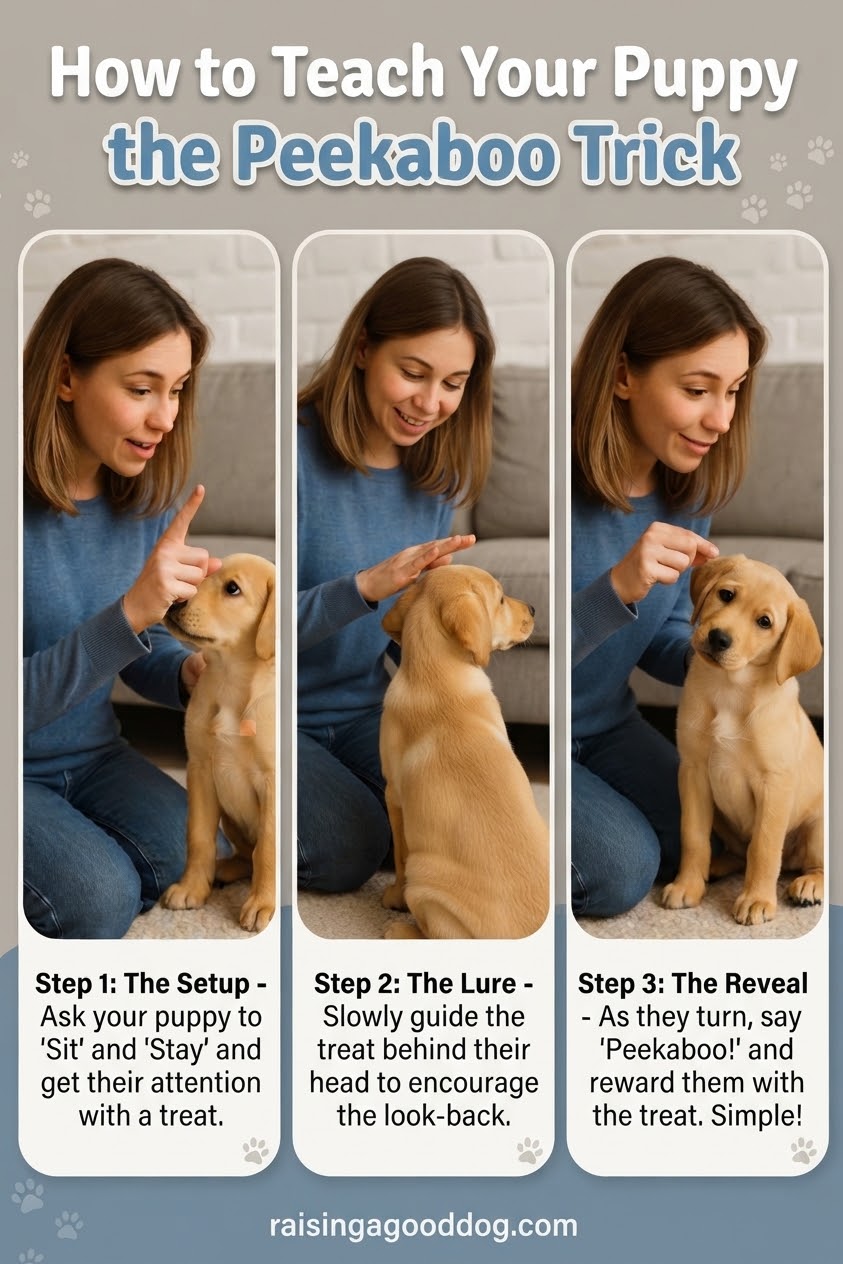
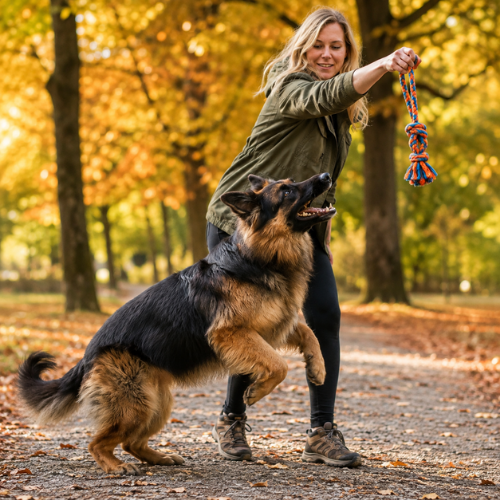
I love a trick that makes a dog and person look like a team, and the peekaboo trick is one of my favourites because it is simple, silly, and genuinely builds communication. I teach it slowly, with the puppy comfortable and choosing to participate, not by forcing a position.
When I work on tricks like this, I start by making success easy. Reward-based training helps dogs understand which behaviours earn good things, and short, positive sessions are a practical foundation for puppies.
Teach Your Puppy the Peekaboo Position
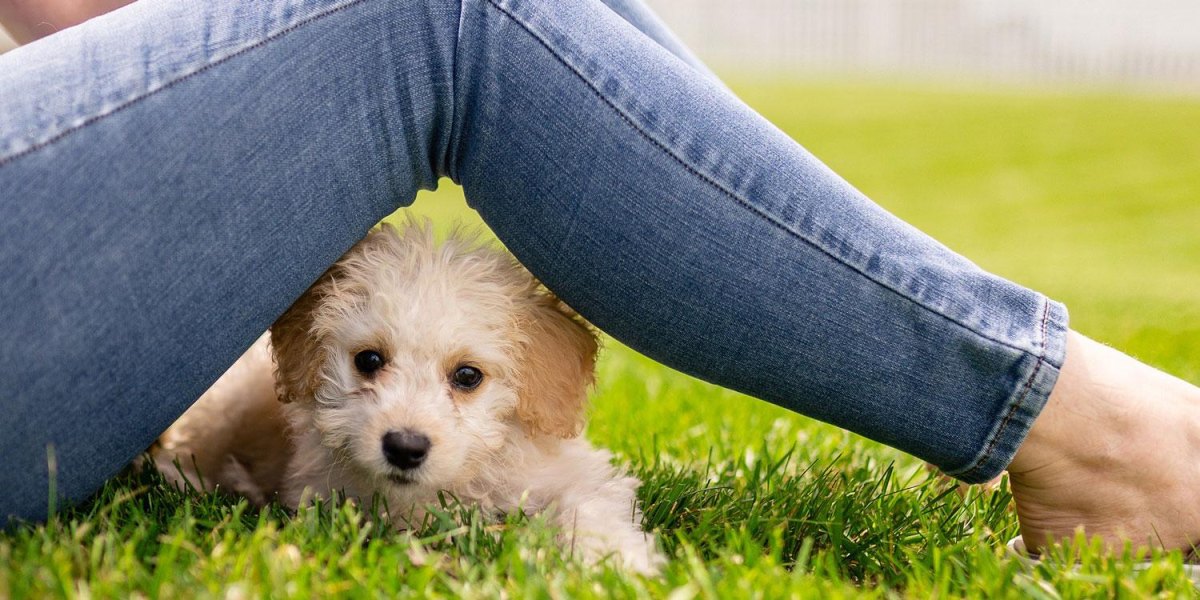
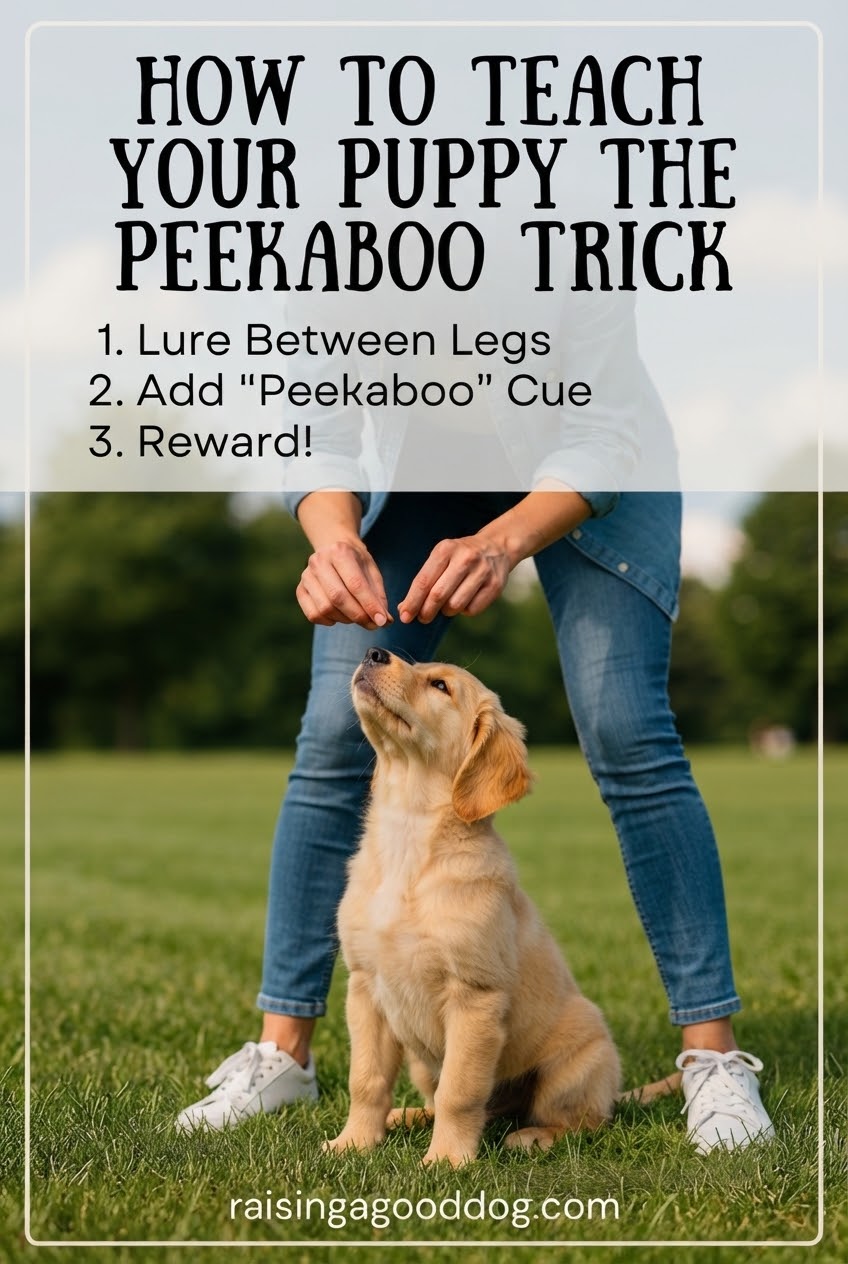
Before I add any word for the trick, I teach the puppy that standing between my legs is a safe starting position. I begin in a quiet room where there are fewer distractions and where my puppy can think.
I stand with my legs slightly apart, guide my puppy into the space with a treat, and reward the moment they step into place. I am looking for relaxed body language: soft eyes, normal breathing, and a loose body. If I see lip licking, tucked posture, freezing, or avoidance, I make the exercise easier.
- Stand. Create a comfortable space for your puppy to walk between your legs.
- Guide. Use a treat to encourage the position without pulling or pushing.
- Reward. Mark the moment your puppy reaches the position and offer the treat.
My training tip
I do not rush this part. The position itself is the trick foundation, and confidence comes first.
Use Treats to Build the Peekaboo Cue
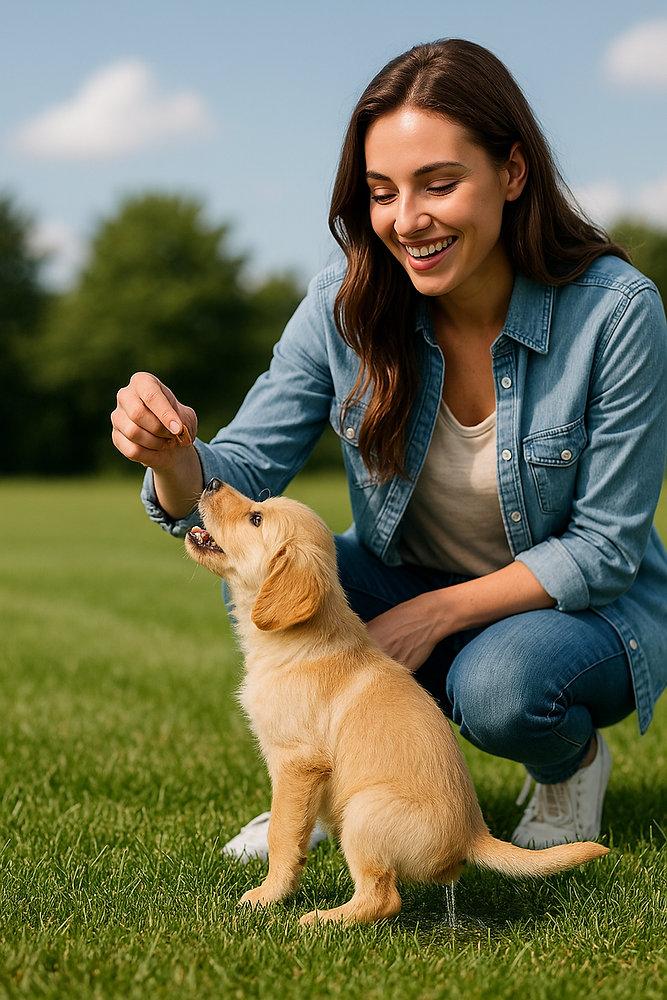
Treats are not a bribe in my training room; they are information. The puppy learns, this behaviour pays, and that makes repeating it worthwhile. Reward-based methods are widely recommended for teaching dogs because they focus on reinforcing behaviours we want to see.
I keep the treats tiny and the repetitions brief. Once my puppy is happily moving into peekaboo, I start reducing the visible lure and reward after the behaviour instead. That way the puppy learns the action, not just following food.
| Training stage | What I do |
|---|---|
| Beginning | Use a treat to guide the puppy into position. |
| Learning | Reward the position after the puppy reaches it. |
| Improving | Use treats less predictably while still rewarding success. |
Add the Peekaboo Command and Hand Signal
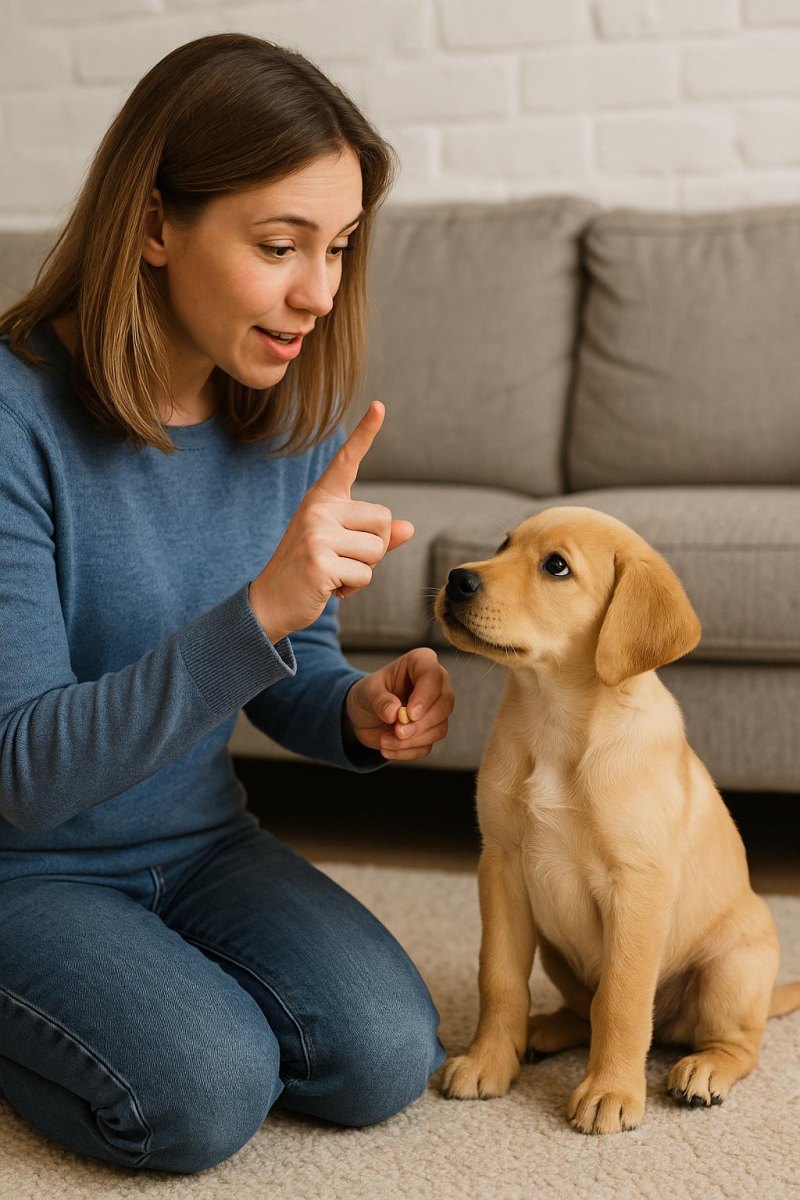
I only add the cue after the puppy understands the movement. A word like “peekaboo” has meaning because it predicts a behaviour the puppy already knows, not because I repeat it louder. The cue comes second.
I say the word once as my puppy is about to move into position, then reward. I usually add a hand signal too because dogs pay close attention to our body language, sometimes even more than our words.
- Word cue: Choose one short phrase and keep it consistent.
- Hand signal: Use the same movement every time.
- Timing: Reward quickly so your puppy connects the action and outcome.
Practice Peekaboo With Short Training Sessions
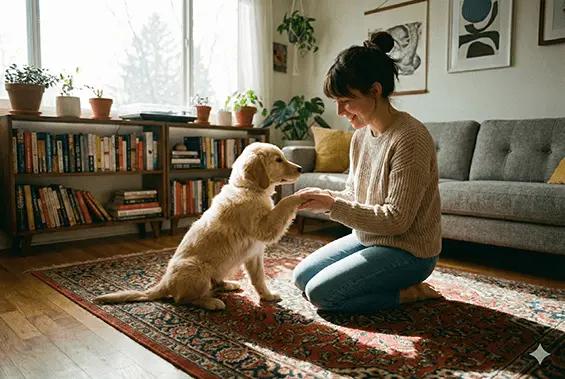
I would rather finish with a puppy wanting more than keep going until everyone is frustrated. Most puppies learn best with short practice sessions, especially when they are learning a new trick.
My usual approach is a few minutes at a time, then a break. If my puppy suddenly wanders away, scratches, sniffs the floor, or stops taking treats, I treat that as useful information rather than stubbornness.
- Practice when your puppy is rested and able to focus.
- Choose a low-distraction area before adding challenges.
- Stop after a successful repetition whenever possible.
- Increase difficulty gradually instead of testing your puppy.
A mistake I see often
Owners sometimes add distractions too quickly. A puppy who succeeds in the kitchen may not yet understand the trick at the park.
Reward and Improve Your Puppy’s Peekaboo Trick
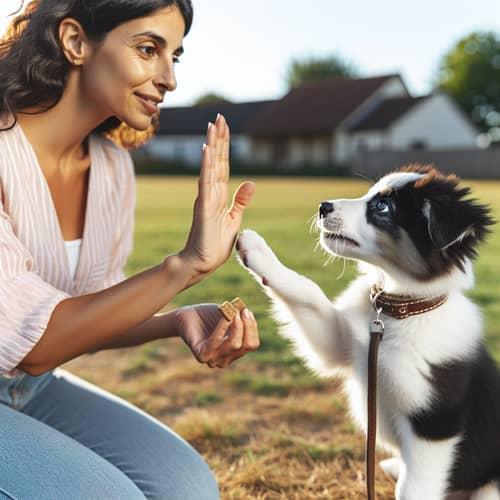
The finished peekaboo trick is not about perfection. I care more about a puppy who happily offers the behaviour than one who performs because they feel pressured. A willing learner is always my goal.
As your puppy improves, you can add small challenges: a different room, a little more distance, or a longer hold. I change one thing at a time so my puppy knows how to succeed.
What improves the trick
- Clear cues
- Frequent rewards
- Patient repetition
What slows learning
- Rushing distractions
- Repeating cues endlessly
- Training when the puppy is overwhelmed
The little detail that matters
I always watch the dog in front of me, not the trick I imagined. Good training meets the puppy where they are today.
More Pinterest Visuals