I have watched many puppies go from confused little noodles to dogs who proudly offer a sit, a paw, or a recall. The trick is not making training complicated; it is creating clear learning moments your puppy can understand. I use short, reward-based sessions because they fit real life, including those rainy Tuesday walks when nobody feels like being perfect.
Before teaching tricks, I make sure the puppy is comfortable, rested, and able to focus. A puppy who is overwhelmed, overtired, or stressed will struggle to learn, and that is information, not failure. Small successful steps are what build reliable behaviours.
Start With Basic Commands Like Sit and Stay
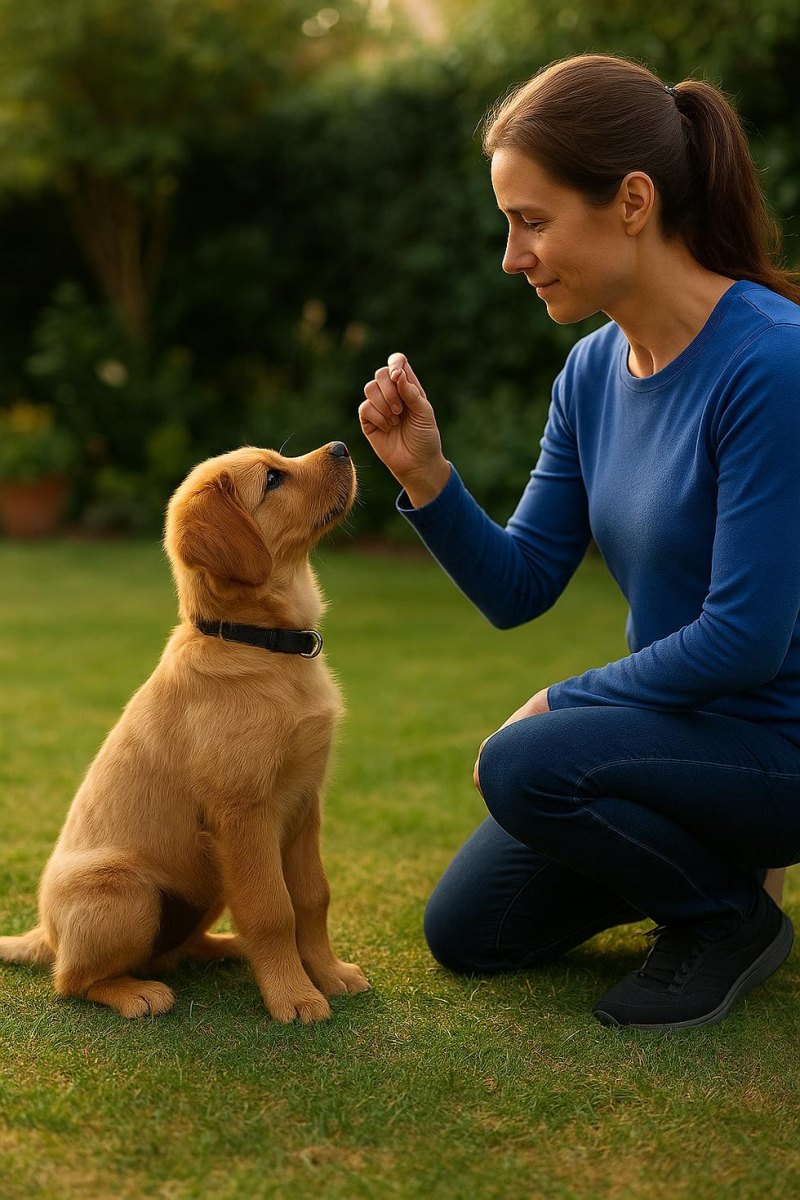
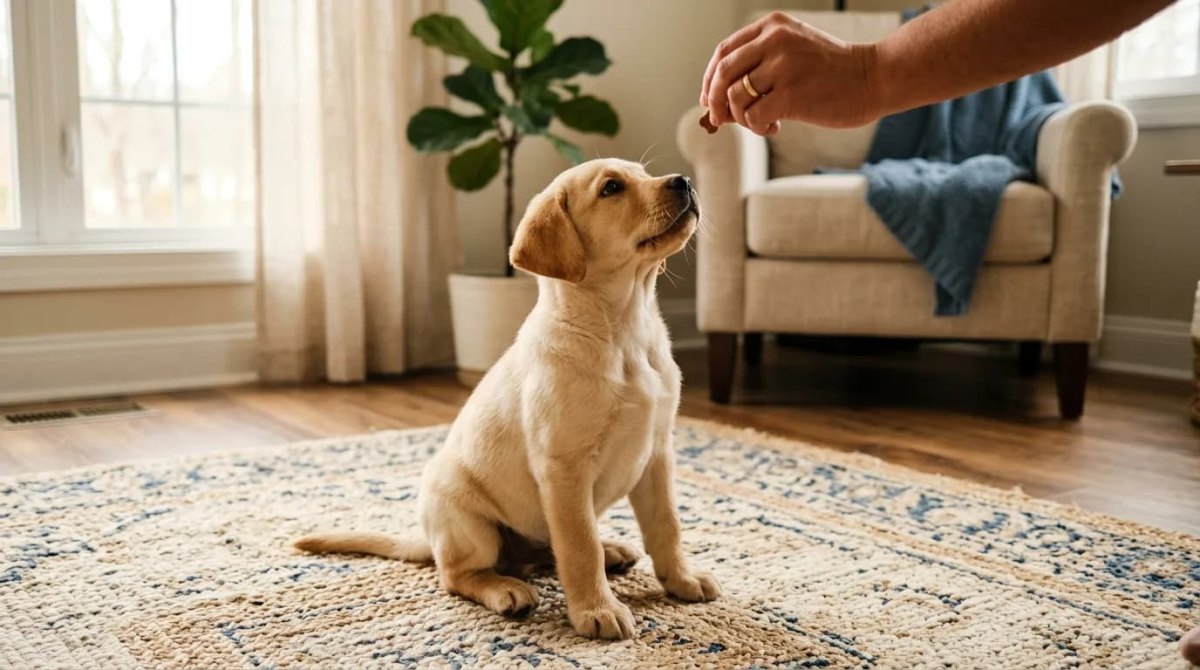
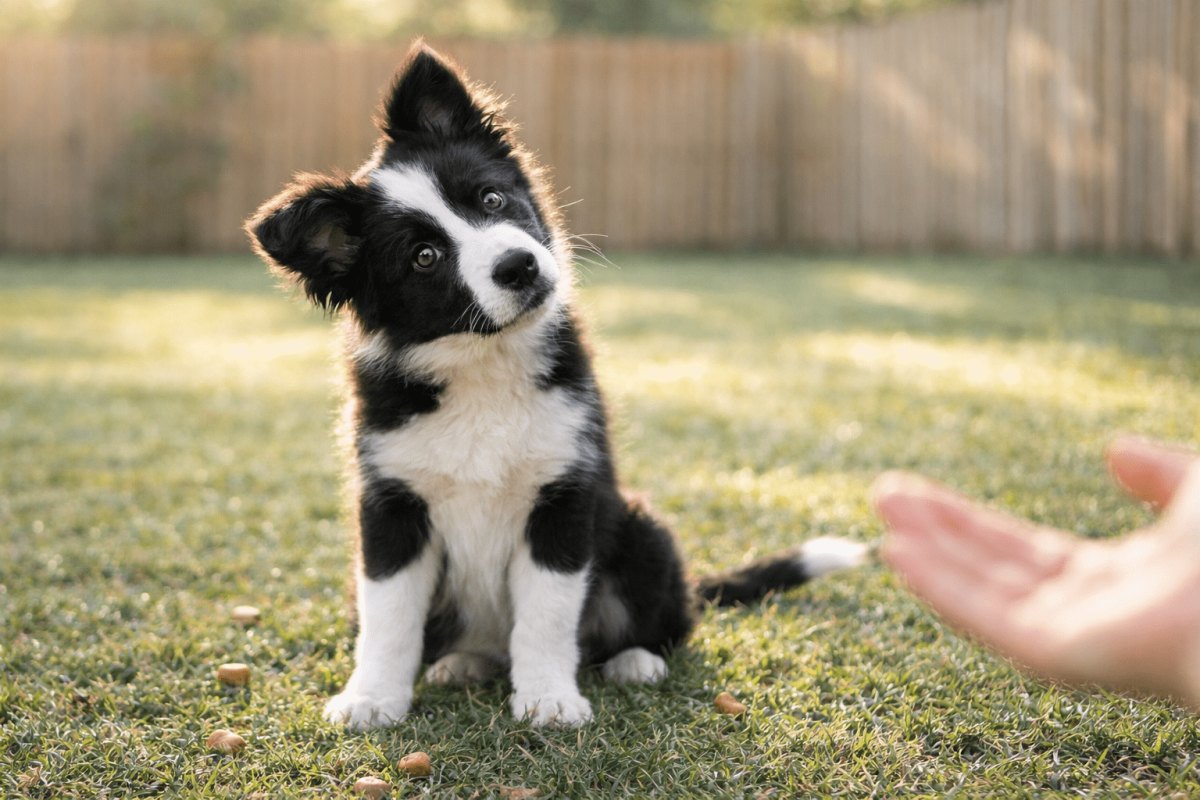
I always begin with simple cues because they teach the puppy how the training game works. Sit and stay are not about control; they are about helping your dog understand that good choices earn rewards. Veterinary behaviour resources describe cues as signals that help dogs predict which behaviour will lead to a reward.
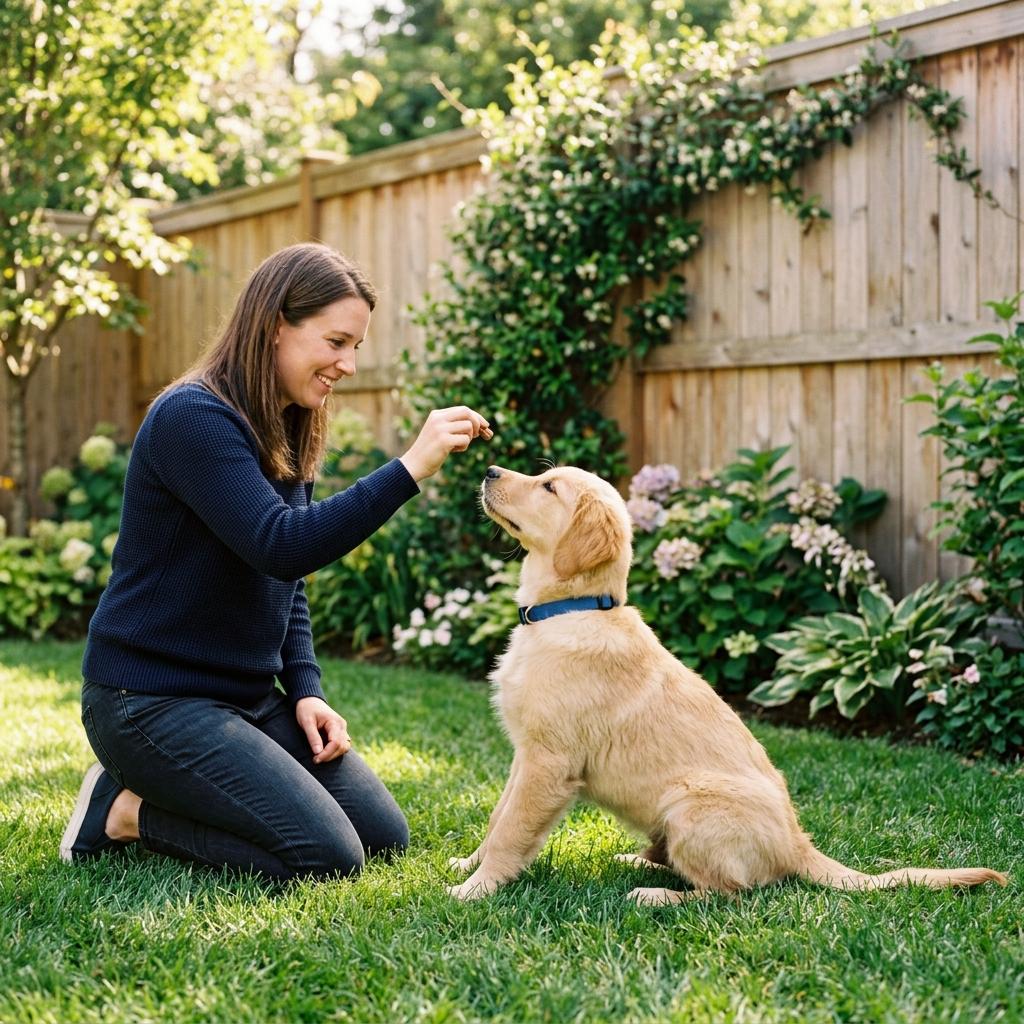
- Lure. Guide your puppy into position with a reward and mark the moment they succeed.
- Repeat. Practise in short sessions before adding distractions.
- Build. Slowly increase the time your puppy stays before rewarding.
Training tip
If your puppy keeps breaking the stay, make the exercise easier instead of repeating the cue louder.
Teach Your Puppy to Come When Called
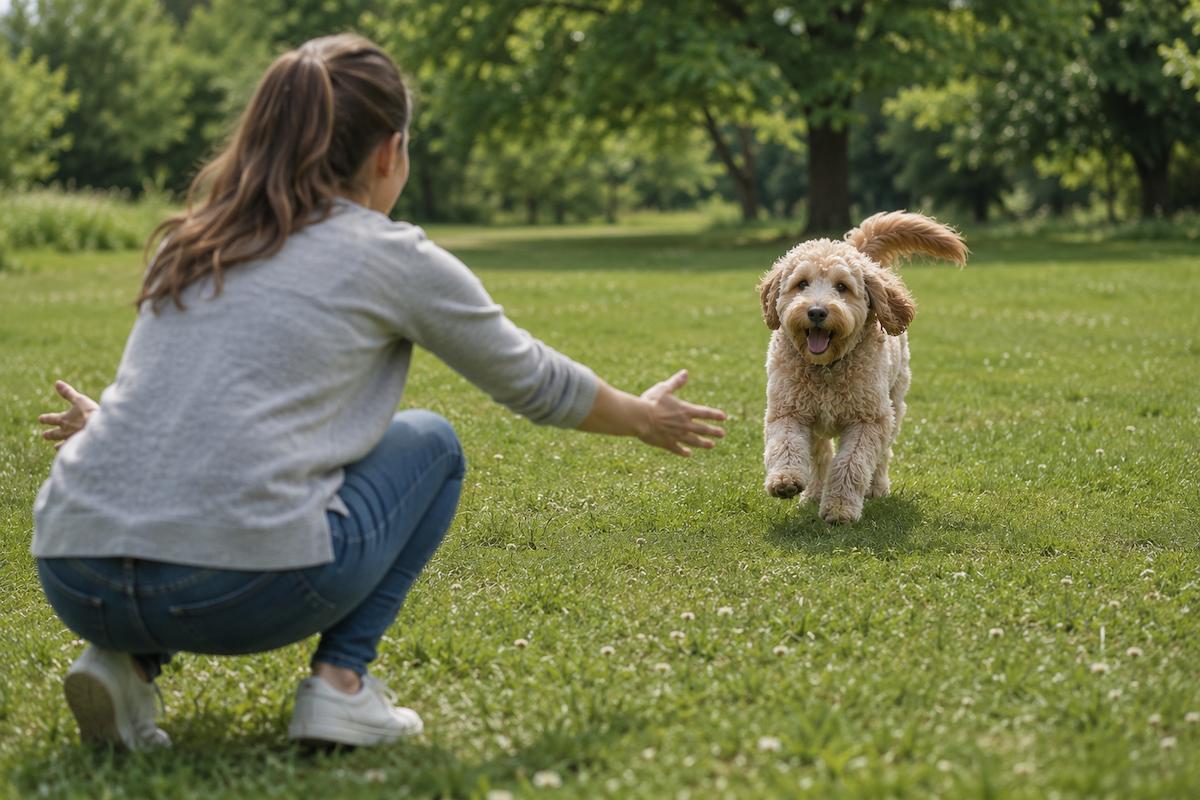
Recall is the trick I protect most carefully because it can become a safety skill. I never call a puppy to end every fun thing; I want coming to me to feel like the best option available. Reward-based recall training works by making the behaviour valuable to repeat.
- Start indoors with very few distractions.
- Use a happy voice and reward generously.
- Avoid calling your puppy for something unpleasant while they are learning.
Common mistake
Do not test recall too early in a busy park. Build the habit before asking your puppy to ignore exciting distractions.
Practice Fun Tricks Like Shake and High Five
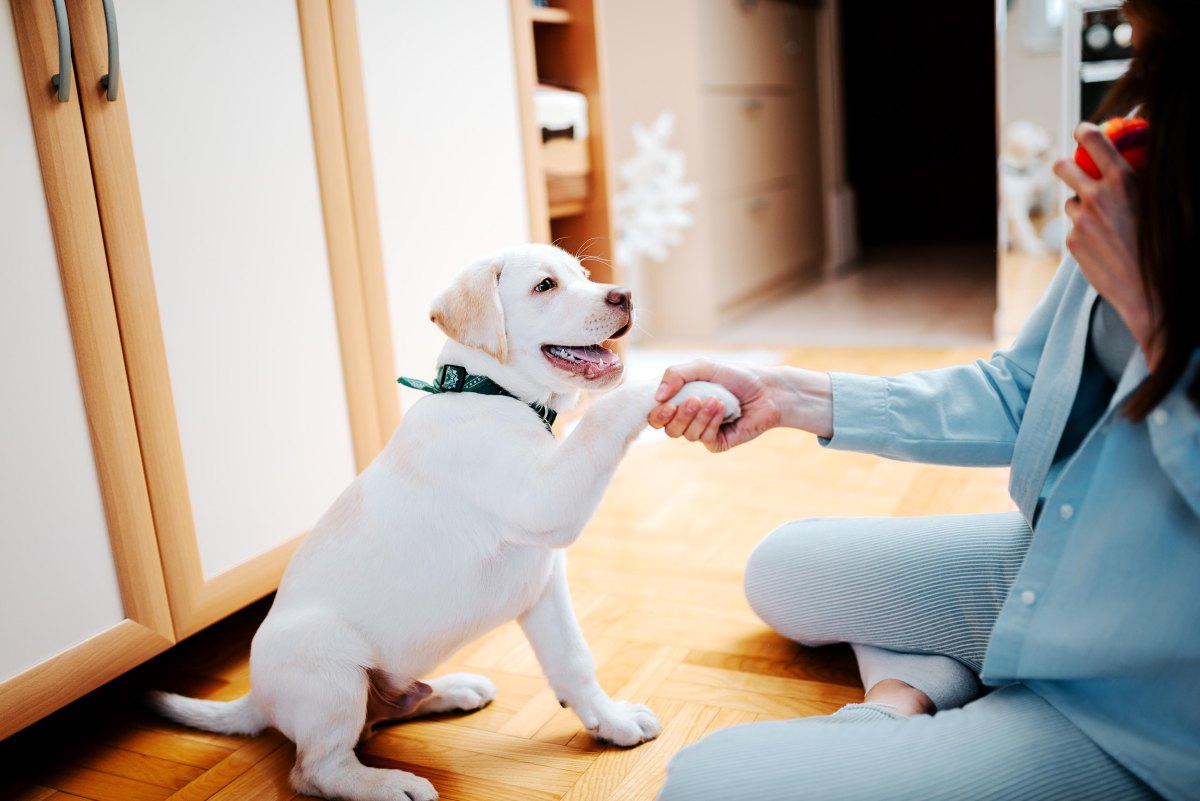
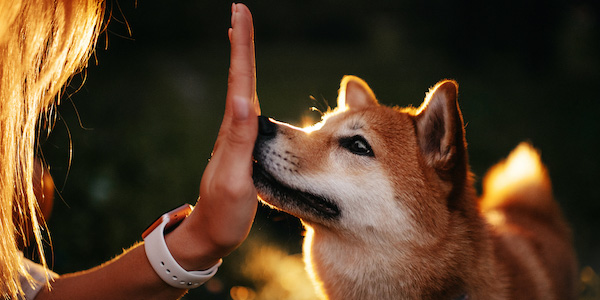
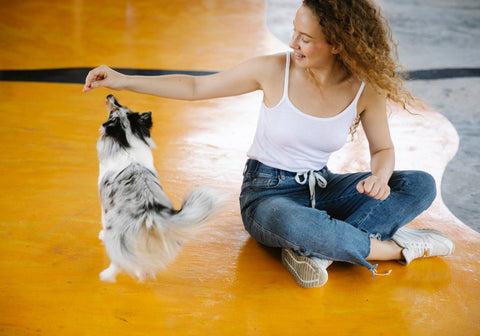
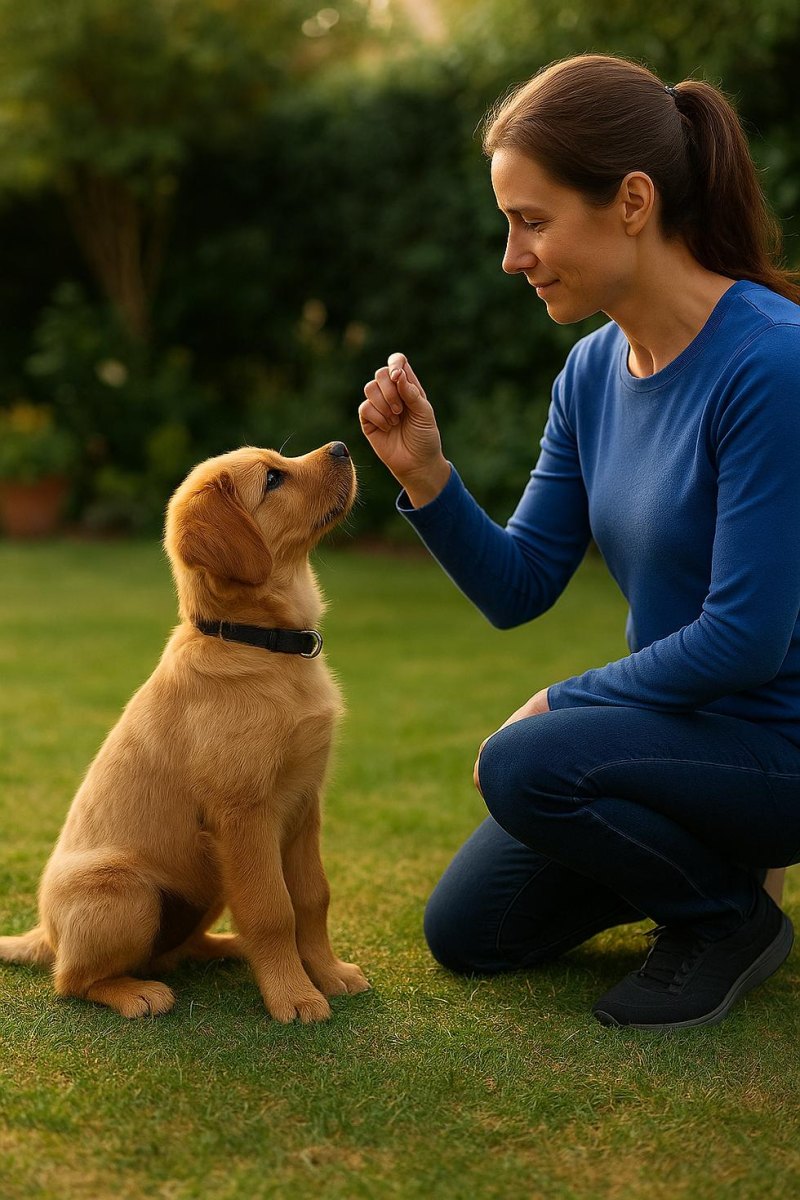
Shake and high five are lovely beginner tricks because they are easy to split into tiny pieces. I look for the smallest effort from the puppy, then reward it. That approach creates confident problem solving instead of guessing and frustration.
- Shake: Reward your puppy for lifting a paw toward your hand.
- High five: Gradually raise your hand position until the paw reaches your palm.
- Practice: Keep sessions short and finish while your puppy still wants more.
Why these tricks help
- They improve communication between dog and person.
- They provide mental enrichment.
Things to watch
- Some puppies need extra time to offer paw movements.
- Do not force a paw hold if your puppy dislikes it.
Train Your Puppy to Roll Over Step by Step
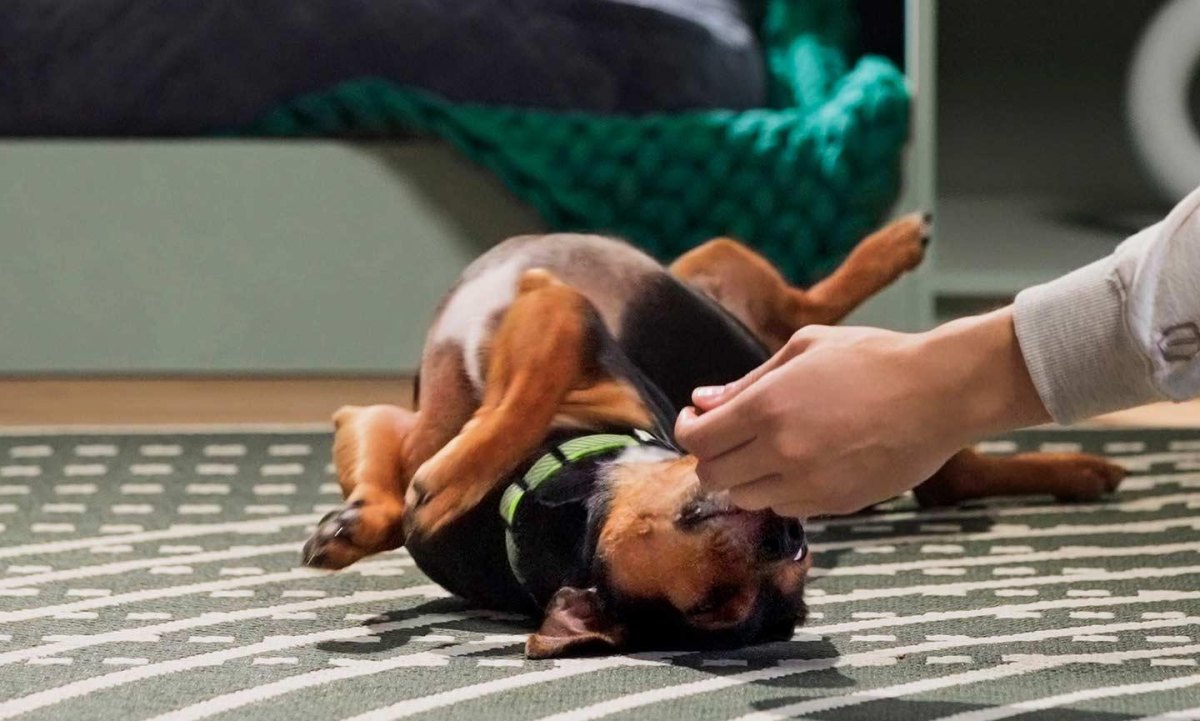
Roll over looks simple when a finished dog performs it, but puppies are learning a chain of movements. I start only when the puppy is comfortable lying down and moving their body. Breaking the trick into pieces keeps training comfortable and clear.
- Start. Ask for a down position in a comfortable space.
- Guide. Move a treat slowly near the shoulder to encourage a side position.
- Reward. Mark small progress before expecting a full roll.
Avoid this mistake
Do not push your puppy's body into a roll. If they hesitate, the movement needs smaller steps.
Reward Good Behavior for Faster Learning
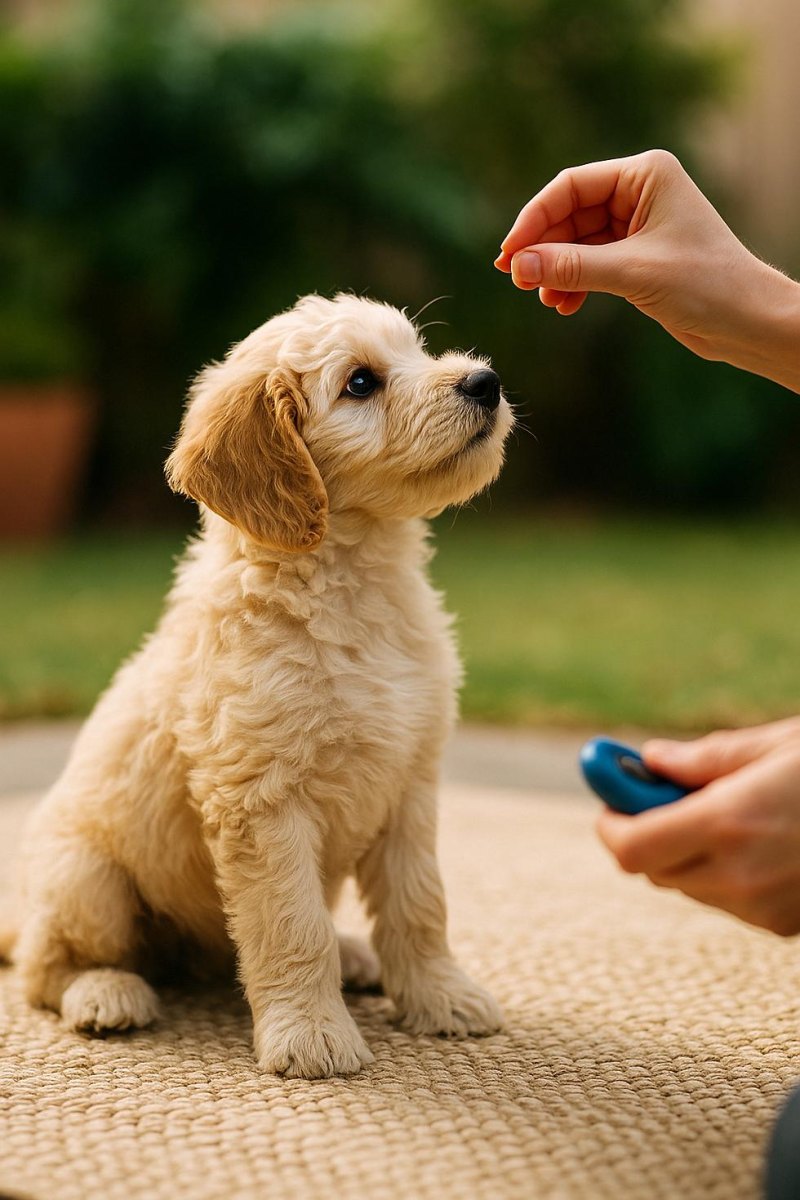
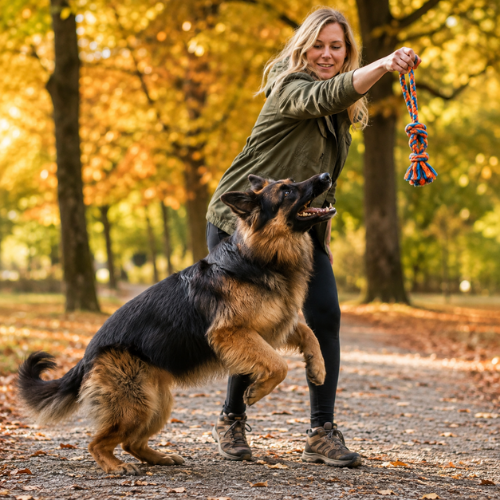
The reward is the part many people rush past, but it is where learning happens. Puppies repeat behaviours that bring something they value, whether that is food, play, praise, or another meaningful reward. Good timing matters because your puppy needs to understand exactly what earned the reward.
| Training moment | What I do |
|---|---|
| Puppy succeeds | Reward immediately so the connection is clear. |
| Puppy struggles | Make the step easier and try again later. |
| Puppy loses focus | End the session before frustration builds. |
I tell my clients that a five-minute training session done happily beats twenty minutes where everyone is tired. The goal is not a circus dog; it is a puppy who trusts you and enjoys learning. Reward-based training focuses on teaching the behaviours we want to see, and that is the foundation I come back to every day.
More Pinterest Visuals