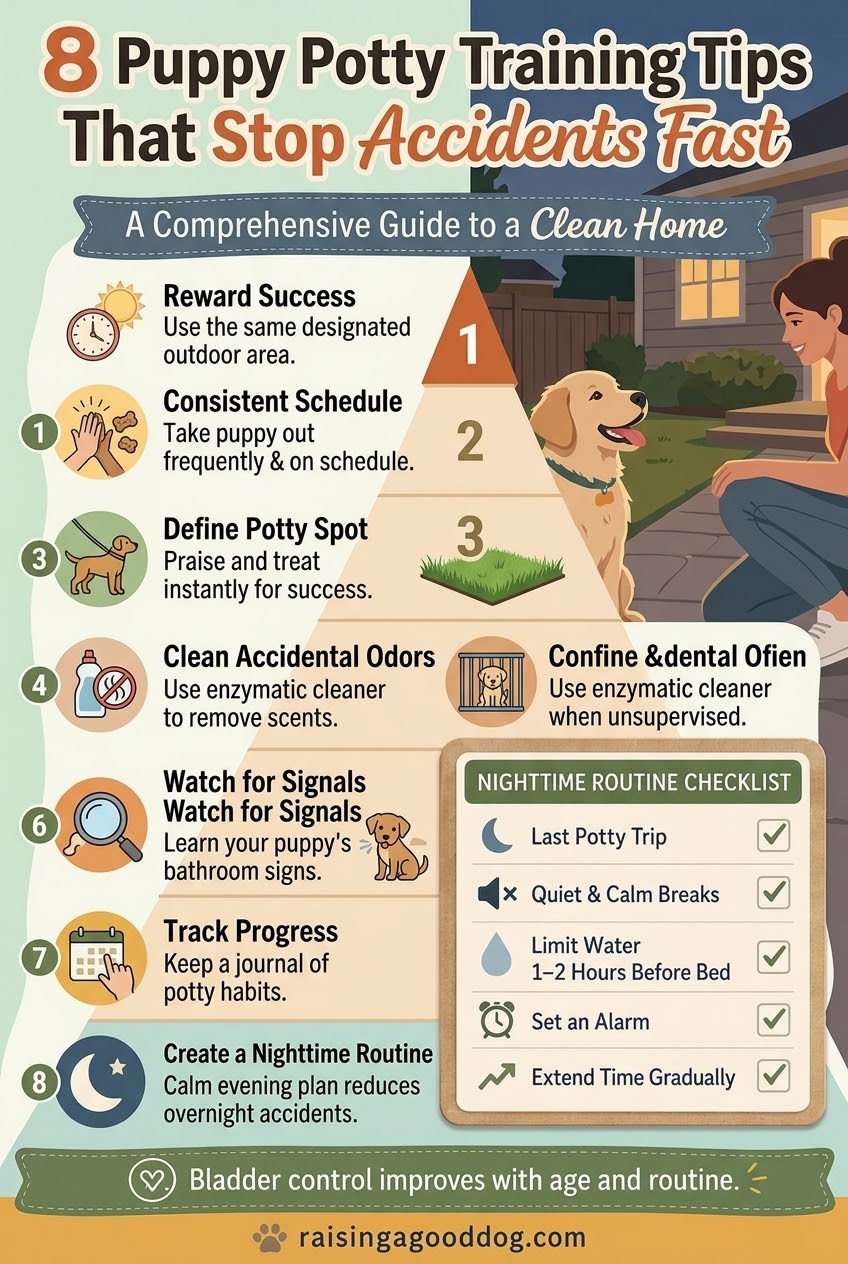
Nobody warns you that housetraining a puppy is really an exercise in managing yourself — your schedule, your attention span, your ability to notice a sniffing spiral before it becomes a puddle on the rug. I've walked a lot of clients through this from my training room here in Asheville, and the ones who succeed fastest aren't the ones with the smartest puppy — they're the ones who stop treating accidents as a training failure and start treating them as information. This isn't obedience work. It's habit-building on a bladder that's still growing, and it moves faster than people expect once the pieces line up.
Set the Schedule Before You Set Anything Else
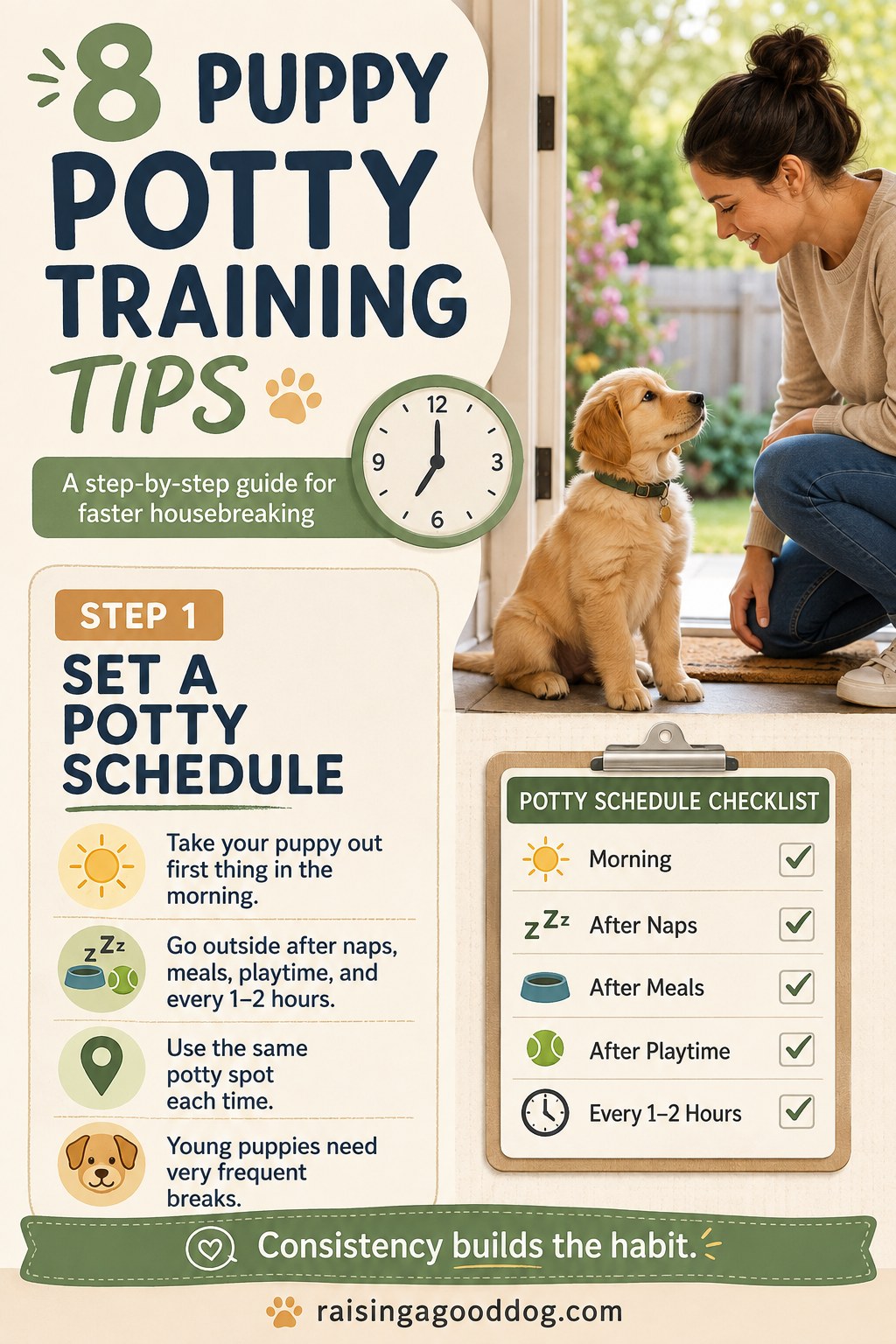
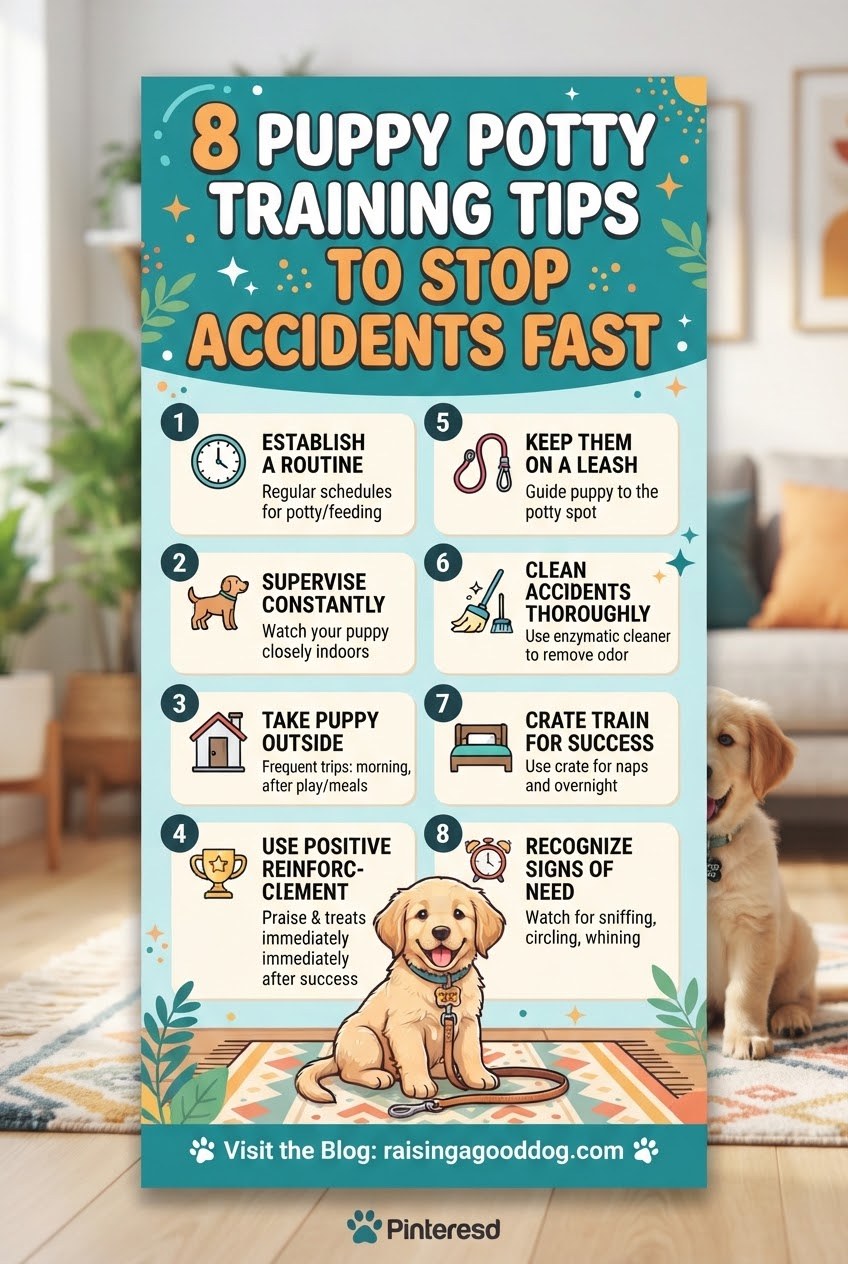
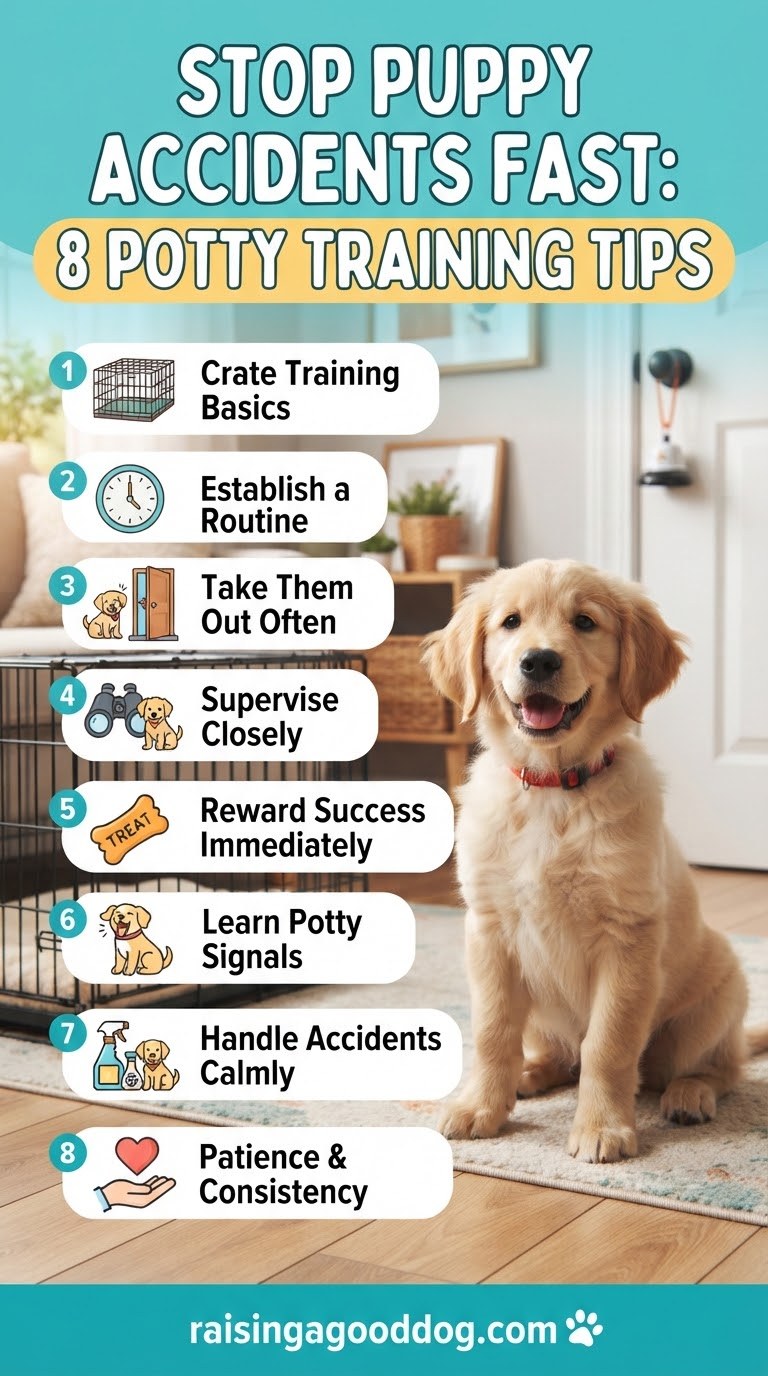
This is the piece I put first in every client email, because a schedule is management, not training — it's how you stop accidents from happening long enough for the habit to form. A young puppy's bladder is small and their awareness of it is close to zero, so you're not waiting for a signal at eight or ten weeks. You're taking them out on a clock.
- First thing every morning — before coffee, before anything else.
- After every nap — puppies wake up and need to go almost immediately.
- After meals — usually within fifteen to twenty minutes.
- After play — excitement moves things along fast.
- Every one to two hours for very young puppies, full stop.
A rough rule I give clients: a puppy can generally hold it for about as many hours as their age in months, plus one — so a three-month-old is closer to four hours max, not eight. That's a guideline, not a guarantee, and it's why the next seven steps matter as much as this one.
Pick One Potty Spot and Stay Loyal to It
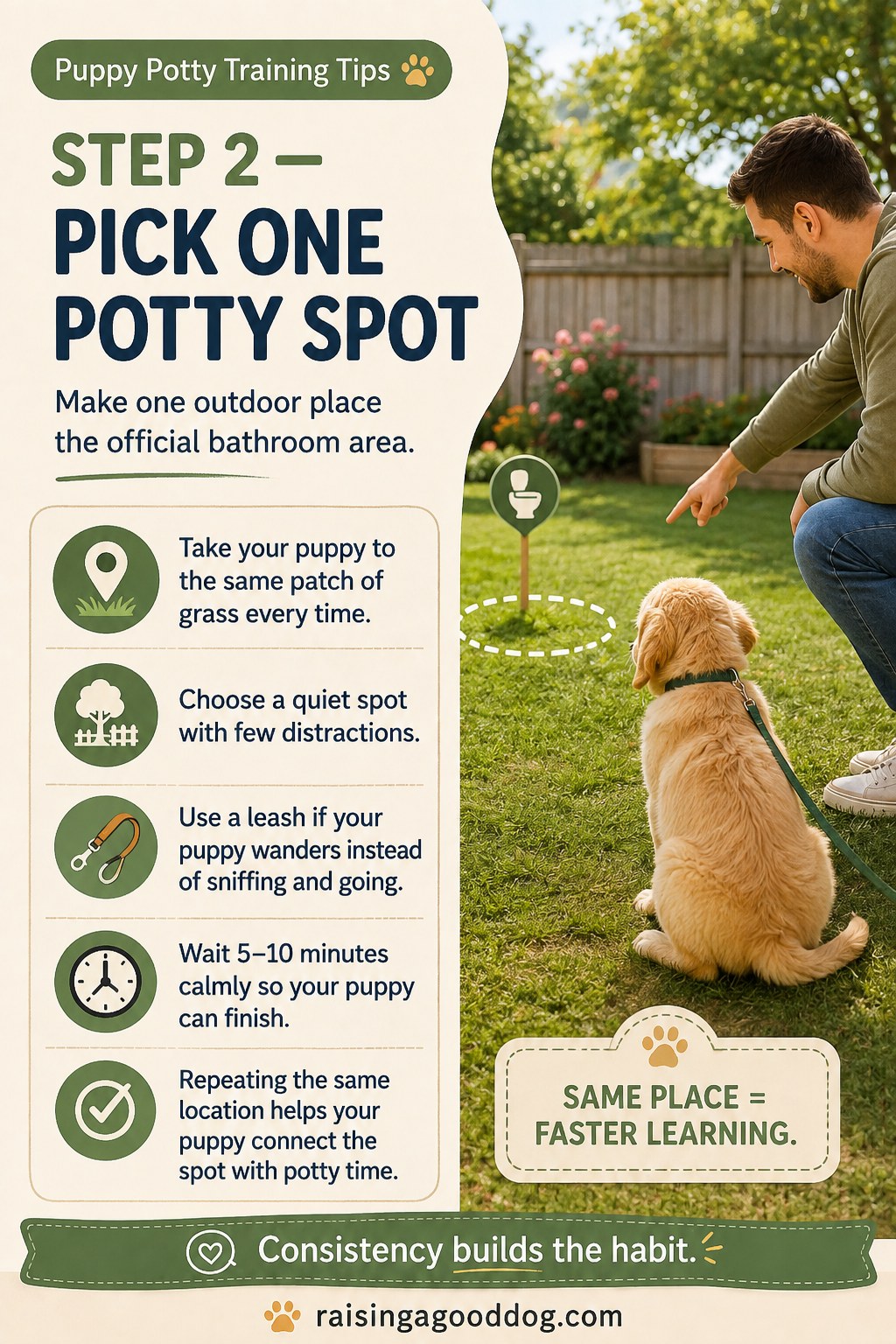
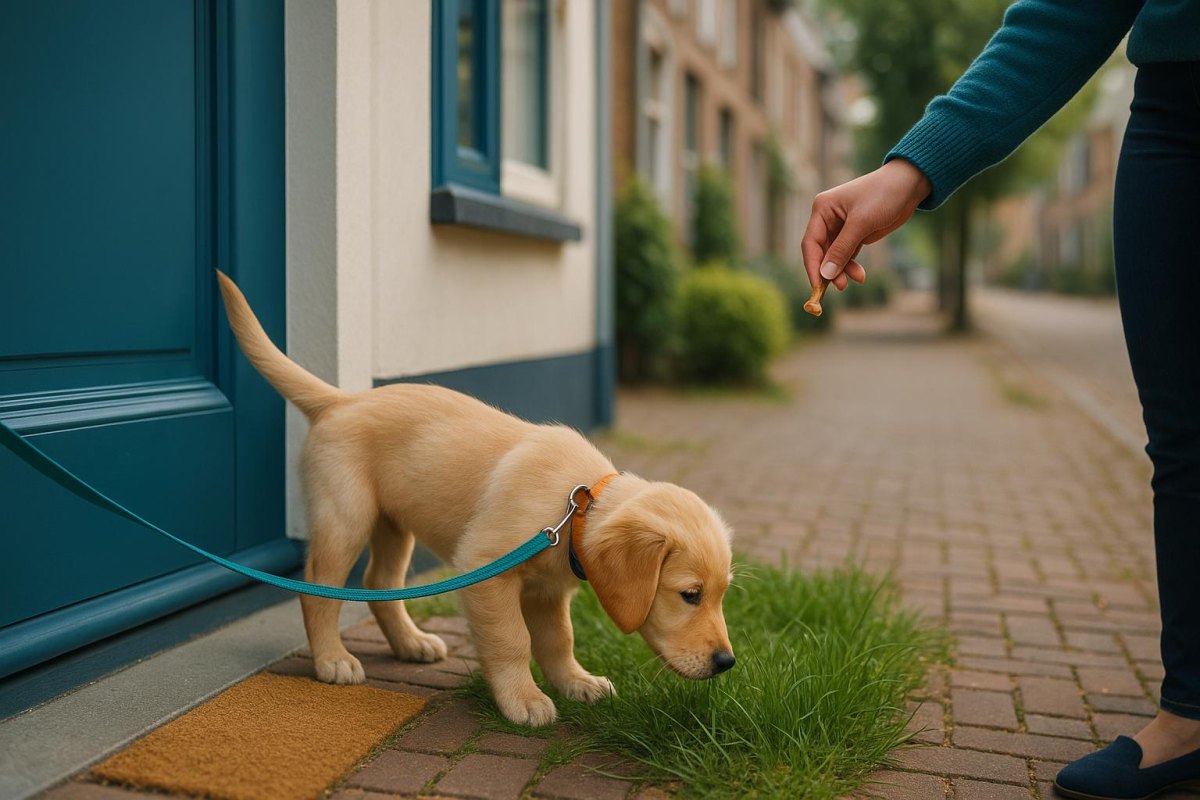
Puppies build habits through repetition and scent, so taking your puppy to the same patch of grass every single trip does real work — the smell of previous visits cues the behavior faster than anything you say. Choose somewhere quiet, away from the sounds and smells that turn a bathroom trip into a ten-minute investigation.
If your puppy wanders, sniffs everything but the actual spot, or tries to turn the trip into a squirrel patrol, keep them on leash rather than letting them free-roam the yard. Wait calmly for five to ten minutes — no coaxing, no games — so they can actually finish. If you're in an apartment without a yard, this still applies: pick one corner of the same patch of sidewalk or one turf pad, and be just as boring and consistent about it. The spot matters less than the repetition.
Attach a Word to the Behavior
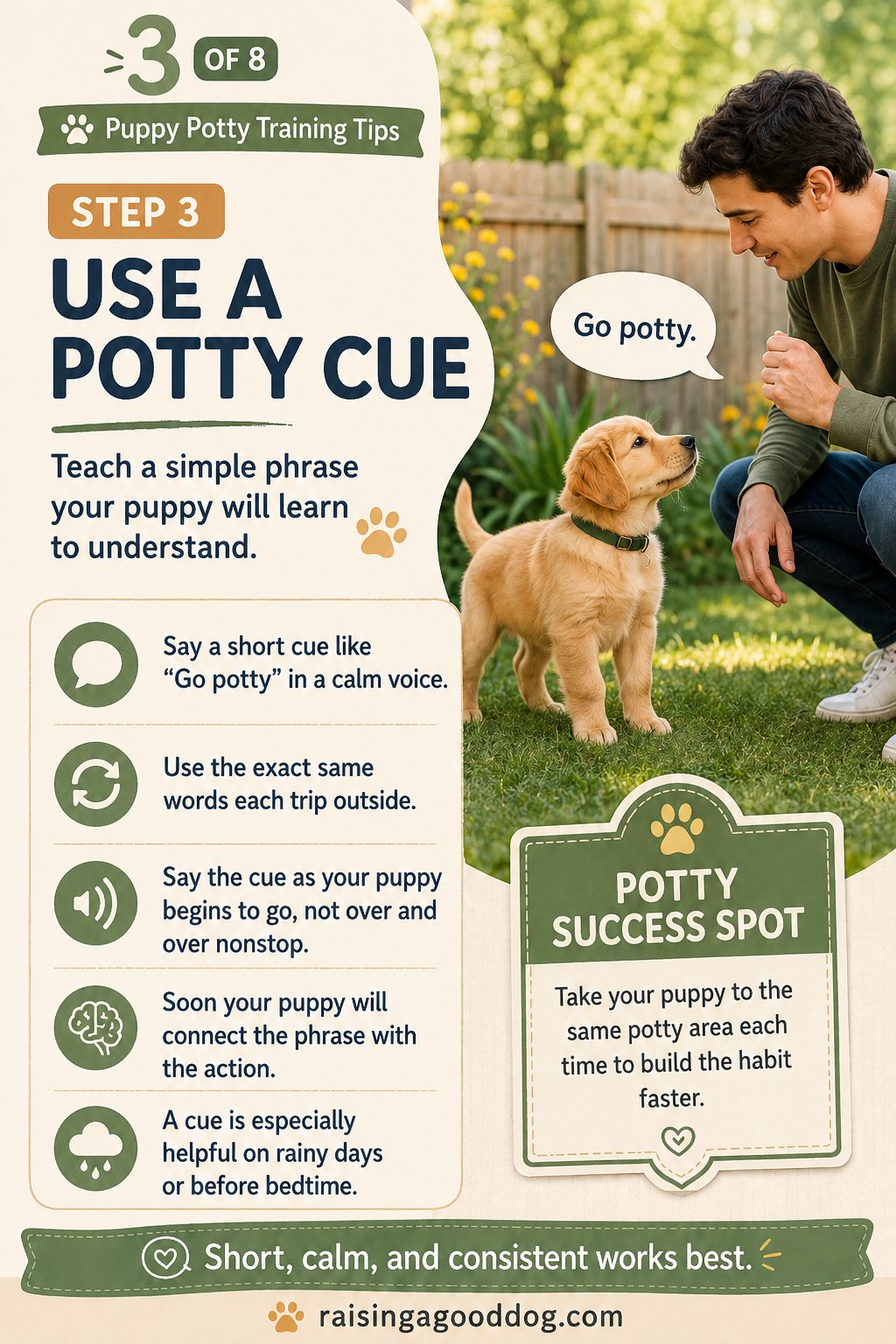
A potty cue works the same way any cue works — you're pairing a word with a behavior until the word predicts it. Pick something short, like go potty, say it in a calm, ordinary voice, and use the exact same phrase every trip. Consistency here does more than enthusiasm does.
Timing is the whole trick
Say the cue as your puppy begins to go, not before, and not on repeat while they're mid-squat. Repeating it over and over just becomes background noise your puppy learns to ignore — I hear this in almost every intake call, and it's an easy fix once someone points it out. Once the association is solid, a potty cue earns its keep on rainy mornings, right before bed, or anywhere you need your puppy to get down to business quickly instead of exploring.
Reward the Instant It Happens
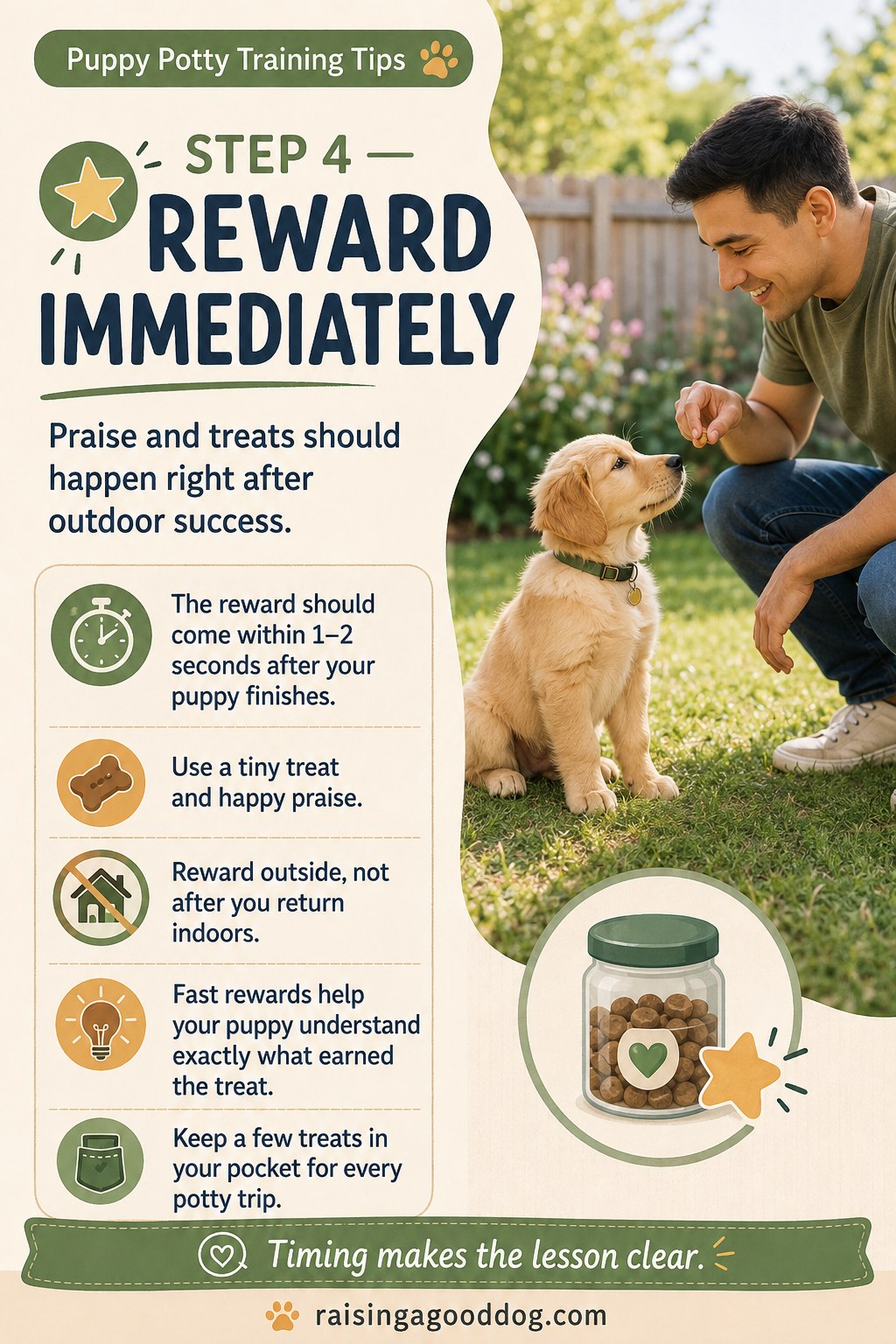
Timing is the entire lesson here, and it's the step almost every exhausted new puppy owner shortcuts without meaning to.
In my experience, the single biggest thing separating a puppy who's housetrained in six weeks from one still having accidents at four months is a one-to-two-second reward window — nothing else in this list matters as much as that timing.
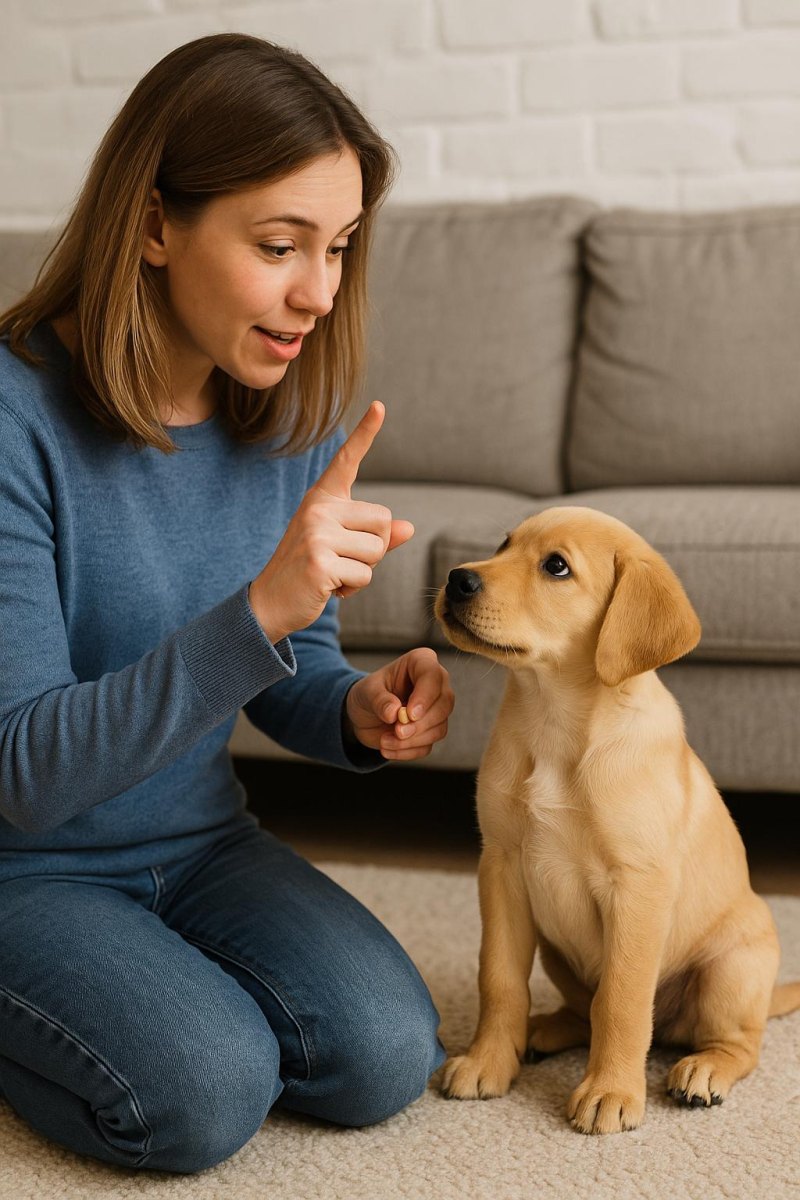
- Reward within one to two seconds of your puppy finishing, not after you've both walked back inside.
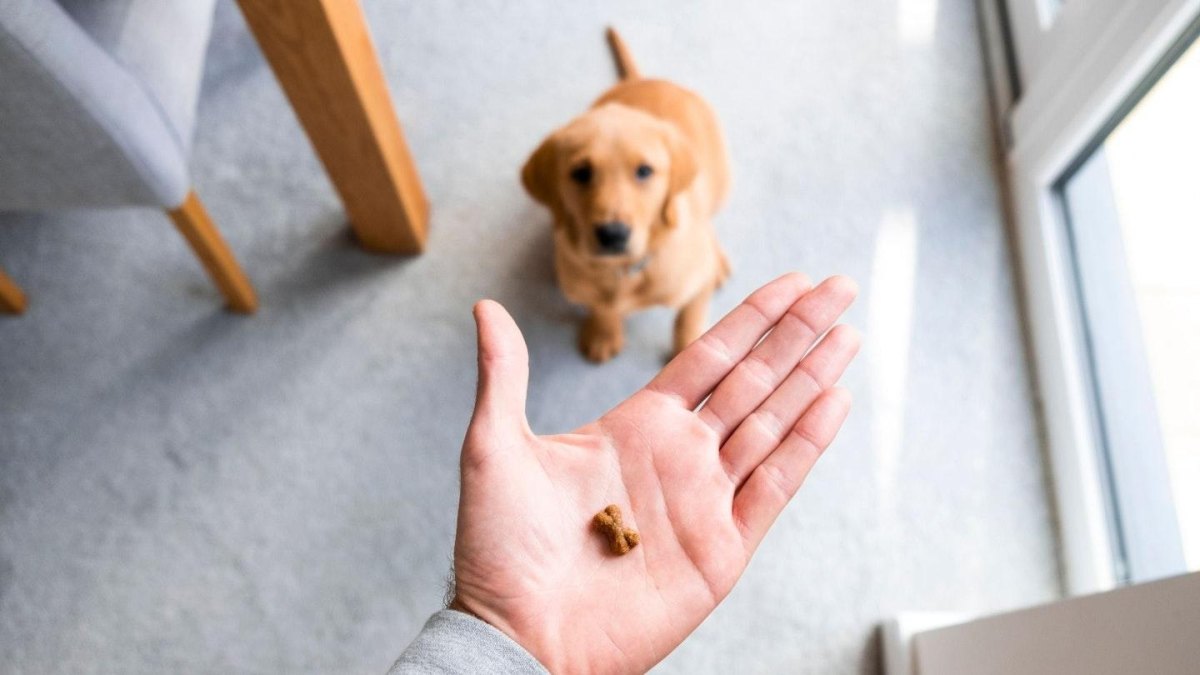
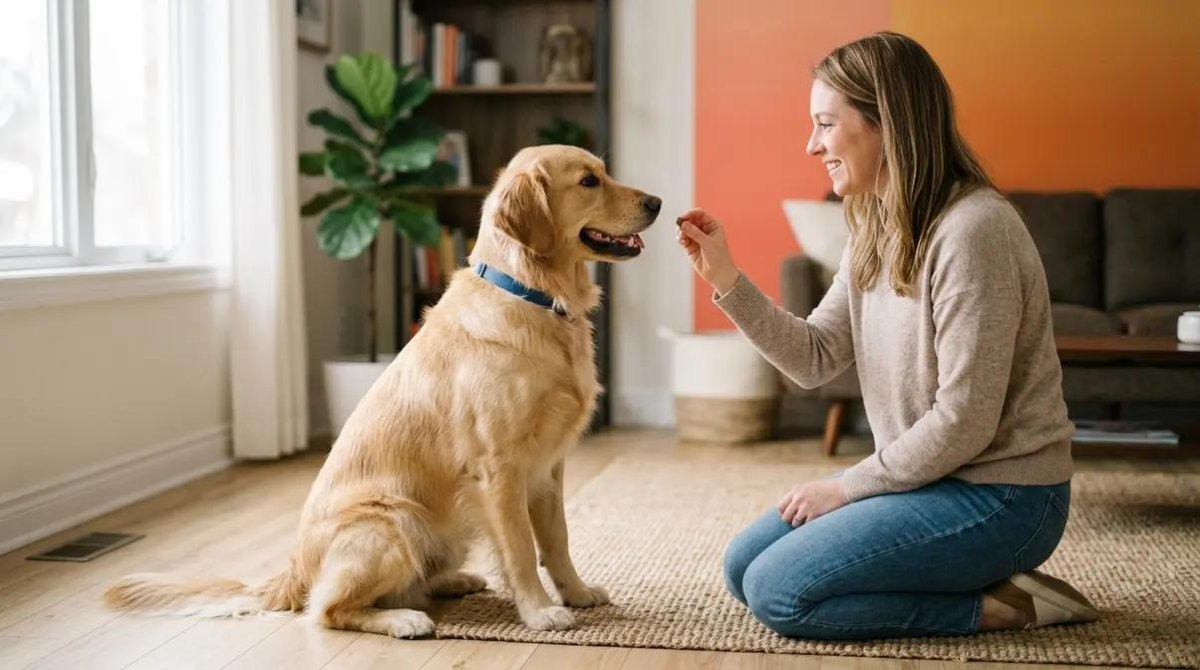
- Use a tiny, high-value treat plus genuine, happy praise — the treat isn't the whole message, your tone is part of it.
- Reward outdoors, at the spot, so your puppy connects the reward with what just happened where it happened.
- Keep treats in your pocket on every single potty trip — not just the ones you remember to plan for.
Waiting until you're back in the kitchen tells your puppy that coming inside earned the treat, not the potty itself. It's a small gap that causes a lot of confusion.
Supervise Indoors Like It's Your Job
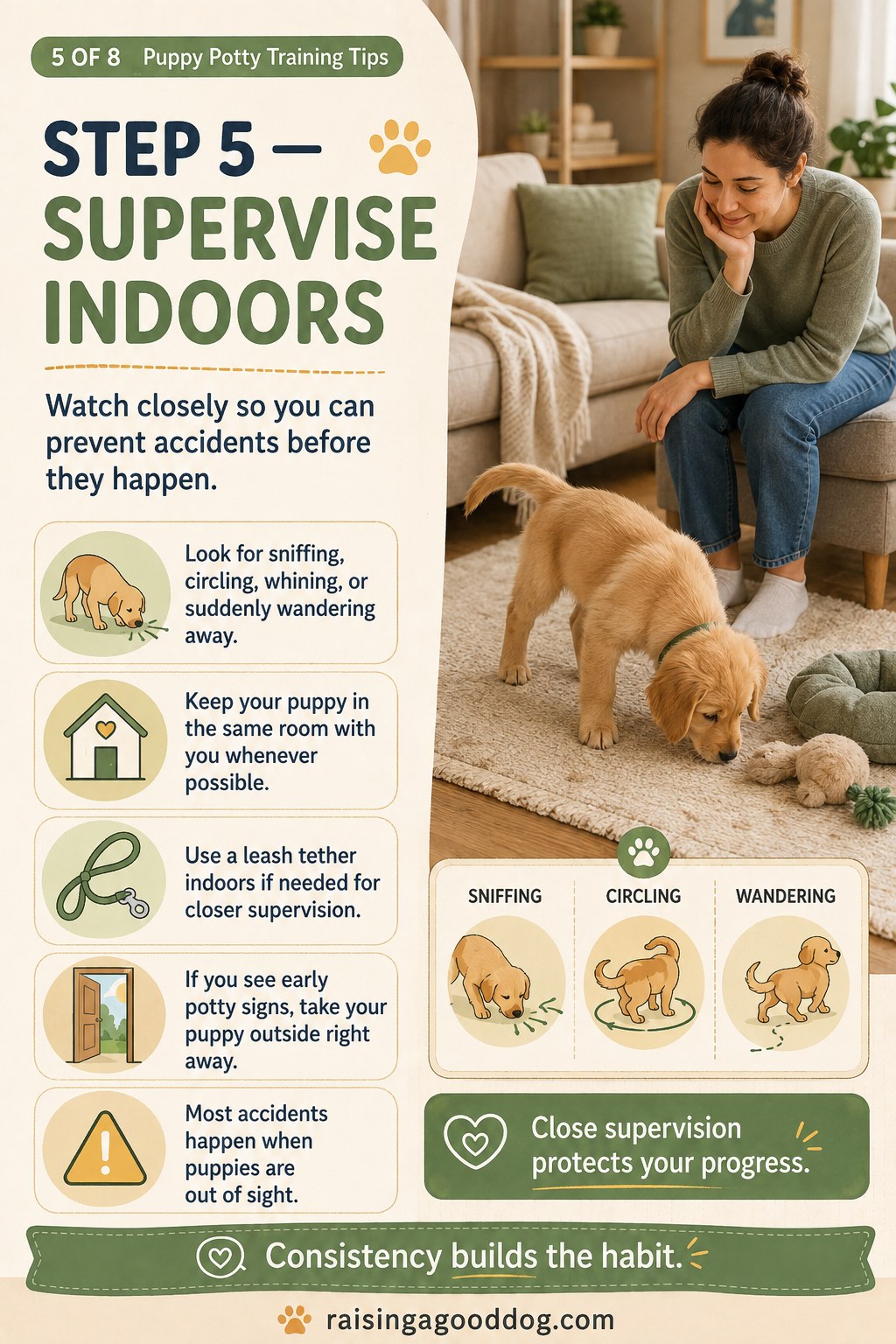
This is management applied indoors, and it's the step most house-training plans skip entirely. Most accidents don't happen because a puppy is being sneaky — they happen because nobody was watching during the thirty seconds it mattered.
From my vet-clinic years I got very used to reading small, early body language, and the same skill applies here. Watch for:
- Sudden sniffing at the floor, more intense than casual exploring
- Circling in one spot
- Whining or general restlessness
- Wandering off toward another room, out of your sightline
Keep your puppy in the same room with you whenever you can, and if that's hard to enforce, a leash tether to your belt loop or a piece of furniture works well for a few weeks — it's not a punishment, it's just closer supervision with less effort on your part. The moment you see any of the above, skip the debate and go outside. Most accidents happen in the gap between "out of sight" and "too late."
Use a Crate Wisely — Not as a Cage
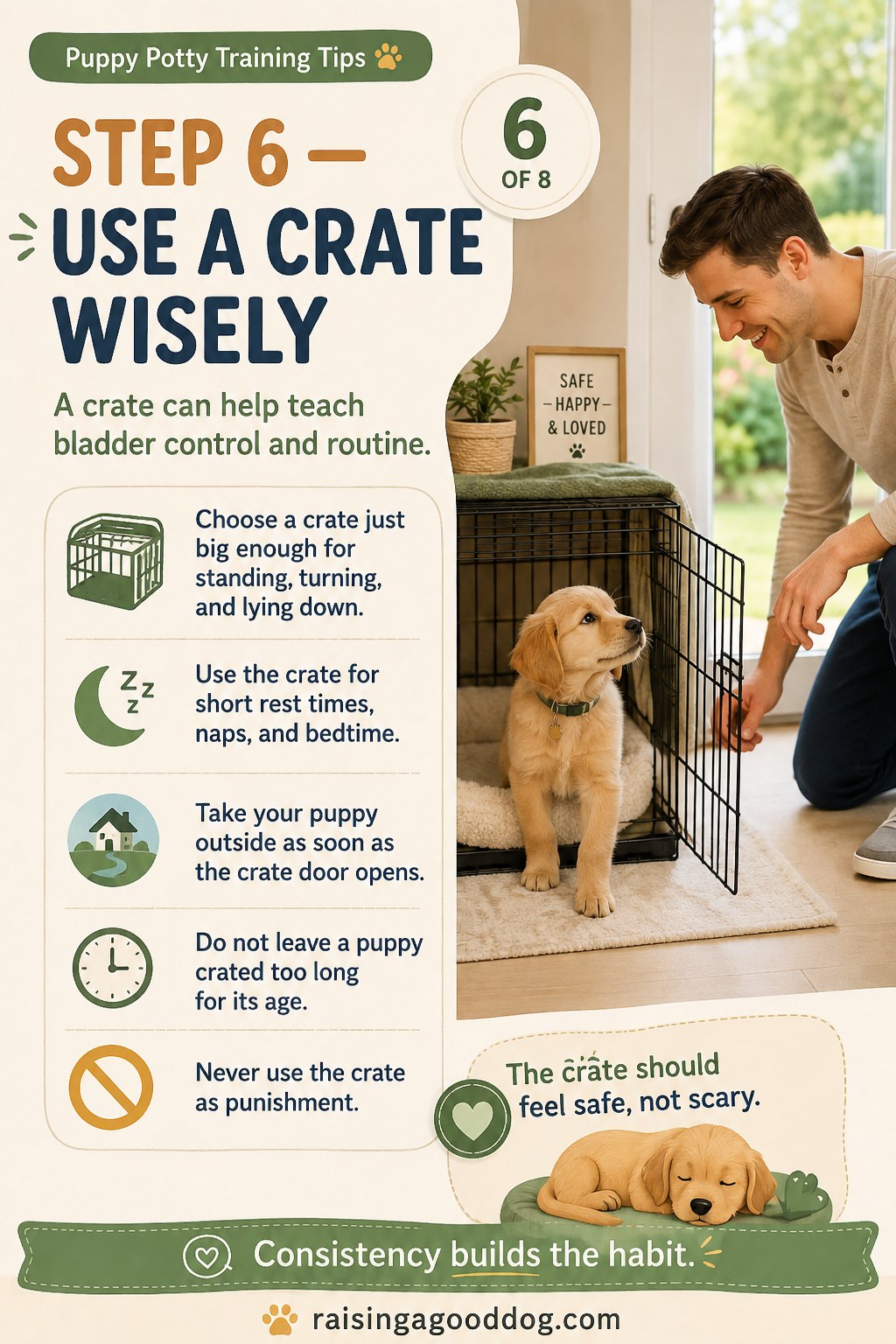
A crate can genuinely help teach bladder control, because most puppies are reluctant to soil the small space they rest in — but it only works if the space feels safe, not like a punishment or a place they're dumped when you're annoyed.
- Size it correctly — just enough room to stand, turn around, and lie down. Too much space defeats the purpose.
- Use it for short rests — naps, bedtime, brief periods, not as an all-day holding pen.
- Take your puppy out the instant the door opens — every time, no exceptions, so the routine stays predictable.
- Respect duration limits for age — a young puppy simply cannot hold it as long as an adult, no matter how well the crate is going.
- Never use it as punishment — if your puppy is distressed in the crate, that's information to act on, not defiance to correct.
If your particular puppy panics in a crate no matter how gradually you introduce it, a puppy-proofed pen or a gated section of a room is a completely legitimate alternative. The goal is safe containment, not a specific piece of equipment.
Respond to Accidents Without Making Them Worse
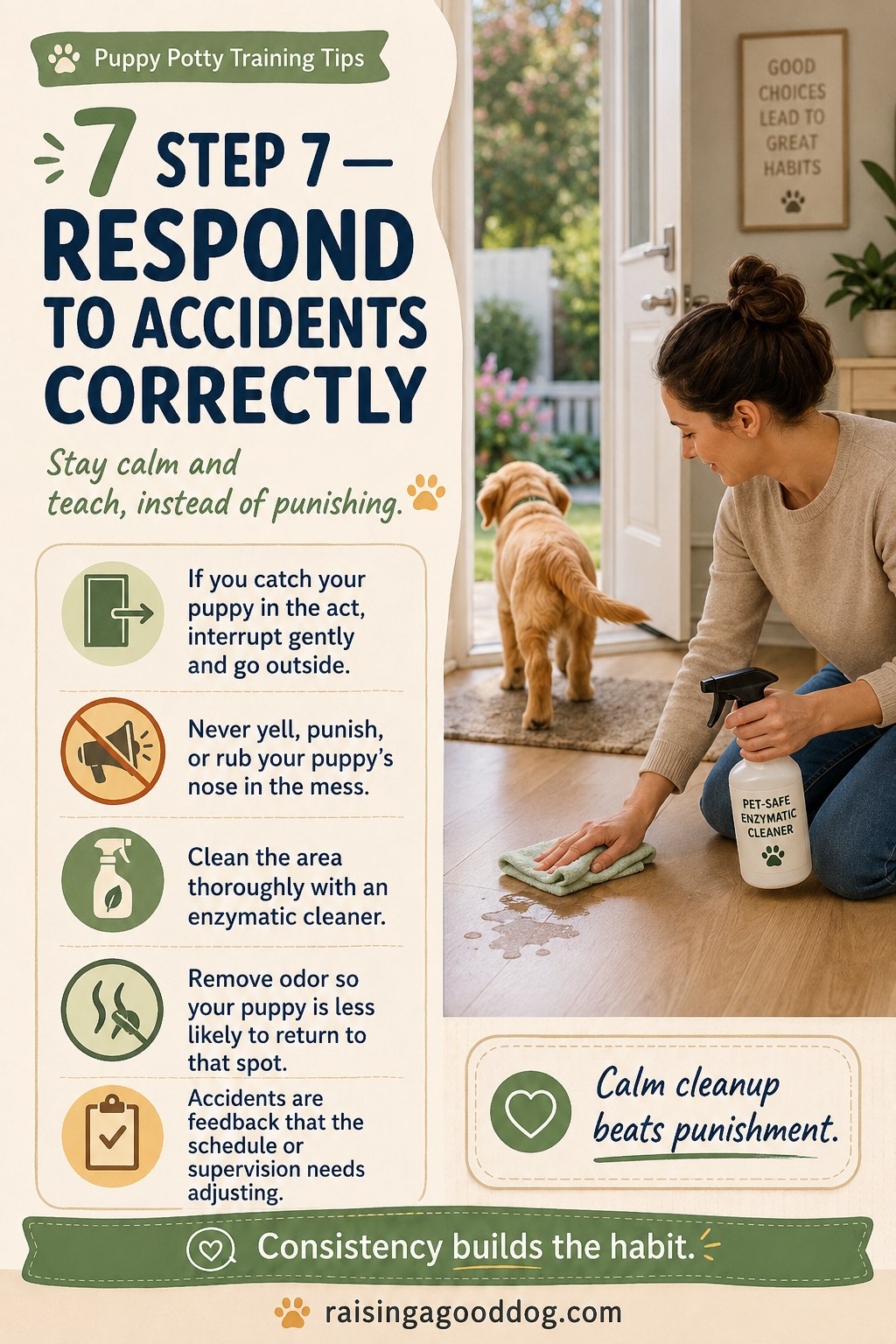
How you handle the accident itself either speeds up house-training or actively slows it down, and this is the one place I ask people to unlearn what they were taught.
If you catch your puppy mid-act, interrupt gently — a light noise, a calm scoop-up if it's safe to do so — and head outside immediately, so they can finish and get rewarded there instead.
- Never yell, and never rub their nose in it. Puppies don't connect punishment to something they did minutes ago; they connect it to you being unpredictable, which tends to make them hide to potty instead of learning where to go.
- Clean thoroughly with an enzymatic cleaner, not just soap or a household spray — regular cleaners don't fully break down the scent markers that pull a puppy back to the same spot.
- Treat the accident as feedback, not failure. If accidents keep happening, the schedule or supervision usually needs adjusting, not the puppy.
I say this to clients constantly: nobody in this house is doing anything wrong, the plan just needs a tighter loop.
Build a Nighttime Routine That Holds Overnight
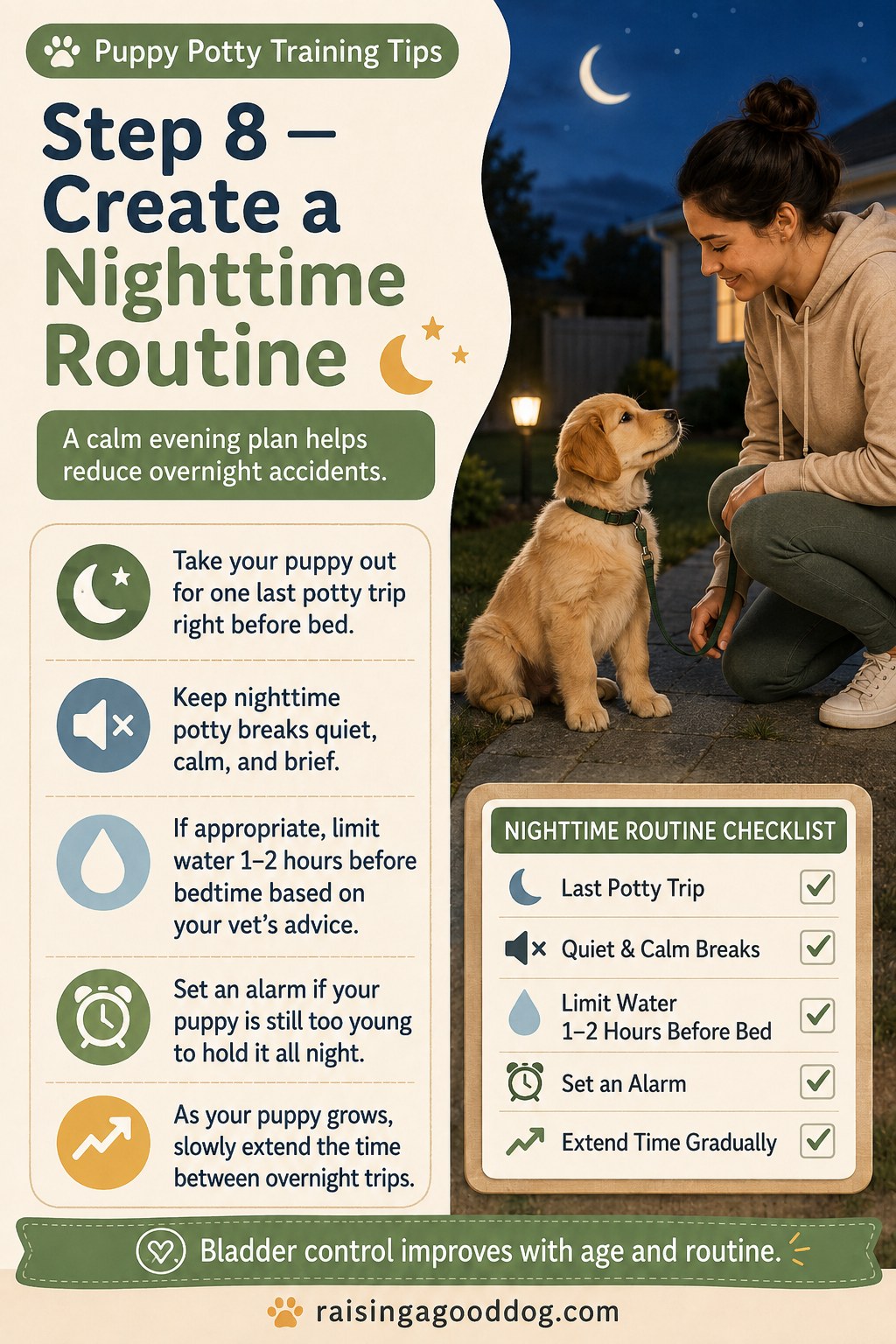
Overnight accidents usually aren't a training gap — they're a bladder-capacity and routine gap, and a calm evening plan closes most of it.
Take one last, quiet potty trip right before bed, keep it brief and low-key so your puppy doesn't wind up energized right before lights-out, and talk to your vet about appropriate water timing in the one to two hours before bed based on your puppy's age and health. If your puppy is still very young, set an alarm for a middle-of-the-night trip rather than gambling on them making it — better a short interruption to your sleep than reinforcing a habit of going indoors overnight. As bladder control improves with age, extend the gap between overnight trips gradually rather than all at once.
One note I give every client, no exceptions: if a puppy who was reliably housetrained suddenly starts having overnight or daytime accidents again, that's a vet visit first, not a training problem to troubleshoot on your own — regressions like that can point to a urinary tract infection or another medical cause that needs ruling out before behavior work makes sense.
None of this requires a perfect puppy, just a consistent human — and most of the families I've worked with get there faster once they stop blaming the dog for a gap in the schedule. Give it time, expect a few setbacks along the way, and keep that enzymatic cleaner within reach.

Frequently Asked Questions
How long does puppy potty training actually take?
It genuinely varies by puppy, but most owners see real progress within a few weeks and solid reliability somewhere between four and six months, with full reliability often settling in closer to six months or a bit beyond. Setbacks along the way are normal, not a sign the plan isn't working.
My puppy was doing great and suddenly started having accidents again — what happened?
Rule out medical causes first — urinary tract infections and other health issues can cause a sudden regression that looks exactly like a training lapse. If your vet clears that, look at whether supervision has loosened, the schedule has slipped, or a routine change like travel or a new environment has thrown things off.
Is it okay to use puppy pads instead of going outside?
They can be a reasonable bridge for apartments or owners with limited mobility, but they can also slow the transition to outdoor-only habits since they teach a puppy that indoor surfaces are sometimes acceptable. If you use them, be consistent about location just as you would outdoors, and plan a clear, gradual transition.